Nettie's Bees
Our experienced beekeepers safely remove and rehome wild bee swarms, protecting both the bees and your property. Call or text Nettie's Bees at (508) 221-1578 if you have a swarm.
Not sure if they are honeybees? Click the button below to learn whether you have a honeybee swarm or wasps.

- Free
- swarm removal in most accessible locations within our service area
- 2-4 hours
- response time during swarm season, in daylight hours
- 24-72 hours
- how long swarms typically remain in their temporary location
Identify before you call
Wasps or Bees?
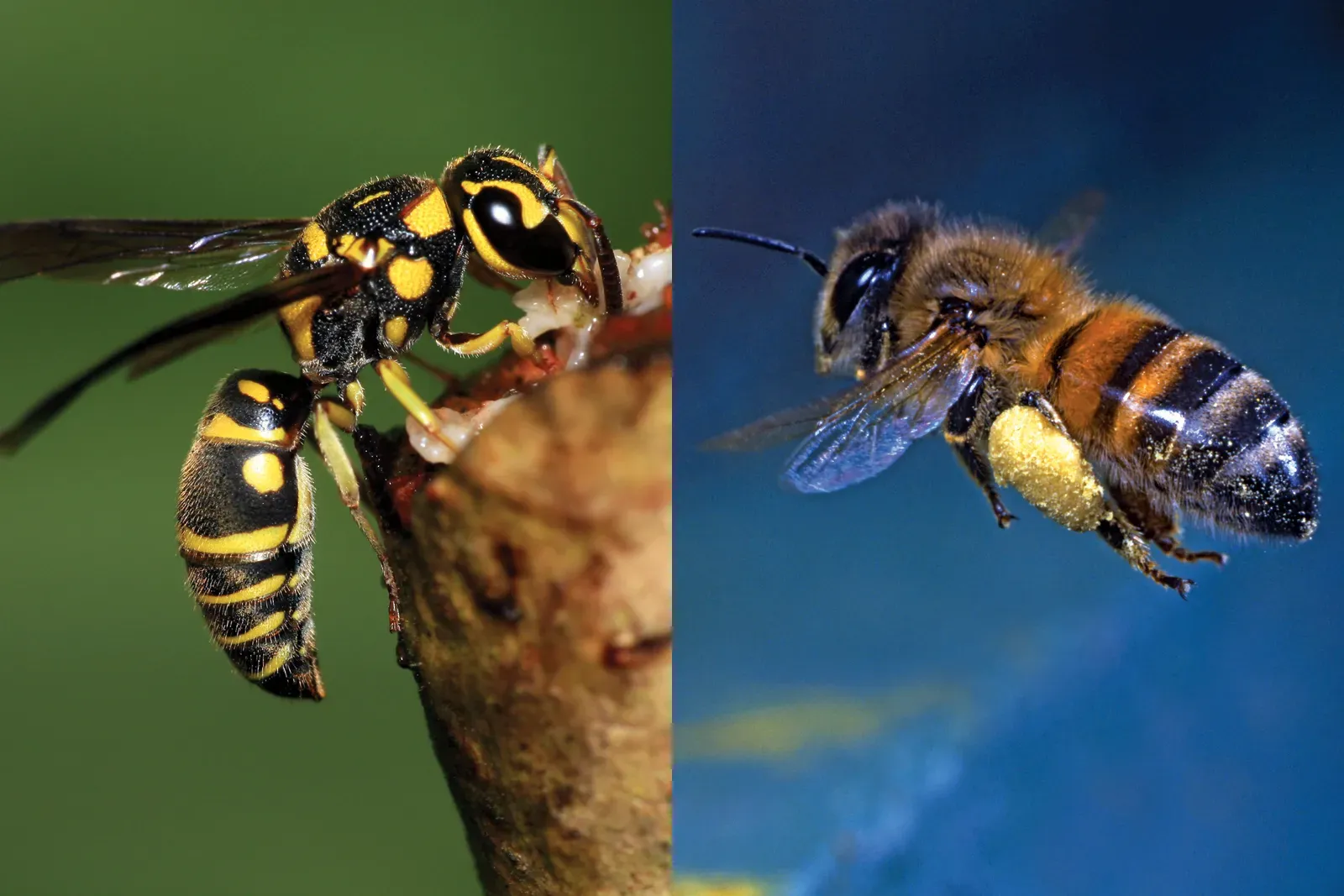
Wasps | Honeybees | |
|---|---|---|
| Body Shape | Slender with pronounced narrow "waist" between thorax and abdomen | Round, plump bodies with little visible "waist" |
| Color | Bright, shiny yellow with bold black stripes or markings | Golden brown to amber with subtle, muted tan/brown stripes (not bright yellow) |
| Texture | Smooth, glossy body with no fuzz or hair | Notably fuzzy or hairy all over their bodies |
| Size | Similar to honeybees but appear longer and thinner | Medium-sized, about ½ inch long (about the size of your fingernail) |
| Legs | Long, dangling legs, especially noticeable during flight | — |
| Wings | — | Clear wings that lay flat along their back when resting |
| Distinctive Feature | Yellow jackets have a "jacket" appearance with yellow on the sides | — |
If you have a swarm
What happens when you call
Step 1 of 3
Call or text
Call us as soon as you spot a swarm, as they may not remain accessible for long.
Step 2 of 3
Share photos
We're always happy to provide guidance on whether what you're seeing is actually honeybees or another type of insect.
Step 3 of 3
A new home
Captured swarms are relocated to one of our apiaries where they're housed in a proper hive box and allowed to establish a new colony.
Questions
Frequently asked questions
Does Nettie's Bees offer bee removal services?
We do offer swarm collection for honeybees in the South Coast Massachusetts area when available. If you have honeybees that have swarmed in your yard, contact us and we may be able to safely collect and rehome them. For established colonies in structures or for other stinging insects like wasps or hornets, we recommend spraying them or contacting a professional pest removal service. We're always happy to provide guidance on whether what you're seeing is actually honeybees or another type of insect.
Can you remove bees that have already moved into my walls or structure?
It depends on the difficulty of accessing the bees. We usually do not remove bees that require carpentry work but we encourage you to reach out and share photos so we can see if it is something we can access and help with! This is a more involved process called a "cut-out" rather than a swarm removal. Established colonies require specialized techniques to access the hive, remove the comb, and extract the bees.
Do you handle wasp or hornet nest removal?
We specialize in honeybee rescue. For wasps, hornets, or yellow jackets, we recommend contacting pest control professionals or spraying them with wasp spray.
What exactly is a honeybee swarm?
A honeybee swarm is a natural colony reproduction process where about half of a hive, along with the queen, leaves to find a new home. The swarm typically forms a cluster (often on tree branches, fence posts, or structures) while scout bees search for a permanent location. Swarming bees are temporarily homeless and focused on protecting their queen rather than defending territory.
Are honeybee swarms dangerous?
Honeybees in a swarm state are generally docile and at their least aggressive. They've gorged on honey before leaving their hive, have no brood or honey stores to defend, and are focused on finding a new home. While it's always best to keep a respectful distance, swarms rarely pose a threat unless directly disturbed.
How long will a swarm stay in one location?
Swarms typically remain in their temporary location for 24-72 hours, though some may stay up to a week depending on weather conditions and how quickly scout bees find a suitable permanent home. Don't assume a swarm will leave quickly on its own—it's best to call for professional removal.
How quickly can you respond to a swarm call?
We prioritize swarm calls since timing is critical. During swarm season (typically spring through early summer), we aim to respond within 2-4 hours during daylight hours. Please call us as soon as you spot a swarm, as they may not remain accessible for long.
How much does swarm removal cost?
We offer free swarm removal in most accessible locations within our service area, as capturing swarms helps sustain honeybee populations and our beekeeping operation.
Where do the bees go after you remove them?
Captured swarms are relocated to one of our apiaries where they're housed in a proper hive box and allowed to establish a new colony. These rescued bees often become productive honey producers and pollinators after their successful relocation.
Why shouldn't I just spray a swarm with insecticide?
Honeybees are essential pollinators experiencing population declines worldwide. Killing a swarm destroys thousands of beneficial insects that could otherwise be safely relocated. Additionally, many states and localities have laws protecting honeybees, making it illegal to exterminate them unnecessarily.