There is a plant that grows along roadsides and stream banks across eastern North America, tall, white-flowered, blooming in late summer, that was once the most widely used medicinal herb in the United States. Doctors prescribed it. Households kept it. Herbalists across traditions, from Indigenous medicine to frontier folk practice to 19th-century professional medicine, reached for it consistently. The plant is boneset (Eupatorium perfoliatum), and its story is worth knowing.
Most people have never heard of it. That's not because it stopped working. It's because it went out of fashion.
What is boneset?
Quick answer: Boneset is a plant native to eastern North America that was one of the most widely used medicinal herbs in early America. It's traditionally used in herbal medicine to support joint and bone health and was historically used by both Indigenous peoples and settlers. It's intensely bitter.
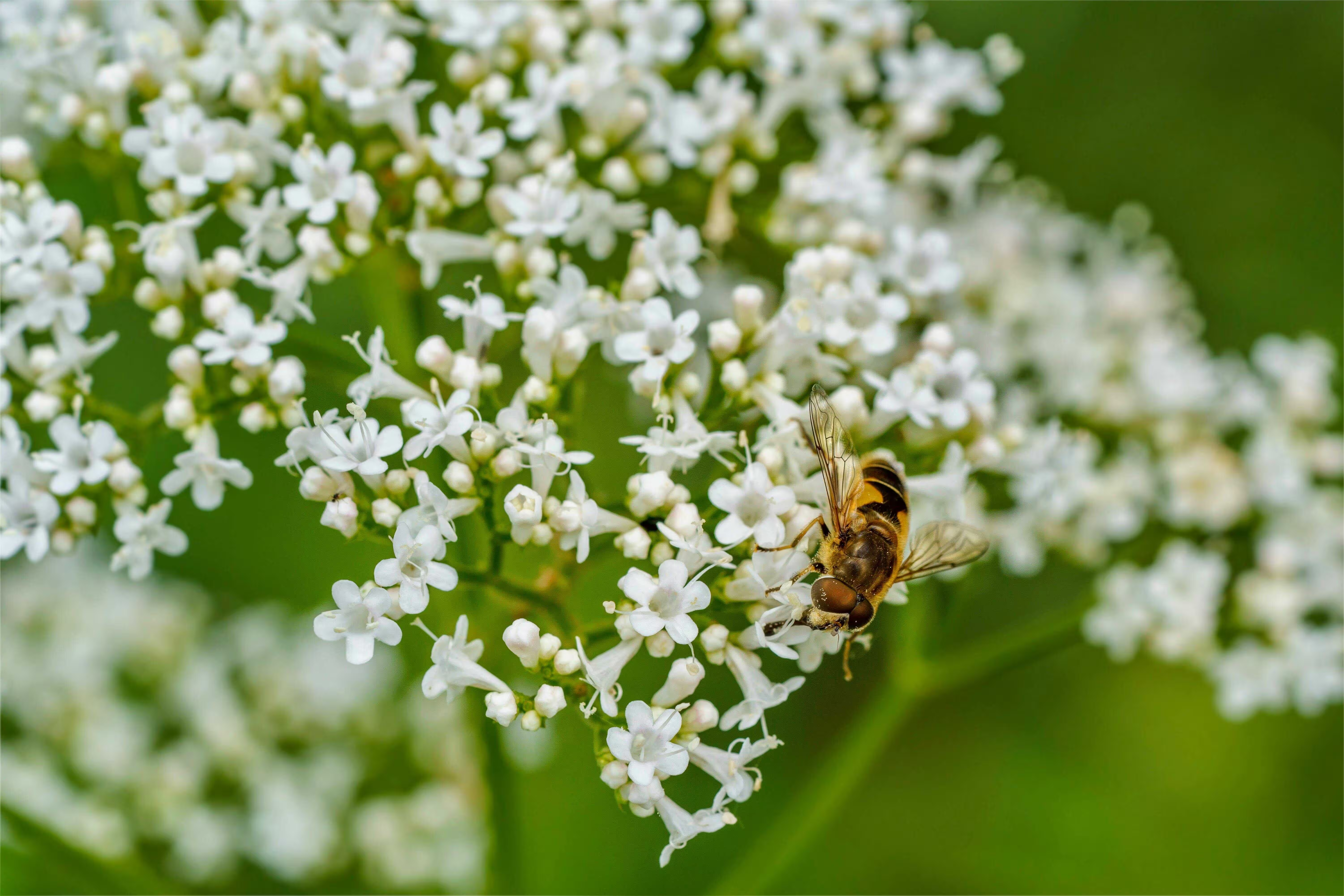
Boneset is a perennial herb that grows 2-3 feet tall, with pairs of leaves that are fused together at the base, making it look like one leaf pierced through the stem. That's where the name comes from: the leaves look like they're bound together. In late summer, it produces clusters of white flowers beloved by pollinators.
It grows across the eastern United States in damp areas: near streams, in wetlands, along pond edges. If you're looking for it, check the wet margins of plant communities, not the dry uplands.
The whole plant is used, but the aerial parts (stems, leaves, flowers) are what's traditionally harvested. It's harvested at or just before flowering, when the medicinal compounds are most concentrated.
Why boneset was so important
In early America, boneset was what you reached for when someone had a fever, body aches, and felt like their bones were breaking. It was used for:
Joint and bone support. The name is the clue. Boneset was the herb you used when you wanted to support joint health, bone healing, or general structural support. The Eclectic doctors (19th-century doctors who blended botanical medicine with conventional medicine) prescribed it widely.
Fever and general malaise. It was considered useful in the first stages of illness, when the body felt achy and fever was present. It didn't cure the illness, but it supported the body through the acute phase.
Respiratory support. Used in herbal formulas to support the lungs and respiratory passages.
Circulation and lymphatic support. Boneset was believed to support the movement of lymphatic fluid and general circulation.
Why boneset? Because it grew locally, because it worked reliably at a mild level, because it had been used this way for generations, and because the Eclectic doctors, who were real doctors with real patients, chose to use it alongside their conventional tools.
What happened to boneset
Boneset didn't stop working. What stopped was its relevance. As pharmaceuticals became more powerful and more available in the early-to-mid 20th century, gentler botanical remedies fell away. Aspirin could reduce fever more dramatically than boneset. Antibiotics could address infections that herbal preparations couldn't. The market had new tools that worked faster.
Boneset also tastes terrible. It's one of the bitterest plants in North American herbalism. Ask someone to choose between a pharmaceutical that tastes like nothing and an herbal remedy that tastes actively bad, and they'll choose the pill most of the time.
So boneset faded from household medicine cabinets, from doctor's prescriptions, from collective memory. But it never faded from the herb gardens of herbalists who valued its long history and consistent, gentle effectiveness.
How to use boneset
Boneset is traditionally used as a tea or tincture. Because it's so bitter, most people mix it with other herbs that have better flavor, or take it as a tincture (which masks the taste somewhat).
As a tea: Steep 1-2 teaspoons of dried herb in hot water for 10-15 minutes. The longer you steep, the more bitter it becomes. Strain and drink. You can add honey (which helps with both the taste and the effect). Drink once or twice a day during the season when you want structural support.
As a tincture: Take 30-60 drops in water, up to three times a day. Tinctures are more concentrated, so you use less plant material but get the benefit more efficiently.
The traditional approach is to use boneset seasonally: in spring and fall, or whenever you feel your joints and bones could use support. Not year-round, but as a seasonal tonic.
Nettie's Boneset Tincture is made with boneset herb and alcohol, prepared traditionally. A dropper or two in water, or taken directly, delivers the herb's benefits without the intensity of the taste.
Safety notes
Boneset is considered safe for most adults when used in traditional amounts (tea, tincture). Some people find it can be slightly laxative, so start with a small amount and see how your body responds.
If you're pregnant, nursing, or on medications, check with your healthcare provider before using boneset. Some people with liver sensitivities may want to avoid it, as it contains compounds that historically were concerning. Modern use suggests this is only an issue at very high doses, but it's worth noting if you have liver concerns.
Don't use the fresh plant directly on the skin (it can irritate), and don't take doses much higher than recommended. Like many herbs, more isn't better.
Why this plant matters
Boneset represents something worth preserving: knowledge from a time when people worked closely with local plants, learned their properties through generations of use, and trusted what they had learned. Not because it was perfect — antibiotics are better for serious infections — but because it worked for what it was meant to do.
In a modern world of powerful pharmaceuticals, there's still a place for gentle herbal support. Boneset is one of the plants that remembers that. Using it now means you're continuing a chain of knowledge that reaches back through herbalists and Eclectic doctors and Indigenous healers to a time when knowing the plants around you was ordinary.


.jpg)
.jpg)