Honey and Blood Sugar: Glycemic Index, Diabetes and What Research Shows
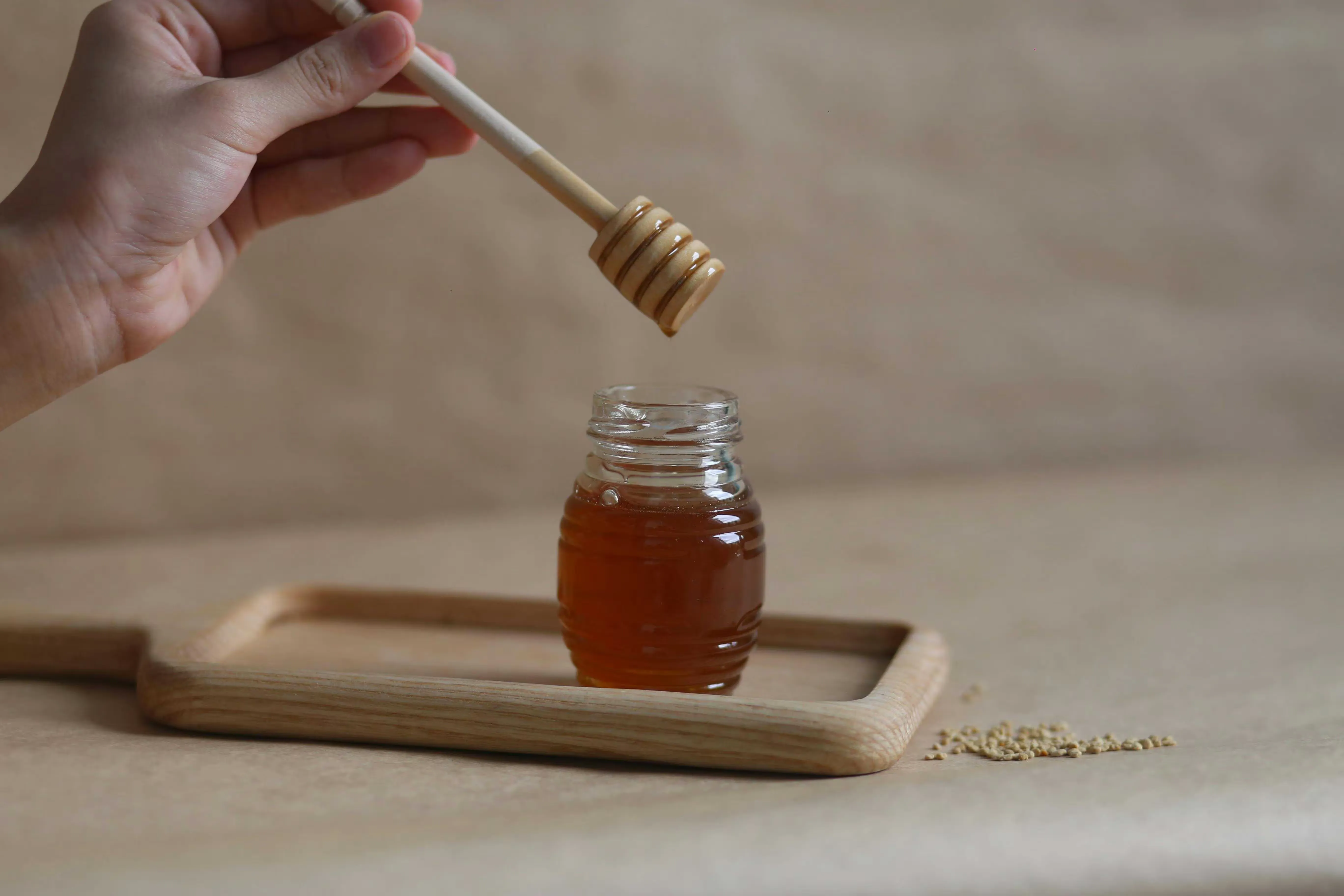
“Is honey okay for diabetics?” is one of the most common questions people ask about honey. The short version: honey isn’t off-limits, but it isn’t a free food either. It’s sugar, and it has to be counted like sugar.
Quick answer: Honey raises blood sugar. A tablespoon has about 17 grams of carbohydrate, about the same as a slice of bread. Honey’s glycemic index averages around 58-61, a little below table sugar’s 65, but varies from the 30s to the 80s by flower. Some small studies suggest honey may affect blood sugar slightly more gently than sugar, but people with diabetes should count it as carbohydrate, use small amounts and talk with their care team. Honey is also a handy fast-acting sugar for treating lows.
How does honey affect blood sugar?
Honey is about 82% sugar: roughly 40% fructose and 31% glucose, with small amounts of other sugars. The glucose raises blood sugar quickly. Fructose is handled mainly by the liver and raises blood glucose less directly, which is one reason honey’s average glycemic index is a bit lower than table sugar’s.
A tablespoon of honey (21 g) has about 17 grams of carbohydrate. For comparison, a teaspoon of table sugar has about 4 grams, and a slice of bread about 15.
What is the glycemic index of honey?
The glycemic index (GI) ranks how fast a food raises blood sugar compared with pure glucose (100). In the International Tables of Glycemic Index compiled at the University of Sydney (Atkinson and colleagues, 2008), honey values range widely, from the low 30s for some high-fructose honeys to over 80 for others, with an average around 58 to 61. Table sugar is about 65.
| Sweetener | Approximate GI |
|---|---|
| Glucose | 100 |
| Table sugar (sucrose) | 65 |
| Honey (average) | 58-61 |
| Maple syrup | 54 |
| Acacia (black locust) honey | about 30s |
| Agave syrup | 10-20 |
A lower GI doesn’t make a food safe in any amount. The total carbohydrate you eat matters at least as much.
What do studies say about honey and diabetes?
- A 2009 trial in Iran (Bahrami and colleagues, International Journal of Food Sciences and Nutrition) gave 48 people with type 2 diabetes increasing doses of honey for eight weeks. Body weight and some blood fats improved slightly, but HbA1c, a key measure of long-term blood sugar, rose a little. The authors urged caution.
- A 2023 meta-analysis from the University of Toronto (Ahmed and colleagues, Nutrition Reviews) pooled 18 trials. Honey, especially raw and single-flower honeys, was linked to slightly lower fasting blood sugar and some improvements in blood fats compared with control diets, when eaten within a healthy diet. The trials were small and short.
Together, these suggest honey may be a slightly better choice than table sugar for some people, but they don’t show that honey helps diabetes or can be eaten freely.
Can people with diabetes eat honey?
Many can, in small amounts, as part of a planned diet. The American Diabetes Association advises treating all added sugars, honey included, as carbohydrate and keeping them limited. Practical tips:
- Count it. A teaspoon is about 6 grams of carbohydrate; a tablespoon about 17.
- Use less. Honey is sweeter than sugar, so a little goes further.
- Eat it with food. Pairing honey with protein, fat or fiber, like plain yogurt or nuts, slows the rise in blood sugar.
- Test and learn. Check your glucose after trying honey to see how your body responds.
- Talk with your care team about what amount fits your plan.
Can honey treat low blood sugar?
Yes. The American Diabetes Association lists a tablespoon of honey among fast-acting sources of about 15 grams of carbohydrate for treating hypoglycemia. Recheck your blood sugar after 15 minutes. Honey isn’t suitable for babies under 1, so use other options for infants.
Frequently asked questions
Is raw honey better for diabetics than regular honey?
Raw and processed honey have the same sugar content. The 2023 meta-analysis found slightly better results with raw honey, but the difference is small and uncertain.
Does honey cause diabetes?
No single food causes type 2 diabetes. A diet high in added sugars of any kind, honey included, can contribute to weight gain and raise risk over time.
Which honey has the lowest glycemic index?
High-fructose honeys, like acacia (black locust) and some others, tend to have the lowest GI values. Testing varies, so don’t rely on a label’s GI claim alone.
Is honey better than sugar for blood sugar?
Slightly, on average, but not by enough to treat it differently in a meal plan. See honey vs sugar.
How much honey can a diabetic eat per day?
There’s no set amount; it depends on your overall plan and medications. Many people with diabetes keep it to a teaspoon or two, counted as carbohydrate. Ask your doctor or dietitian.
Sources
- Atkinson FS, Foster-Powell K, Brand-Miller JC. “International tables of glycemic index and glycemic load values: 2008.” Diabetes Care, 2008.
- Bahrami M et al. “Effects of natural honey consumption in diabetic patients: an 8-week randomized clinical trial.” International Journal of Food Sciences and Nutrition, 2009. PubMed
- Ahmed A et al. “Effect of honey on cardiometabolic risk factors: a systematic review and meta-analysis.” Nutrition Reviews, 2023. PubMed
- American Diabetes Association, Standards of Care in Diabetes: nutrition therapy and hypoglycemia.
- USDA FoodData Central, “Honey.”
Honey can have a place on a diabetic’s table: a small, counted, well-chosen spoonful. Your care team can help you find the amount that works for you.