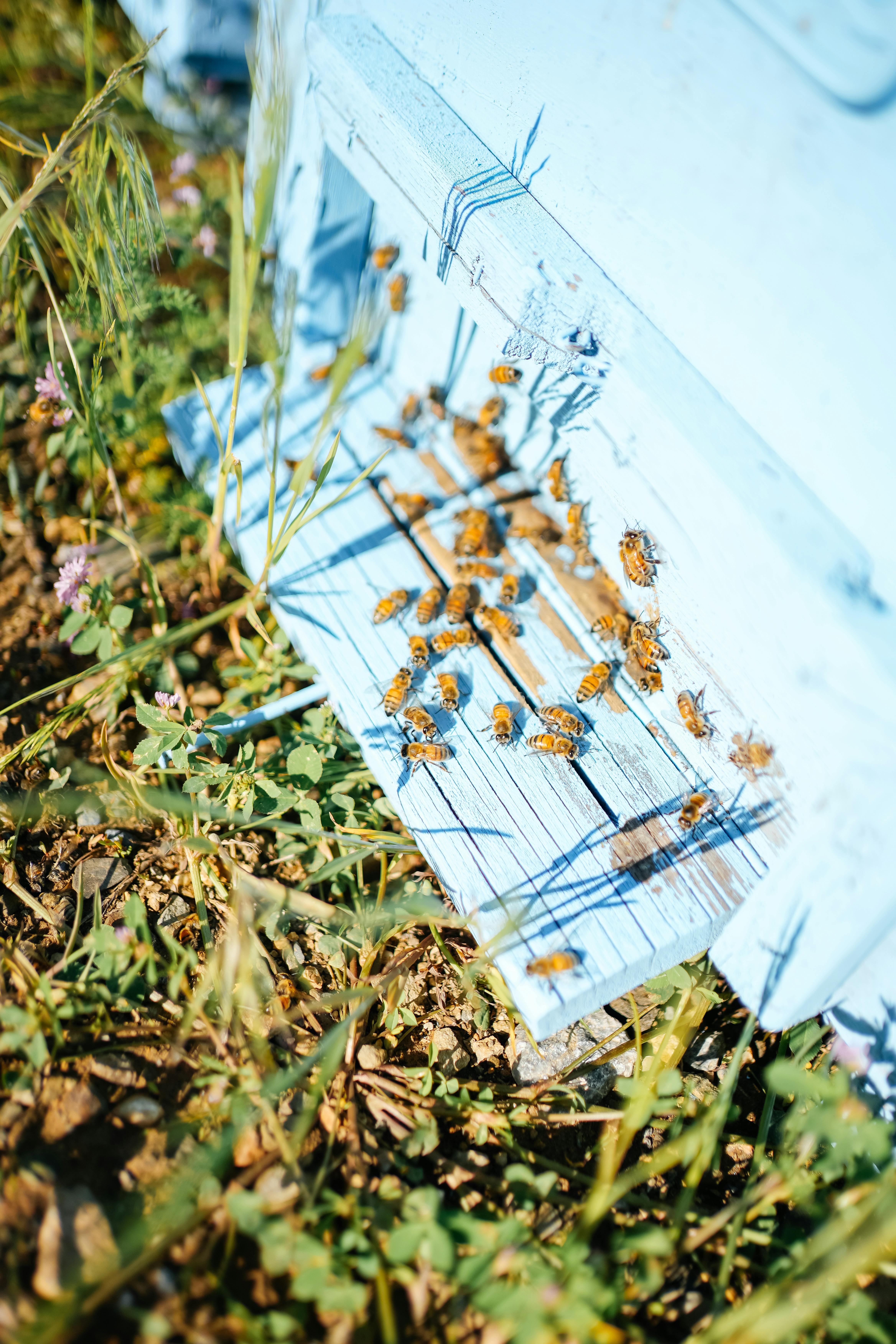
Most people have never experienced what happens to a beekeeper when the season changes. They've never opened a hive in the heat of summer and felt the fury of a colony protecting its honey stores. They've never watched a beekeeper in autumn make difficult decisions about which frames to harvest and which to leave for the colony to eat through winter. They've never seen a hive in January when the thermometer is below freezing and the only thing keeping the bees alive is the honey they stored months ago.
Winter is the defining challenge for a honeybee colony. It is the entire reason bees collect honey in the first place.
Here's what happens to a honeybee colony in winter, and why winter is the most critical season for beekeeping.
What bees do in winter: cluster and survive
Honeybees don't hibernate. They don't migrate. They stay in the hive.
As the temperature drops and days shorten, the colony begins to shift its behavior. By November, the bees have stopped foraging almost entirely. The queen reduces her laying. The colony draws inward.
When the outside temperature falls below approximately 57 degrees Fahrenheit, honeybees form a tight cluster. The bees huddle together, wings vibrating, generating heat collectively. The outer bees form an insulating shell. The bees inside the cluster stay warm.
The cluster can maintain a temperature of around 95 degrees Fahrenheit even when the outside air is well below freezing.
Quick answer: Honeybees survive winter by clustering together in the hive and eating honey they stored in fall. The cluster generates heat through muscle vibration, maintaining an interior temperature of around 95 degrees even in freezing weather. Winter survival depends almost entirely on having enough honey stores to last until spring foraging begins.
Honey: the fuel that determines winter survival
The bees' survival hinges entirely on the honey stores they collected in summer and fall.
A typical hive needs approximately 60 to 90 pounds of honey to make it through a New England winter. That's roughly 18,000 to 27,000 teaspoons of honey. In a single lifetime, a forager bee produces roughly one-twelfth of a teaspoon. So a winter's worth of honey represents the lifetime work of thousands and thousands of bees.
If a hive doesn't have enough honey stores when winter arrives, the colony starves. No other outcome is possible. There are no insects to forage. There are no flowers. The bees cannot leave the cluster because the outside temperature would kill them.
This is why beekeepers face a genuine ethical challenge when harvesting honey. They must leave enough for the bees to survive. A beekeeper who takes too much honey, or who takes it too late in the season, is gambling with the colony's life.
This is also why local, raw honey matters. A beekeeper who knows their bees, who's tasted the honey they make, who has a relationship with the land and the bees living on it, is making careful, thoughtful decisions about what to harvest and what to leave.
How the colony cares for the brood in winter
Here's something that surprises people: honeybees are still raising brood in the middle of winter.
In late fall, the queen continues laying, but at a reduced rate. By January, in the depth of winter, she may be laying 500 eggs per day instead of her summer peak of 2,000. But she is still laying.
The bees need a new generation of workers ready to go when spring foraging begins. Brood takes warmth, attention, and resources. But it's worth it, because without those young bees ready to forage when spring arrives, the colony is finished.
This brood-rearing is one of the reasons a winter cluster must stay tightly organized and warm. The bees are not just surviving, they're preparing for spring.
Winter losses and what causes them
Despite their incredible adaptation, many colonies don't make it through winter.
In the United States, average winter losses are approximately 30 to 50 percent, depending on the region and the year. Some losses are inevitable, but some are preventable.
Starvation: The most common cause of winter mortality. A colony runs out of honey stores before spring foraging begins.
Moisture and cold: A hive that's poorly ventilated can develop condensation inside. This moisture freezes on the cluster. Wet, cold bees die faster than dry ones. Proper hive design and ventilation are critical.
Nosema (bee dysentery): A gut parasite that affects bees in winter when they're confined to the hive. Infected bees have diarrhea, which damages the hive's cleanliness and spreads disease.
Varroa mites: A parasitic mite that feeds on bee blood and weakens individual bees. A heavily infested colony is more vulnerable to cold and disease. Mite treatment is one of the most labor-intensive aspects of beekeeping.
Poor queen: A queen that didn't lay well, that's infected with disease, or that's simply aging may be unable to sustain the colony through winter. Queens decline in fertility over time and eventually must be replaced.
Why winter is the hardest test of beekeeping
Summer beekeeping looks like managing individual hive problems. Overheated hives. Pest invasions. Space management.
Winter beekeeping is about preparedness and sacrifice.
A beekeeper must resist the urge to harvest too much honey, even when there's a surplus. They must leave enough to sustain the colony. They must monitor the hive to watch for signs of starvation. In the worst case, they must feed the colony supplemental sugar water or pollen patties to keep them alive through a shortage.
And sometimes, despite everything, the colony doesn't make it.
This is where the difference between industrial beekeeping and small-scale, ethical beekeeping becomes clear. A beekeeper who knows their colony, who's been with them through the season, who values the bees as individual entities rather than production units, is willing to sacrifice harvest to ensure survival.
The spring emergence: when it's all worth it
Sometime in March or April, depending on the weather, the temperatures rise enough for bees to begin foraging again.
The cluster dissolves. The bees begin flying, looking for the first flowers. The queen begins laying more aggressively. Young bees from winter brood emerge, ready to work.
If the colony made it, if the honey stores lasted, if the cluster held together and the bees stayed warm and the queen kept laying, then suddenly, there is an explosion of new life in the hive.
By May, a surviving winter colony is building comb, raising brood at an incredible rate, and preparing for the nectar flow that will sustain them through another year.
It never gets old.
Frequently asked questions
Do all honeybee colonies die in winter?
No, but many do. Average winter losses are 30-50 percent depending on region and year. Well-managed colonies with adequate honey stores, good genetics, and low parasite loads survive at high rates. Poorly managed colonies or those affected by disease have lower survival.
How do honeybees stay warm in winter?
They form a tight cluster and vibrate their flight muscles. The muscle contractions generate heat. The cluster maintains an interior temperature of roughly 95 degrees Fahrenheit even when outside temperatures are well below freezing.
What do bees eat in winter?
The honey they stored in summer and fall. A hive needs approximately 60 to 90 pounds of honey to survive a New England winter. Without it, bees starve.
Can you open a hive in winter?
No, not if you care about the bees. Opening a hive breaks the cluster, lets warm air escape, and exposes the bees to cold they can't tolerate. Beekeepers check hives in winter by listening at the entrance and monitoring from outside, not by opening the box.
Why is winter so hard for honeybees?
Because they can't leave the hive, they can't forage for fresh food, and they can't generate warmth through activity. They survive entirely on stored resources and collective body heat. If either runs out, the colony dies.


.jpg)
.jpg)