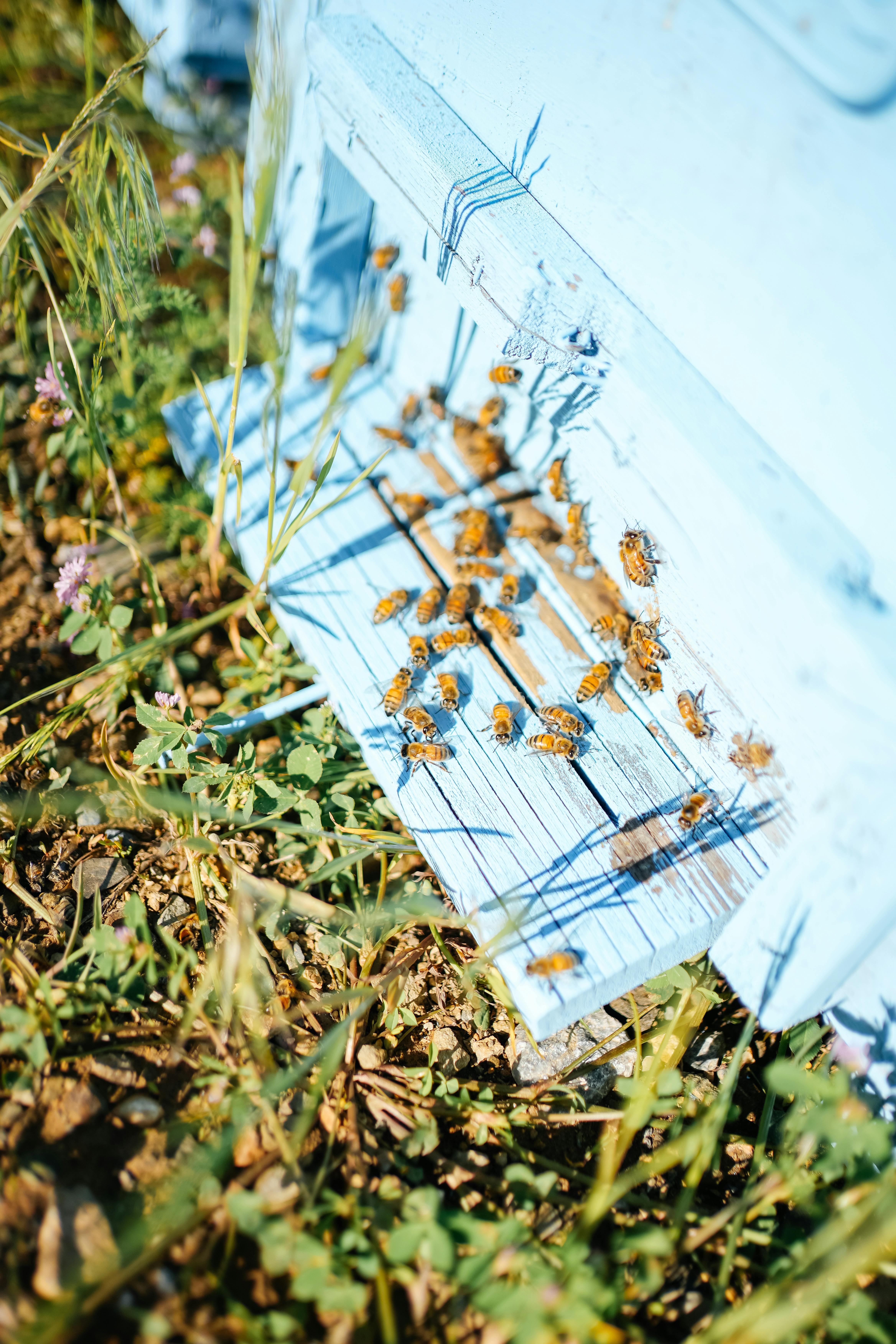
There are dozens of different varieties of honey. Some are thick and opaque. Some are liquid and clear. Some taste almost medicinal. Some taste like flowers or fruit.
What makes them different is not the bees, it's what the bees eat.
Raw honey gets its name, its flavor, its color, and its unique properties from the plants the bees foraged from. That is, the terroir of honey. And like wine, terroir is everything.
Here's a guide to the honey varieties you're most likely to see, what makes them distinct, and how to use each one.
Clover honey
Flavor: Mild, subtly floral, smooth. One of the most accessible honey varieties.
Color: Light amber to golden.
Texture: Usually creamy and mild. Crystallizes fairly quickly.
Best for: Sweetening tea, drizzling on yogurt, baking. Clover honey's mild flavor makes it a good all-purpose honey.
Geography: Clover grows widely across North America. Clover honey is produced in nearly every state.
Wildflower honey
Flavor: Complex and variable, depending on which flowers are blooming. Often with subtle herbal or fruity notes.
Color: Ranges from light amber to dark brown, depending on the season and the specific flowers.
Texture: Usually thicker and darker than clover. Often crystallizes.
Best for: Eating straight, using in traditional remedies, or gifting. Wildflower honey tastes distinctly like the place it came from. The complexity is the point.
Geography: Varies by season and location. Massachusetts wildflower honey tastes different from wildflower honey from Vermont or the Midwest.
Buckwheat honey
Flavor: Bold, almost molasses-like, with an earthy, slightly mineral quality. Not for everyone.
Color: Very dark brown to nearly black.
Texture: Thick and viscous, often crystallizes into a grainy texture.
Best for: Baking (especially gingerbread and dark cakes), using in herbal remedies, or for people who want a honey with real character and depth. Buckwheat honey is also traditionally associated with cough support.
Geography: Buckwheat grows in temperate regions. It's more common in the Northeast, parts of the Midwest, and Canada.
Orange blossom honey
Flavor: Floral and citrus-forward, with subtle sweetness and a hint of spice.
Color: Light golden.
Texture: Usually liquid and clear.
Best for: Adding to tea, drizzling over desserts, or using in Mediterranean cooking. The floral-citrus profile is distinctive.
Geography: Produced wherever orange trees bloom, particularly in Florida and California, though also in Mediterranean regions.
Acacia honey
Flavor: Very mild and delicate. Almost neutral. Some people describe it as having a slight floral note, but it's subtle.
Color: Light, nearly clear to pale golden.
Texture: Thin and runny, stays liquid for a long time before crystallizing.
Best for: For people who want the properties of raw honey without a strong flavor. Good for sweetening delicate dishes where you don't want honey's flavor to dominate.
Geography: Acacia honey is primarily produced in Europe, particularly Hungary and Eastern Europe. Less common in the US.
Tupelo honey
Flavor: Floral and fruity, with a subtle spice note. More complex than acacia but milder than wildflower.
Color: Golden to light amber, often with a greenish tint.
Texture: Liquid and smooth, resists crystallization.
Best for: Drizzling, using in tea, or eating straight. Tupelo honey is rare and expensive, often sought by honey connoisseurs.
Geography: Tupelo trees grow primarily in the southeastern US, particularly Florida and Georgia. It's a protected variety in some regions.
Manuka honey
Flavor: Rich and malty, slightly medicinal, distinctive. A strong honey.
Color: Dark amber to brown.
Texture: Thick and creamy.
Best for: Traditional remedies, eating straight, or using in herbal preparations. Manuka honey is often associated with health and wellness traditions from New Zealand (where it's primarily produced).
Geography: Exclusively from New Zealand (and small amounts from Australia). Manuka is a protected designation, and genuine manuka honey must be produced in New Zealand.
How honey variety affects flavor pairing and use
Mild honeys (clover, acacia, orange blossom): These work well in baking, teas, and dishes where you want sweetness without a strong honey flavor coming through. Use mild honey when the honey is playing a supporting role.
Complex honeys (wildflower, buckwheat, tupelo): These are best appreciated on their own or in applications where their flavor shines. Drizzle a complex honey on cheese, use it in a simple tea, or eat it straight. These honeys are the star of the show.
How to taste and describe honey
If you want to actually appreciate the flavor of a honey, do it right. Pour a small amount (about a teaspoon) into a cup. Let it warm up slightly. Taste it slowly, holding it in your mouth for a few seconds. Notice:
The initial flavor on your tongue. Is it sweet? Floral? Earthy? Fruity?
The flavor that develops as it warms in your mouth.
The aftertaste. Does the flavor linger, or does it disappear quickly?
The mouthfeel. Is it thick or thin? Smooth or grainy?
You might notice things you didn't expect. You might taste herbs, flowers, caramel, toast, spice. These are real flavor compounds from the plants the bees foraged from.
This is what raw honey does. It tastes like where it came from.
Nettie's Bees honey varieties
We produce three raw honey varieties from our network of local beekeepers in South Coast Massachusetts:
Raw Clover Honey: The local classic. Mild, smooth, straightforward. Good for everyday use.
Raw Wildflower Honey: The seasonal special. Tastes different depending on when it was harvested and what was blooming. More complex and interesting than clover.
Raw Buckwheat Honey: The bold one. Dark, earthy, distinctive. Not for everyone, but for people who want honey with real character.
Each jar is traceable to the local beekeeper who made it. You can know exactly where your honey came from.
Frequently asked questions
Which honey is the healthiest?
All raw honey contains similar beneficial compounds. The differences are more about flavor and culinary use than about health properties. If you're interested in the traditional associations with a particular honey, buckwheat honey and manuka honey are often cited, but all raw honey from a known source is nutritionally sound.
How long does honey last?
Raw honey can last indefinitely. Stored in a cool place away from direct sunlight, honey remains good forever. Crystallization is normal and doesn't indicate spoilage.
Why does some honey crystallize and others stay liquid?
Crystallization depends on the glucose-to-fructose ratio in the honey. Honeys with higher glucose content (like clover) crystallize more readily. Honeys with higher fructose content (like acacia and tupelo) stay liquid longer. Crystallization is a sign the honey is real, not that it's gone bad.
Can you taste the difference between raw and commercial honey?
Absolutely. Raw honey, especially from a single source, has character and complexity. Most commercial honey is ultra-filtered, which removes the pollen and much of the subtle flavor. A side-by-side taste will show you the difference immediately.


.jpg)
.jpg)