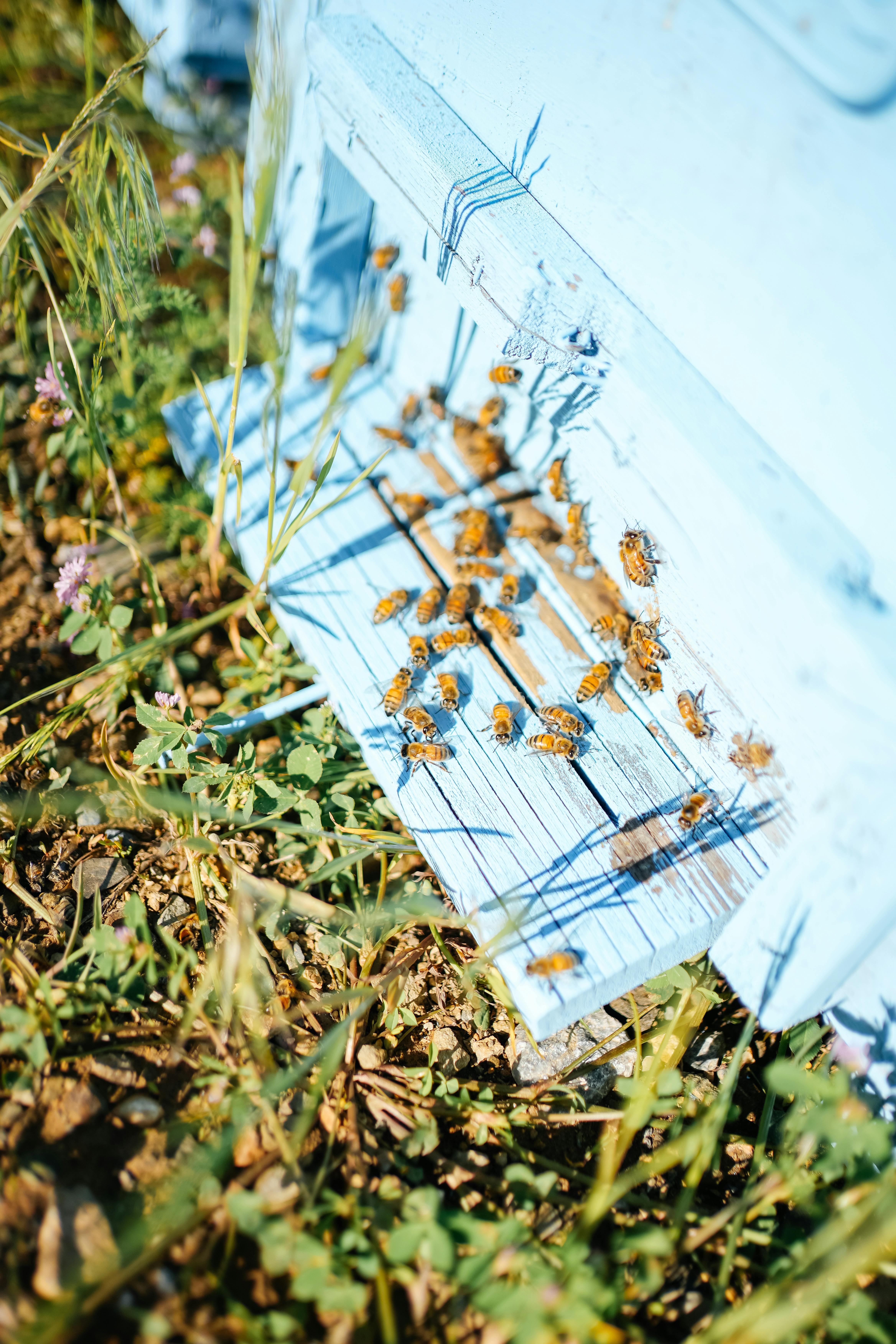
I grew up in Lithuania. My father kept bees. I watched him work the hives as a child and learned from him the way children learn from parents, not from books or instruction but from standing close and paying attention over many years.
What I didn't know then was how old what he was teaching me actually was. Beekeeping in Lithuania goes back centuries. The forests were thick with wild bees, and people learned to keep them, to harvest their honey, to understand their seasons and their needs. My father was part of a chain of beekeepers reaching back through his own parents, their parents, and generations before that.
When I moved to America and eventually settled in Massachusetts, I brought that knowledge with me. The techniques are the same. The bees are the same. The understanding of how to live alongside them is the same.
What changed is the context. And in that change, I've learned something about why beekeeping matters, not just as a business or a hobby, but as a way of being present with the living world.
Why my father kept bees
Quick answer: Beekeeping is a form of stewardship. It's not extracting from nature, but working with nature. The bees need a home. You give them one. They make honey. You harvest what you need, leaving plenty for them. It's a partnership that's worked for thousands of years.
My father didn't keep bees because he wanted to become wealthy or famous. He kept them because it was what you did. Because the bees needed homes and he could provide them. Because honey was needed in the household and you could make it yourself instead of trading for it. Because keeping bees connected him to the seasons, to the land, to something larger than himself.
Beekeeping in Lithuania wasn't a career path. It was part of living.
When you tend bees, you're on the bees' schedule. You check them in early spring, when they're coming out of winter. You add space when the colony grows. You harvest honey in late summer when the season is winding down. You prepare them for winter. You're paying attention to them all year.
This attention changes something in you. You become aware of what flowers are blooming. You notice when it rains, because that affects what the bees can forage. You think about what plants are growing nearby because the bees need them. You become aware of the weather, the seasons, the cycles of the year in a way that most people aren't anymore.
This awareness is not a luxury. It's the foundation of a life lived in real relationship with the world.
What beekeeping teaches
When you work with bees, they teach you things that no book can.
They teach patience. You can't rush a bee. The hive works on its own schedule. You learn to work with that schedule instead of trying to impose your own.
They teach respect. Bees will sting if they need to, and they should. Anger toward them is pointless. You learn to move slowly, to think about what you're doing, to respect the hive's boundaries.
They teach intelligence. Watch bees for a while and you realize they're solving complex problems. Finding flowers. Building comb. Feeding larvae. Maintaining temperature. These are not simple tasks, but thousands of bees solve them together, without a boss, without a plan written down. That organization is astounding.
They teach community. A bee has no life outside the hive. Every action serves the colony. This isn't sentimental. It's practical. Individual bees have no survival outside of community. Watching that teaches something real about what humans have forgotten.
Beekeeping as resistance
In a world of industrial agriculture, monoculture, pesticides, and supply chains so long you can't trace where your food comes from, beekeeping is a small act of resistance.
It says: I will know where this comes from. I will tend it myself. I will work with the living world instead of against it. I will pay attention.
It's not a solution to everything. One person's backyard bees doesn't heal agriculture. But it's a refusal to be passive. It's a choice to work with living things instead of consuming products made by someone else's hands.
Nettie's Bees started this way. Not as a business plan. As a continuation of what I learned from my father. As a way of staying connected to something true. The honey we sell isn't a commodity. It's a relationship. It comes from bees that live in hives we tend. It's traceable. It's real.
What I've learned in America
When I kept bees in Lithuania, it was ordinary. Everyone knew what bees were. Everyone understood honey.
In America, beekeeping became special. Almost exotic. People stop me at farmers markets and ask if I keep bees myself, as if it's a remarkable thing.
In a way, that's accurate. In a culture where food comes from a supply chain, where most people have no relationship with where their food comes from, keeping bees is remarkable. It's unusual to pay attention. It's unusual to know the source of something. It's unusual to work with living things directly.
But this unusual thing isn't new. It's ancient. It's what people did normally for thousands of years.
What's changed is that we've forgotten. And what's remarkable now would be ordinary if we remembered.
Why this matters to Nettie's Bees
Every jar of honey we sell carries this story. Not because it's marketing, but because it's true. The honey comes from bees that Nettie tends. She knows them. She knows the land they forage on. She knows the beekeepers we work with. It's not abstracted into a supply chain.
That's the point. That's what makes it different.
In a world that pushes toward bigger, faster, more abstracted, Nettie's Bees is small. It's local. It's personal. It requires knowing people and places and paying attention.
That's not a competitive advantage in the business sense. It's a choice about how to live. And it happens to produce honey that tastes like something real, because it is.


.jpg)
.jpg)