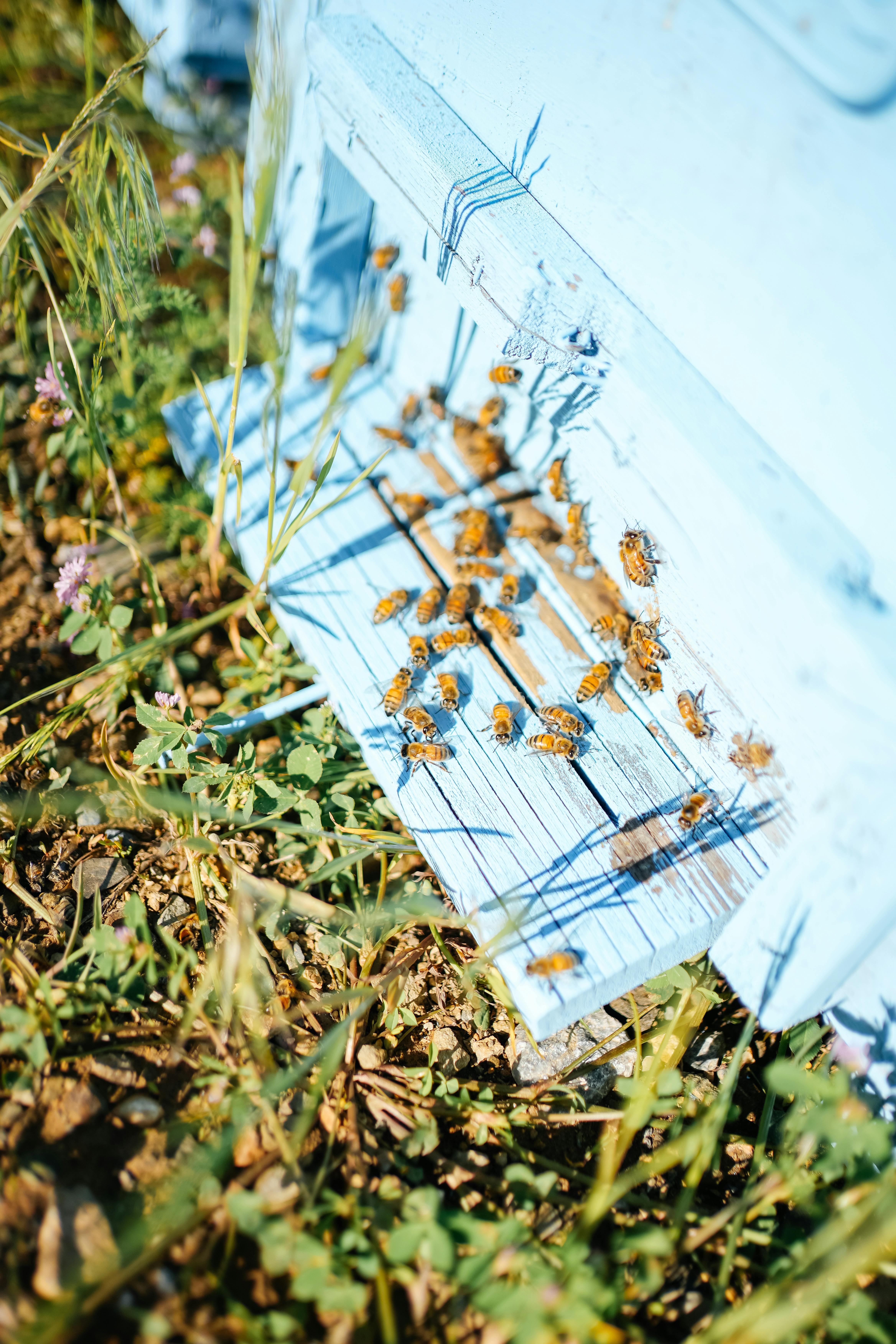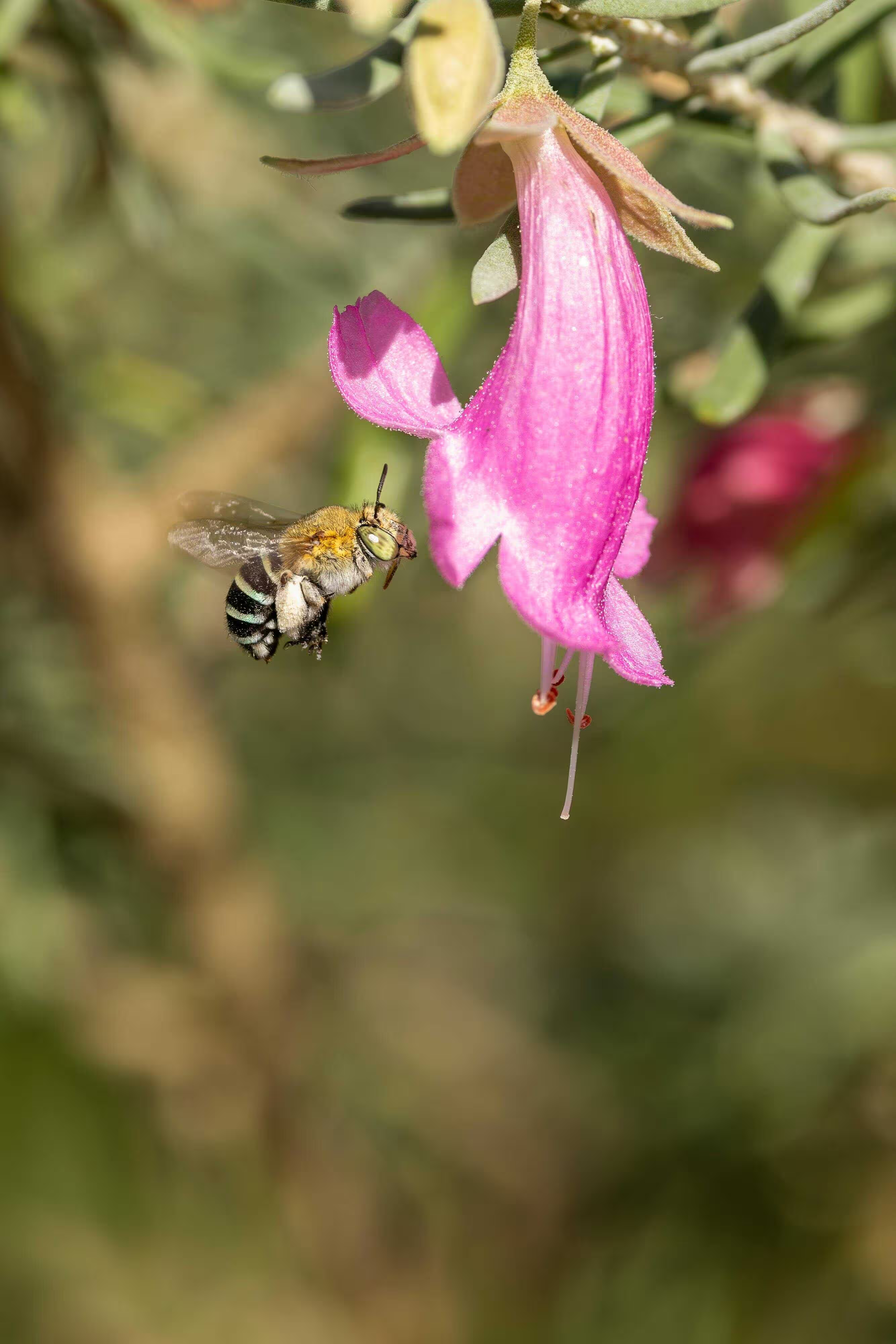
The bee you picture when someone says "bee", the striped, honey-making one, is not from here.
Apis mellifera, the Western honeybee, was brought to North America by European colonists in the early 1600s. The first recorded introduction was around 1622 in Virginia. Before that, North America had no honeybees. What it had were more than 4,000 native bee species that had been pollinating this continent for millions of years without producing any honey at all.
This surprises people. It's worth sitting with for a moment, because it changes how you think about bees, beekeeping, and what it means to "support pollinators."
What makes a bee "native"
A native bee is one that evolved in North America alongside native plants. Native plants and native bees developed together over millions of years, the plants producing pollen and nectar in forms that native bees could collect, the bees becoming specialized for the particular flower shapes, colors, and bloom times of local plants.
Honeybees are European. They do a good job pollinating many North American crops and flowers, but they didn't evolve here. They're not invasive in the traditional sense, they've been here for 400 years and play a real role in our food system, but they are, technically, a managed imported species.
Quick answer: Honeybees are not native to North America. They were brought from Europe in the early 1600s. North America has over 4,000 native bee species, including bumblebees, mason bees, sweat bees, and leafcutter bees. Native bees are often more efficient pollinators of native plants and wild crops than honeybees are.
A field guide to the native bees you've probably seen
The next time you're in a garden, look at who's actually visiting the flowers. You may be surprised how rarely you're looking at a honeybee.
Bumblebees (Bombus spp.): Large, fuzzy, slow-moving, with distinctive yellow and black banding. They form small colonies of 50 to 500 bees, usually underground. Bumblebees are native, and they're one of our most important pollinators. They're also one of the bees in most serious decline in North America.
Mason bees (Osmia spp.): Small, often metallic blue or orange-red, solitary nesters that use hollow stems or pre-drilled holes in wood. A single mason bee pollinates as much as 100 orchard bees. They're out early in spring, long before many other pollinators are active.
Leafcutter bees (Megachile spp.): You'll know one by the perfect semicircles cut out of your rose or hosta leaves. They use these leaf pieces to line their nest cells. Efficient pollinators, completely harmless.
Sweat bees (Halictidae): Tiny, sometimes metallic green, sometimes striped. They're attracted to salt in human perspiration, which is why they land on your arm on a hot day. Effective pollinators across many plant families.
Carpenter bees (Xylocopa spp.): Large, black, often hovering near wooden structures where they drill nesting holes. Males are territorial but have no stinger. Females rarely sting. Good pollinators of open-faced flowers like sunflowers and tomatoes.
How native bees and honeybees pollinate differently
Here's something most people don't know: many native crops, tomatoes, peppers, blueberries, cranberries, require a technique called buzz pollination, or sonication.
These plants hold their pollen tightly inside tube-shaped anthers with a small opening at the tip. To release the pollen, a bee needs to grab the anther and vibrate her flight muscles at around 400 hertz. The vibration shakes the pollen loose in a shower.
Honeybees cannot do this. Their wing vibration frequency during normal flight doesn't match what's needed. Bumblebees can. So can many other native bees.
This is why commercial tomato growers rent bumblebee colonies even when they have honeybee hives on the property. Honeybees are excellent generalist pollinators across hundreds of plant species. But for solanaceous crops, tomatoes, peppers, eggplant, and for blueberries and cranberries, native bees do something honeybees can't replicate.
Why native bees are in trouble
Several bumblebee species that were once common across North America have declined dramatically over the past 30 years. The rusty-patched bumblebee (Bombus affinis), once found across much of the eastern US, is now federally listed as endangered. It's lost 87 percent of its historic range.
The causes are overlapping: habitat loss (no nesting sites, no diverse flowering plants), pesticide exposure including insecticides and fungicides, disease introduced through managed bumblebee colonies, and, in some ecosystems, competition from high-density honeybee populations.
That last point is worth being clear-eyed about. In areas where beekeepers place very high densities of honeybee colonies, it can affect forage availability for native bees. This isn't an argument against keeping honeybees, it's an argument for thoughtful hive placement, for supporting diverse habitat, and for understanding that beekeeping and native bee conservation are complementary, not identical, goals.
Why caring about one doesn't mean ignoring the other
Honeybees and native bees face different challenges and serve different ecological roles. Keeping honeybees is good, for pollination, for honey, for the beekeeping knowledge and culture that comes with it. Supporting native bee habitat is also good, and it doesn't require you to stop doing the first thing.
The two go together on a healthy farm or in a thoughtful garden. Honeybees working the top of the white clover. Bumblebees working the tomato flowers. Mason bees in the apple orchard. Sweat bees in the wildflower patch. Each doing something slightly different, covering the full range of what a flowering landscape needs.
Near the cranberry bogs in Massachusetts, this plays out every summer. Honeybees work the open faces of the cranberry flowers. Bumblebees buzz-pollinate them. Both are necessary. Neither is sufficient on its own.
What you can actually do
The most direct thing anyone can do for native bees costs almost nothing: plant native flowering plants, leave some bare ground for ground-nesting bees (which make up roughly 70 percent of all native bee species), and stop removing hollow stems in fall. Dead-heading everything and mulching every square inch of soil eliminates nesting habitat for dozens of species.
Beyond that: reduce pesticide use, buy local honey from beekeepers who practice thoughtfully, and learn to recognize the bees you see. The bumblebee on your sunflower has a name. It matters. Knowing that changes how you garden.
Frequently asked questions
Are honeybees native to North America?
No. Honeybees (Apis mellifera) are native to Europe, Africa, and western Asia. They were introduced to North America by European colonists starting around 1622. For the full story of how beekeeping traveled across cultures and centuries, see The History of Beekeeping. Before that arrival, North America had no honeybees, only its 4,000-plus native bee species.
What is the difference between a honeybee and a bumblebee?
Honeybees are slender, yellow and brown, and live in large colonies of up to 60,000. They are not native to North America. Bumblebees are native, larger, rounder, and fuzzier, live in small colonies of 50 to 500, and can perform buzz pollination that honeybees cannot. Only one bumblebee queen survives winter, starting a new colony each spring.
What are native bees?
Native bees are bee species that evolved in North America alongside native plants. There are over 4,000 species in North America, ranging from the large bumblebee to tiny sweat bees less than 5mm long. Most are solitary, nesting in ground burrows or hollow stems rather than in colonies.
Are native bees better pollinators than honeybees?
It depends on the crop. For buzz-pollinated plants like tomatoes, blueberries, and cranberries, native bees like bumblebees are more effective than honeybees. For large-scale agriculture across many crop types, honeybees' large colonies and generalist foraging make them the primary managed pollinator. For native plants and wild ecosystems, native bees are generally better matched to the specific plants.
Why are native bees declining?
The primary causes are habitat loss (development eliminating nesting sites and diverse forage), pesticide exposure, disease, and climate disruption of bloom timing. Some bumblebee species have also been affected by pathogens introduced through commercial bumblebee breeding operations.
How can I tell a honeybee from a native bee?
Honeybees are slender, brownish-orange and black, about 15mm long, and often carry yellow pollen in baskets on their hind legs. Native bees vary enormously: bumblebees are large and fuzzy; mason bees are small and metallic; sweat bees are tiny and sometimes iridescent green. A good field guide or iNaturalist can help with identification.


.jpg)
.jpg)