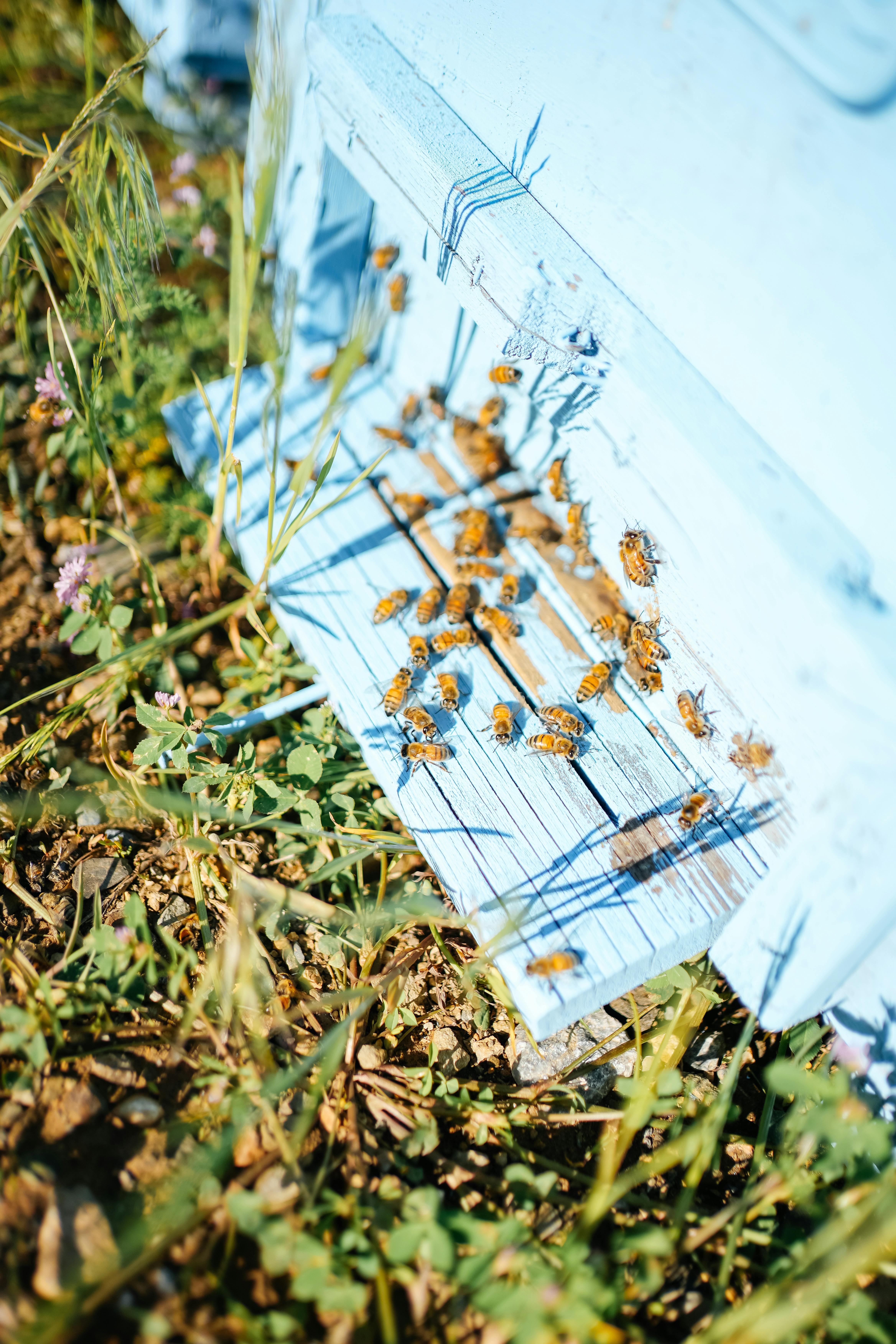
Raw honey is sometimes described as a "living food." That language is a little dramatic, but it points at something real. The enzymes in raw honey are active, they are doing things. Breaking down sugars. Producing antimicrobial compounds. Shaping flavor. And they are one of the first casualties of commercial processing.
Here is what is actually going on.
What Are Enzymes and Why Does Honey Have Them?
Enzymes are proteins that act as catalysts, they speed up chemical reactions without being consumed in the process. Think of them as specialized tools, each designed for a specific job.
Honey contains enzymes from two sources. The primary source is bees themselves. As honeybees collect nectar, they add enzymes from their hypopharyngeal glands (specialized glands in the head). These bee-produced enzymes drive most of the transformation that turns watery nectar into shelf-stable honey. A smaller contribution comes from the flower nectar itself.
The ripening process (where bees fan their wings to evaporate moisture and gradually transform the composition of the nectar) develops and concentrates this enzymatic activity over several weeks. By the time the cells are capped with wax, the honey's sugar chemistry has been fundamentally changed from what the bees collected.
What Are the Main Enzymes in Honey?
Diastase (also called amylase) breaks down complex starches into simpler sugars. There is not much starch in nectar, but diastase matters for two reasons: it assists in digesting pollen particles present in honey, and it has become the standard international quality marker for honey.
The "diastase number" (DN) measures how much starch the diastase in 100g of honey can break down in one hour under controlled conditions. The Codex Alimentarius (the international food standards body) requires a minimum DN of 8 for high-quality honey. Heat destroys diastase readily, making it a reliable indicator of whether honey has been exposed to high temperatures.
Invertase converts sucrose (the main sugar in flower nectar) into glucose and fructose. This is the transformation that gives honey its characteristic sweetness profile. Invertase activity continues slowly even after harvest, which is why honey's sugar composition can shift subtly during long-term storage. It is extremely sensitive to heat, one of the best signals that honey has not been processed at high temperatures.
Glucose oxidase is the most remarkable of the group. It converts glucose into gluconic acid and produces hydrogen peroxide as a byproduct. That hydrogen peroxide is the source of honey's well-documented antimicrobial properties.
When honey is diluted slightly (as happens when it contacts body fluids or is applied to a wound) glucose oxidase activates and produces a slow, sustained release of hydrogen peroxide. Research published in Frontiers in Microbiology confirmed this enzymatic mechanism contributes significantly to honey's effectiveness against bacteria, including some antibiotic-resistant strains. The concentration is gentle enough not to damage tissue, unlike the 3% solution in a medicine cabinet.
Catalase works in balance with glucose oxidase. It breaks down hydrogen peroxide into water and oxygen, helping regulate how much hydrogen peroxide is present in honey at any time. Different honey varieties have different glucose oxidase to catalase ratios, which is one reason some varieties (like manuka) have stronger antimicrobial properties than others.
Several other enzymes are also present (acid phosphatase, various proteases, esterases) each contributing in smaller ways to honey's overall character.
Do Honey Enzymes Actually Matter for Health?
Directly, in modest ways. Raw honey is not a concentrated enzyme supplement, the amounts are relatively small compared to dedicated digestive enzyme products.
What they do: the amylase and invertase may provide mild assistance with carbohydrate digestion when honey is eaten with a meal. The glucose oxidase system creates the antimicrobial environment that has made honey useful for wound care and respiratory symptom relief across cultures for thousands of years. Some enzymes also participate in reactions that produce or preserve antioxidant compounds in honey.
The more important thing they do is serve as a quality signal. High enzyme activity means the honey has not been subjected to high heat or heavy processing. When you buy raw honey specifically because of its properties, enzyme levels are a proxy for all of it.
What Happens to Enzymes When Honey Is Heated?
Enzymes are proteins with specific three-dimensional structures. Heat unfolds those structures. Once unfolded, they no longer function, a process called denaturation.
The research is specific about temperature thresholds:
- Above 104°F (40°C): measurable enzyme degradation begins
- At 122°F (50°C): significant activity is lost within hours
- Above 140°F (60°C): most enzyme activity is rapidly destroyed
Commercial honey processing typically heats honey to 145-160°F (63-71°C). The purpose is to make it easier to filter, delay crystallization, create uniform appearance, and extend shelf life. A study published in Food Chemistry found that heating significantly reduced diastase activity, with the degree of reduction depending on temperature and exposure time. Glucose oxidase, the antimicrobial enzyme, is similarly heat-sensitive and shows substantial losses under standard processing conditions.
This is not a subtle difference. Commercial processing fundamentally changes the biochemical character of the product.
Is There Less in Processed Honey Than People Realize?
Yes. Beyond enzymes, processing affects:
- Volatile aromatic compounds that contribute to flavor and aroma (they evaporate under heat)
- Bee-added beneficial microorganisms (eliminated by pasteurization)
- Heat-sensitive B vitamins
- Antioxidant compounds that degrade under heat
Heavily processed honey is primarily a sweetener. That is a legitimate product. But it is not the same thing as raw honey, regardless of what a label says.
How Do Enzymes Affect Honey's Flavor?
Meaningfully. The enzymatic reactions during ripening and storage release and create aromatic molecules that contribute to a honey's distinct taste and smell. Research published in the Journal of Agricultural and Food Chemistry found correlations between specific enzyme activities and the development of flavor compounds in varietal honeys.
Different floral sources produce different enzyme profiles, which partially explains why buckwheat tastes nothing like clover honey, even accounting for floral differences. The enzymes are shaping the chemistry throughout.
How to Preserve Enzymes in Your Raw Honey
The main threats are heat and time. Here is how to minimize both:
Storage temperature: Room temperature (50-70°F) is ideal. Refrigeration is not necessary and actually accelerates crystallization. Direct heat (near a stove, in a warm pantry) should be avoided.
Light: Store in a dark location. Light can degrade some of the more sensitive compounds.
Containers: Glass over plastic where possible.
When the honey crystallizes: Place the jar in a bowl of warm water (water temperature well below 104°F) and let it sit until the crystals dissolve. Change the water if it cools. Do not microwave. Microwaving creates uneven hot spots that can exceed the damage threshold even if the overall temperature seems moderate.
Even well-stored raw honey loses some enzyme activity over time. Research in the Journal of Food Science found diastase activity may decrease by 10-30% over a year at room temperature. But well-preserved raw honey maintains significantly higher activity than processed honey, even after extended storage.
When to Use Raw Honey to Preserve Its Enzymes
Add raw honey to warm beverages after they have cooled slightly, below 104°F means you can hold your hand comfortably against the outside of the cup. For tea, let it sit a minute after steeping before stirring in honey.
For therapeutic uses (soothing a sore throat, using as a cough remedy, taking before bed) room-temperature honey taken directly or in just-warm liquid preserves everything.
For high-heat baking and cooking, the enzymes will be destroyed regardless of which honey you use. No reason to use premium raw honey in a recipe where it is going into a 350°F oven. Save it for uses where the properties you paid for are actually preserved.
At Nettie's Bees, we extract and bottle honey at or below 95°F (hive temperature) for exactly this reason. The people we source from take care with how they harvest. We take care with how we handle it. The enzymes you read about in this article are the reason for both.


.jpg)
.jpg)