Buying Honey in Bulk: For Restaurants, Mead, Baking and Wedding Favors
Honey goes a long way, but some projects need a lot of it: a bakery that sweetens everything with honey, a meadery fermenting hundreds of gallons, an herbalist making elderberry syrup for the season, or a couple handing out a little jar of local honey to every wedding guest. Buying in bulk is cheaper per pound and means fewer trips.
Quick answer: Bulk honey usually comes in 5-gallon pails, which hold about 60 pounds, or larger drums for commercial users. Honey weighs about 12 pounds per gallon, so plan by weight. Mead takes roughly 2.5 to 4 pounds of honey per gallon; a 2-ounce favor jar holds 2 ounces by weight, so 60 pounds fills about 480 of them. Store bulk honey sealed at room temperature, and warm crystallized pails gently, below about 105°F, to keep raw honey raw.
What sizes does bulk honey come in?
| Container | Approximate honey weight | Good for |
|---|---|---|
| Quart jar | 3 pounds | Heavy home use, small baking projects |
| 1-gallon jug or pail | 12 pounds | Home brewers, small bakeries, events |
| 5-gallon pail | 60 pounds | Restaurants, meaderies, herbal makers, big events |
| 55-gallon drum | About 650 pounds | Large food manufacturers |
Honey is sold by weight, not volume, because it’s so dense: a cup weighs about 12 ounces (339 grams).
How much honey do you need?
For wedding or party favors
Favor jars are labeled by weight, so a “2-ounce jar” holds 2 ounces of honey.
- 100 guests with 2-ounce jars: about 12.5 pounds
- 150 guests with 2-ounce jars: about 19 pounds
- 150 guests with 4-ounce jars: about 38 pounds
Add 5 to 10 percent for spills and the jars that end up on the head table. A clear, light honey looks brightest in small jars; a creamed honey won’t drip when guests open them on the way home.
For mead
Mead is fermented honey and water. Rough guide per gallon of mead:
- Dry mead: about 2.5 to 3 pounds of honey
- Semi-sweet: about 3 to 3.5 pounds
- Sweet or dessert mead: about 3.5 to 4 pounds or more
So a 5-gallon batch takes roughly 12 to 20 pounds. Many mead makers prefer raw, unheated honey because it keeps more of its floral aroma. See what is mead.
For baking
Most recipes swap about 3/4 cup of honey for each cup of sugar, reducing other liquids by about 1/4 cup and lowering the oven 25°F. A bakery making a few dozen honey loaves a week can easily go through a 5-gallon pail a month. See baking with honey.
For herbal products
Elderberry syrups often use about 1/2 to 1 cup of honey per batch of 3 to 4 cups of liquid. Herbal makers usually prefer raw honey for its intact enzymes. See foraging elderberries.
How do you store bulk honey?
- Keep containers sealed to keep out moisture, which can cause fermentation.
- Store at room temperature, ideally 65 to 75°F, out of direct sun.
- Keep pails off cold concrete floors, which speed crystallization.
- Use clean, dry scoops and pumps every time.
Sealed raw honey keeps for years, though it will crystallize. See how to store raw honey.
What do you do when a pail of honey crystallizes?
It will, eventually; that’s normal for raw honey. To make it pourable:
- Set the pail somewhere warm, or use a bucket heater or warming blanket set low.
- Keep the honey below about 105°F if you want it to stay raw, and be patient; a full pail can take a day or more.
- Stir occasionally once the edges soften.
- Never use direct flame or a boiling-water bath on a plastic pail.
Or embrace it: crystallized honey is easy to scoop and works fine in baking and brewing. See crystallized honey.
What should you ask a bulk honey supplier?
- Where is the honey from? Ask for the region and, ideally, the beekeeper.
- Is it raw? Has it been heated, and to what temperature? Is it strained or filtered?
- What variety, and will it be consistent? Seasonal honeys vary in color and flavor.
- Can it be blended for a consistent color or flavor across the year?
- What’s the moisture content? Below 18.6% (Grade A) keeps best and ferments least.
- What containers and lead times do they offer?
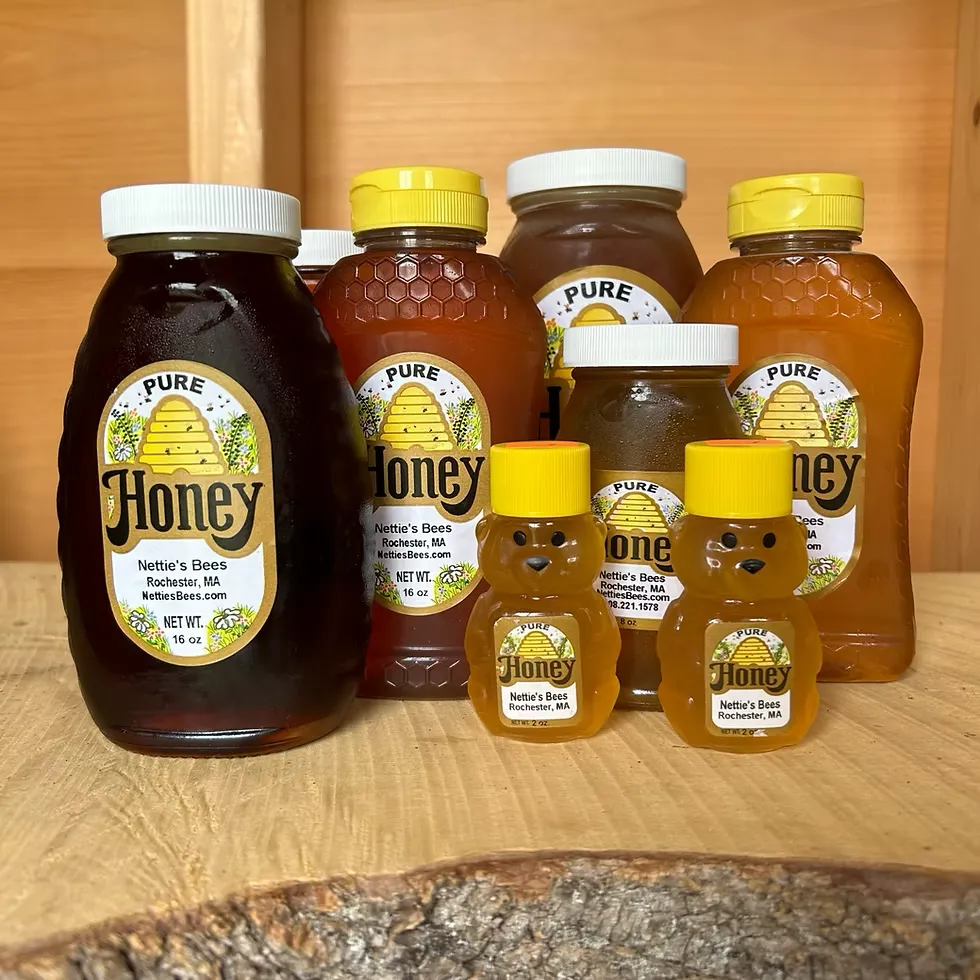
At Nettie’s Bees, our bulk honey comes from local South Coast hives, is never heated above natural hive temperatures, and we can work with you on custom blends. We keep our core varieties available year-round, with seasonal specialties in limited amounts. See bulk honey sales.
Frequently asked questions
How much does a 5-gallon bucket of honey weigh?
About 60 pounds of honey, plus the weight of the pail. Honey weighs roughly 12 pounds per gallon.
Is bulk honey cheaper?
Yes, per pound. Bulk buyers skip the cost of small jars, labels and individual handling. Prices vary by variety, season and quantity; ask for a quote.
Can I buy raw honey in bulk?
Yes. Many local beekeepers sell raw honey in gallons and 5-gallon pails. Make sure it’s unheated and only strained.
How long does bulk honey last?
Indefinitely if sealed and kept dry. It will crystallize over time, which doesn’t affect safety or quality.
What honey is best for wedding favors?
A light, mild honey like clover or blueberry looks bright in small jars and pleases most guests. Local honey adds a story; creamed honey avoids drips.
Sources
- National Honey Board, honey conversions and food service resources.
- USDA Agricultural Marketing Service, U.S. Standards for Grades of Extracted Honey.
Whatever you’re making, good honey makes it better. If you need more than a few jars, get in touch and we’ll help you figure out how much you need.