Found a Swarm of Bees? What to Do (South Coast Massachusetts)
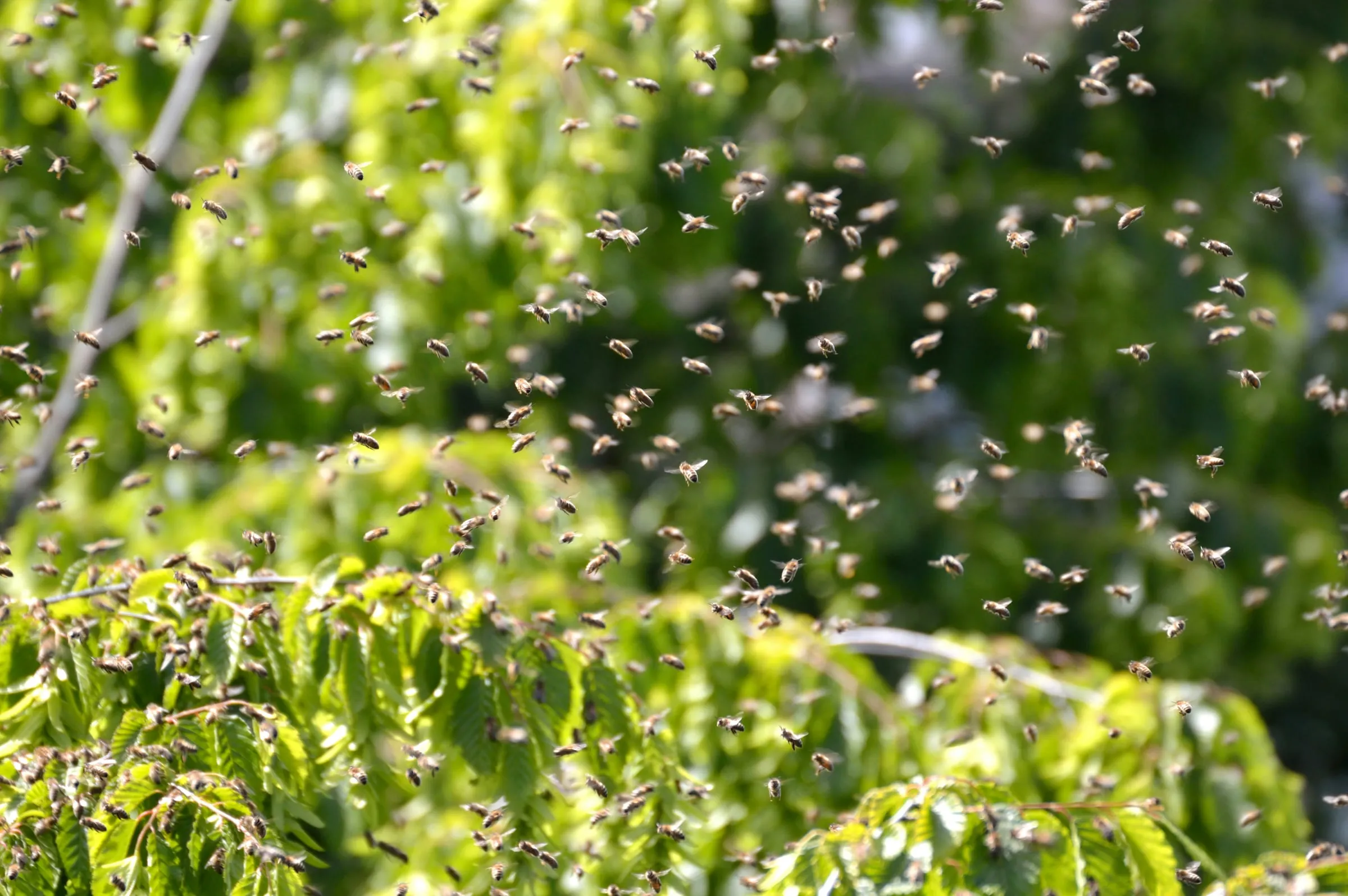
Every spring, someone on the South Coast looks out the window and finds thousands of bees hanging from a tree. The right response is almost always: stay calm, keep the kids and dogs back, and call a beekeeper. A swarm is one of the most remarkable things you’ll ever see in your yard, and in most cases it’s not dangerous at all.
Quick answer: If you find a cluster of honeybees hanging from a branch, fence or eave, it’s most likely a swarm resting while scouts look for a new home. Keep people and pets about 20 feet away, don’t spray, swat or throw water at it, take a photo, and call a local beekeeper quickly, since swarms often move on within one to three days. On the South Coast of Massachusetts, call or text Nettie’s Bees at (508) 221-1578; swarm removal is free in most accessible locations.
What is a bee swarm?
A swarm is how honeybee colonies reproduce. When a hive gets crowded in spring, the old queen leaves with roughly half the colony’s workers, while the bees left behind raise a new queen. The departing bees fill up on honey before they go, fly out in a roaring cloud, and settle together in a cluster, often on a tree branch, shrub, fence post or the side of a house.
From there, scout bees fly off to inspect possible homes: hollow trees, empty hives, wall cavities. When they agree on one, usually within a day or two, the whole swarm takes off and moves in. Our post on how a bee swarm works explains the fascinating decision-making behind it.
On the South Coast, swarm season runs mostly from April through June, peaking in May and early June.
Are swarming bees dangerous?
Swarming honeybees are usually at their gentlest. They have no hive, no honey and no young to defend, and they’re full of honey. People walk past swarms every spring without being stung. That said, they will defend themselves if disturbed, so give them space.
What should you do if you find a swarm?
- Stay calm and keep back. Keep people and pets about 20 feet away.
- Don’t spray, swat, poke or hose it. That’s the surest way to get stung, and it kills bees that can be saved.
- Take a photo. It helps a beekeeper confirm it’s honeybees and plan the collection.
- Note the details: how high the cluster is, what it’s on, about how big it is (softball, football or basketball size), and how long it’s been there.
- Call or text a beekeeper right away. Swarms usually stay 24 to 72 hours, sometimes less. On the South Coast, call or text us at (508) 221-1578.
Is it honeybees or wasps?
Honeybees are fuzzy and golden-brown, and a swarm is an exposed cluster of bees with no nest around it. Wasps and yellowjackets are smooth and shiny with bright yellow and black markings, and they live in paper nests. If you see a gray papery ball or bees going in and out of a hole in the ground, it’s not a honeybee swarm. See honeybee vs wasp vs yellowjacket.
We collect honeybees only. For wasps, hornets and yellowjackets, contact a pest control professional.
What happens when a beekeeper collects a swarm?
Usually it’s quick and calm. The beekeeper places a box under the cluster and gives the branch a sharp shake, or gently brushes the bees in. Once the queen is inside, the rest of the bees follow, often fanning at the entrance to call the stragglers. We may leave the box until evening, when every bee has come in.
The swarm then goes to one of our apiaries, into a proper hive, where it can grow into a healthy colony. Many rescued swarms become strong honey producers and pollinators.
What if the bees have moved into my walls?
Then it’s no longer a swarm but an established colony, and removing it, called a cut-out, can mean opening walls or soffits. We usually don’t take on jobs that need carpentry, but send us photos and we’ll tell you if we can help. Don’t seal the entrance: trapped bees may find their way indoors, and abandoned honey and comb can attract pests. See bees in your wall or chimney for what to do next.
Why not just spray them?
Honeybees are valuable pollinators, and a swarm is a healthy colony that can be saved. Spraying kills tens of thousands of bees, can leave honey and wax that attract pests, and in some places killing honeybees unnecessarily may break local rules. A beekeeper can usually remove a swarm in less time than it takes to buy insecticide.
Frequently asked questions
How long will a swarm stay?
Typically 24 to 72 hours, sometimes up to a week in bad weather. Some leave within hours. Call as soon as you see one.
Does swarm removal cost anything?
Nettie’s Bees offers free swarm removal in most accessible locations within our service area. Swarms high in trees or in hard-to-reach spots may need special arrangements.
What should I do if bees are flying around but not clustered?
A swarm in flight looks like a loud, swirling cloud. Stay indoors or keep your distance; it will usually settle in a cluster within 15 to 30 minutes. Then call a beekeeper.
Will the swarm come back next year?
Not the same bees. But if your yard has a good spot, like a hollow tree, other swarms may be attracted to it. A beekeeper can suggest how to make it less inviting.
Which towns do you cover?
We serve the South Coast of Massachusetts, including Rochester, Marion, Wareham, Fairhaven, Dartmouth, New Bedford and Fall River, plus Tiverton, Rhode Island. Call us to check your location.
Sources
- Seeley TD. Honeybee Democracy. Princeton University Press, 2010.
- Penn State Extension, honey bee swarms and what to do.
A swarm is one of nature’s great spectacles. Take a picture, keep your distance, and give us a call at (508) 221-1578. We’ll take it from there.