Honeybee, Wasp or Yellowjacket? How to Tell Them Apart
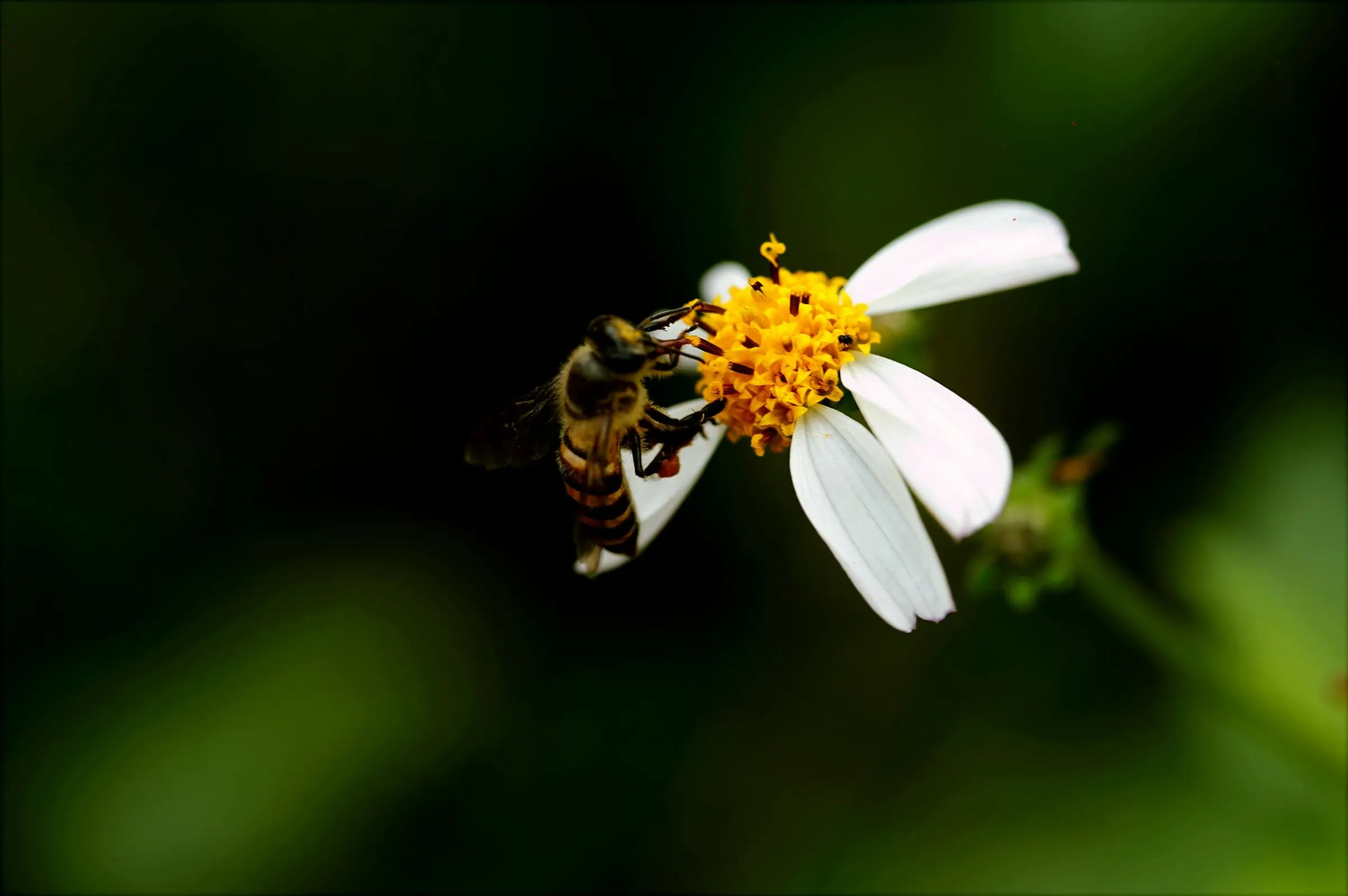
When something buzzes near your lemonade in August, it’s tempting to call it a bee. Most of the time, though, the insect bothering your picnic is a yellowjacket, a wasp that loves sugar and meat. Telling them apart matters: honeybees and bumblebees are gentle pollinators worth protecting, while a yellowjacket nest by your back door is a problem to deal with.
Quick answer: Honeybees are fuzzy, golden-brown and about half an inch long, with a rounded body and no obvious waist. Wasps and yellowjackets are smooth and shiny, with bright yellow-and-black or brown markings and a narrow “waist.” Honeybees build wax comb inside cavities or hives; wasps build paper nests. Honeybees sting only to defend their hive and die after stinging people; yellowjackets can sting repeatedly and get aggressive around food in late summer.
Bees vs wasps at a glance
| Honeybee | Bumblebee | Yellowjacket | Paper wasp | Bald-faced hornet | |
|---|---|---|---|---|---|
| Body | Fuzzy, golden-brown with muted stripes | Large, round, very fuzzy, black and yellow | Smooth, shiny, bright yellow and black | Long, slender, brown with yellow or red marks | Black and white, larger |
| Waist | Barely visible | Barely visible | Narrow | Very narrow, long dangling legs | Narrow |
| Nest | Wax comb in hollow trees, walls, hives | Small nests in the ground, old burrows | Paper nests, often underground or in walls | Open, umbrella-shaped paper comb under eaves | Large gray paper ball in trees or shrubs |
| Diet | Nectar and pollen | Nectar and pollen | Insects, meat, sugary food and drinks | Insects, nectar | Insects, nectar |
| Temperament | Gentle away from hive | Gentle | Defensive, especially late summer | Mostly calm unless nest disturbed | Very defensive near nest |
| Sting | Barbed; dies after stinging people | Can sting more than once | Stings repeatedly | Stings repeatedly | Stings repeatedly |
How do you tell a honeybee from a yellowjacket?
Look at three things:
- Fuzz. Honeybees are covered in fine hairs that catch pollen. Yellowjackets look smooth and glossy, almost plastic.
- Color. Honeybees are golden-brown to amber, with soft, muted stripes. Yellowjackets are bright, sharp yellow and black.
- What they’re doing. A honeybee on a flower is collecting nectar or pollen, often with pollen packed on her legs. A yellowjacket hovering over your hamburger or soda can is hunting for protein and sugar.
What about bumblebees and carpenter bees?
Bumblebees are big, round and fuzzy, and they’re among our best pollinators. They nest in small colonies in the ground and are rarely aggressive.
Carpenter bees look like bumblebees but have a shiny, mostly bare black abdomen. They bore neat round holes in wooden decks and eaves. Males hover aggressively but can’t sting; females rarely do. See bumble bee vs. honey bee vs. carpenter bee and our carpenter bee guide.
How do you tell the nests apart?
- Honeybees build wax honeycomb inside an enclosed space: a hollow tree, a wall cavity, or a beekeeper’s hive. A honeybee swarm hangs in the open as a cluster of bees with no nest at all.
- Yellowjackets usually nest underground or inside walls, with bees zipping in and out of a single hole.
- Paper wasps build small, open, umbrella-shaped combs under eaves, railings and grills.
- Bald-faced hornets build big, gray, football-shaped paper nests in trees and shrubs.
Which stings worse?
Pain varies by person and place on the body. The practical difference: a honeybee leaves her barbed stinger in your skin and dies, so you get one sting from one bee. Yellowjackets and hornets keep their smooth stingers and can sting again and again. See bee stings: what to do for first aid.
What should you do about each?
- Honeybee swarm or colony: call a beekeeper. On the South Coast, call or text Nettie’s Bees at (508) 221-1578. See found a bee swarm.
- Bumblebees or other native bees: leave them be if you can; they’re valuable pollinators and their nests are temporary.
- Yellowjackets, hornets or paper wasps near the house: contact a pest control professional, or deal with small nests carefully at night when wasps are inside. We don’t remove wasps.
Frequently asked questions
Are yellowjackets bees?
No. Yellowjackets are wasps. They’re often called “bees” because of their yellow-and-black color, but they’re predators and scavengers that don’t make honey.
Why are yellowjackets so aggressive in late summer?
By August and September their colonies are at peak size and the queen has stopped laying, so workers switch from hunting insects to seeking sugar. That’s when they crowd picnics, trash cans and drinks. Read more on why yellow jackets get aggressive in late summer.
Do honeybees make nests in the ground?
No. Honeybees nest in enclosed cavities above ground. Bees going in and out of a hole in the lawn are likely yellowjackets or solitary native bees.
What does a honeybee swarm look like?
A cluster of thousands of bees, often the size of a football or bigger, hanging from a branch, fence or eave, with no nest around it. It’s usually calm and moves on within a day or two.
Can I tell honeybees from wasps by the buzz?
Not reliably. Look at the body, the nest and what the insect is doing instead.
Sources
- Penn State Extension, stinging insects: bees, wasps and hornets.
- University of Massachusetts Extension, yellowjackets and hornets fact sheet.
Once you know what to look for, the difference jumps out. And if it’s honeybees, we’d love to give them a good home.