Varroa Mites: The Biggest Threat Inside the Hive
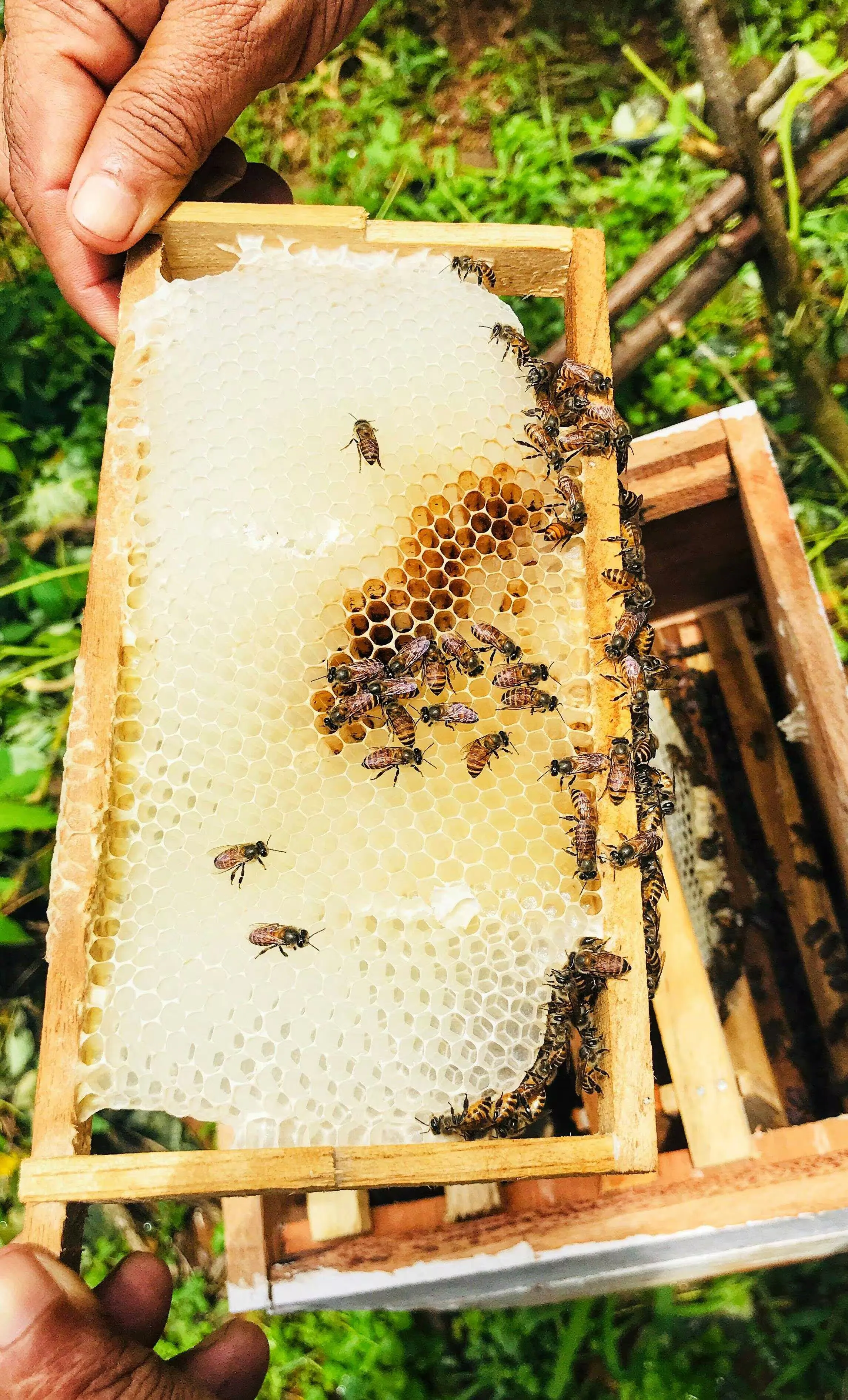
Ask almost any beekeeper what keeps them up at night and the answer is the same: varroa. This tiny reddish-brown mite, about the size of a pinhead, has changed beekeeping more than anything else in the last 40 years. A colony that looks strong in August can collapse by November if mites go unchecked.
Quick answer: Varroa mites (Varroa destructor) are parasites that feed on honeybees and their developing young, mainly on the bees’ fat body, and spread viruses such as deformed wing virus. They reproduce inside capped brood cells, especially drone cells. Untreated colonies usually die within one to three years. Beekeepers monitor mites by sampling about 300 bees with an alcohol wash or sugar roll and treat when counts pass roughly 2 to 3 mites per 100 bees, especially by late summer to protect winter bees.
Where did varroa mites come from?
Varroa mites originally lived on the Asian honeybee (Apis cerana), which evolved defenses against them. In the 20th century, as Western honeybees (Apis mellifera) were moved around the world, the mite jumped species. Western honeybees had little defense. Varroa reached the United States in 1987 and is now in nearly every colony in North America.
How do varroa mites harm bees?
- Feeding. Mites feed on bees’ fat body tissue, which bees rely on for immunity, detoxifying pesticides and surviving winter. A 2019 study in PNAS by Samuel Ramsey and colleagues showed this, overturning the old belief that mites drink bee blood.
- Spreading viruses. Mites carry and inject viruses, especially deformed wing virus, which cripples bees’ wings. A 2016 study in Science (Wilfert and colleagues) traced the worldwide spread of deformed wing virus to varroa.
- Weakening winter bees. Bees raised in late summer must live for months. Mite damage shortens their lives, so the colony dwindles in winter.
How do varroa mites reproduce?
A female mite slips into a brood cell just before workers cap it. Inside, she lays eggs; her offspring feed on the developing bee and mate before the bee emerges. Drone cells stay capped longer, so mites prefer them and produce more offspring there. Mite numbers can double every few weeks in summer as brood rearing peaks.
What are the signs of a varroa problem?
- Bees with shriveled, deformed wings
- Spotty brood pattern, with sunken or chewed cappings
- Bees crawling at the entrance, unable to fly
- Mites visible on adult bees (by then, counts are usually high)
- A strong colony that shrinks fast in fall
Don’t wait for signs. By the time you see deformed wings, the infestation is serious.
How do you count varroa mites?
The Honey Bee Health Coalition’s guide, Tools for Varroa Management, explains the standard methods:
- Alcohol wash. Scoop about 1/2 cup of bees (roughly 300) from a brood frame into a jar with rubbing alcohol, shake, and count the mites that fall off. Accurate, but kills the sample.
- Sugar roll. Same sample, shaken in powdered sugar instead; the bees survive. Slightly less accurate.
- Sticky board. A board under a screened bottom catches falling mites over a few days. Useful for trends, less precise.
Divide mites by bees and multiply by 100 to get mites per 100 bees. Many guidelines treat 2 to 3 mites per 100 bees as a level that calls for action in late summer.
How do beekeepers control varroa?
Most beekeepers use integrated pest management (IPM), combining methods and treating only when monitoring shows a need.
- Organic acids: oxalic acid and formic acid, naturally occurring compounds used as treatments.
- Essential-oil treatments: thymol-based products.
- Hop beta acids: from the hop plant.
- Synthetic miticides: such as amitraz; effective, but mites can develop resistance if they’re overused.
- Drone brood removal: trapping mites in drone comb and removing it.
- Brood breaks: briefly stopping egg-laying so mites have nowhere to reproduce.
- Resistant stock: bees bred for mite-fighting traits, like VSH (Varroa Sensitive Hygiene) and Russian bees.
Always follow the label; in the U.S., the label is the law for pesticides. Timing matters most: treat by late summer so the long-lived winter bees grow up healthy.
Frequently asked questions
Can bees survive varroa without treatment?
Most managed colonies in North America die within one to three years without mite control. Some wild colonies and bred lines survive with fewer mites, and researchers are working to spread those traits.
Do varroa mites affect honey?
They don’t contaminate honey, but beekeepers shouldn’t apply most treatments while honey boxes are on the hive, to keep residues out of the honey. Follow the label.
Are varroa mites harmful to people?
No. Varroa only parasitize honeybees.
Can bees remove mites themselves?
Some bees groom mites off each other or uncap and clean out infested brood. Breeding for those hygienic behaviors is a key long-term strategy.
When should I check for mites?
At least monthly during the active season, and especially in late summer before winter bees are raised, and again after treatment.
Sources
- Honey Bee Health Coalition. Tools for Varroa Management, current edition.
- Ramsey SD et al. “Varroa destructor feeds primarily on honey bee fat body tissue and not hemolymph.” PNAS, 2019. PubMed
- Wilfert L et al. “Deformed wing virus is a recent global epidemic in honeybees driven by Varroa mites.” Science, 2016. PubMed
- Rosenkranz P, Aumeier P, Ziegelmann B. “Biology and control of Varroa destructor.” Journal of Invertebrate Pathology, 2010. PubMed
Varroa is a fight every beekeeper takes on, every year. Counting mites is the single best habit a beekeeper can build. Our beekeeping for beginners guide and colony collapse post explain more.