Beekeeping for Beginners: A Complete First-Year Guide
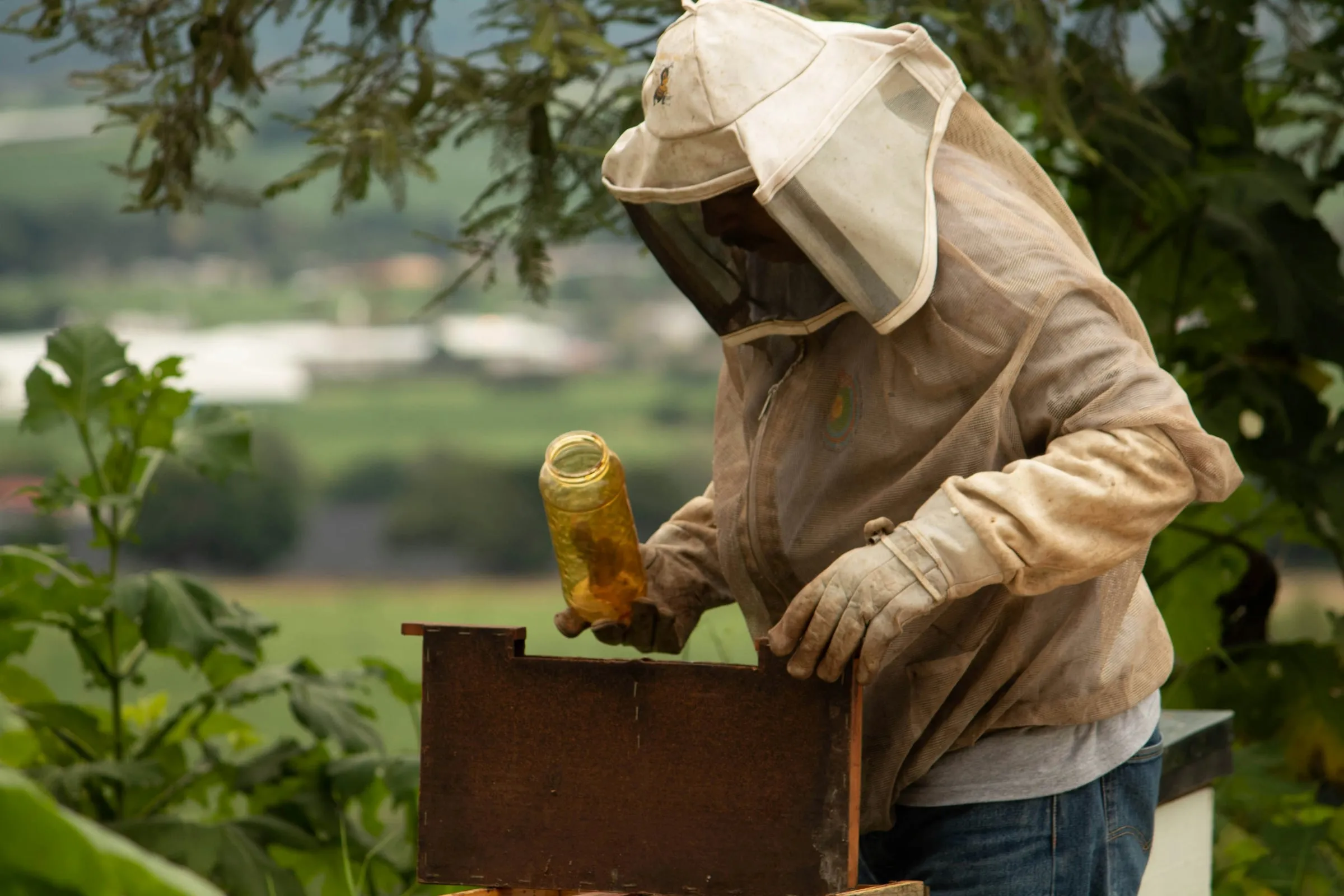
Nettie learned beekeeping the old way, standing next to her father at his hives in Lithuania. Most new beekeepers in America don’t have that, so they learn from books, videos and a lot of trial and error. This guide is the conversation we’d have with you over the fence before your first season: what to buy, what to skip, and what the first year really asks of you.
Quick answer: To start beekeeping, join a local beekeeping club, take a beginner course over the winter, and order two colonies (nucs are easiest) for spring delivery. You’ll need a hive (a 10-frame or 8-frame Langstroth is standard), a veil and jacket, gloves, a smoker and a hive tool. Place hives in a sunny, sheltered spot with water nearby. Expect to inspect every week or two from April to September and to check for varroa mites, and don’t count on much honey in year one.
Is beekeeping right for you?
Ask yourself four honest questions before you buy anything.
- Do you have the time? From April to September, plan on an inspection every week or two, plus harvest, mite checks and the occasional swarm chase. Winter is quiet.
- Are you okay with stings? You will get stung sometimes, even with good gear. If anyone in your household has a serious sting allergy, talk to an allergist first. Our post on bee stings covers what to expect.
- Do you have the space? A hive needs a spot with sun, a wind break, and a flight path that doesn’t cross a sidewalk, patio or the neighbor’s swing set.
- Will your neighbors and town be fine with it? Most towns allow beekeeping, but some have bylaws on setbacks or numbers of hives.
What are the rules for keeping bees in Massachusetts?
The Massachusetts Department of Agricultural Resources (MDAR) runs an Apiary Program with state bee inspectors. It offers free online registration of your apiary and colonies and asks every beekeeper to register, so inspectors can reach you about disease outbreaks or nearby pesticide spraying. MDAR describes registration as voluntary, but it’s well worth doing. The bigger rules are local: check your town’s zoning bylaws and board of health, and your homeowners’ association if you have one. Rules elsewhere vary, so check with your state’s department of agriculture.
What equipment do you need to start beekeeping?
Here is a basic first-year list for one Langstroth hive. Buy two of the hive parts if you’re starting with two colonies.
The hive
- Bottom board (screened bottoms help with ventilation and mite checks)
- Two deep or three medium boxes for the brood nest
- Two or more medium boxes (“supers”) for honey
- Frames and foundation for every box
- Inner cover and outer (telescoping) cover
- An entrance reducer and, for fall, a mouse guard
- A feeder for sugar syrup
For you
- A veil, and a jacket or full suit
- Gloves (many beekeepers go gloveless later, but start with them)
- A smoker and fuel such as pine needles, burlap or wood pellets
- A hive tool for prying boxes and frames apart
- A bee brush
Skip the gadgets until your second year. You won’t know what you actually need until you’ve worked a hive for a season.
Which type of beehive is best for beginners?
| Hive type | How it works | Good for beginners? |
|---|---|---|
| Langstroth (8- or 10-frame) | Stacked boxes of removable frames. Patented by Rev. Lorenzo Langstroth in 1852 around the “bee space” he described | Yes. The standard, with the most parts, help and resources available |
| Top-bar | One long box; bees build comb down from wooden bars | Possible, but combs are fragile and honey yields are lower |
| Warré | Stacked boxes with top bars, added from the bottom, designed by French priest Émile Warré | Interesting, but less support and harder to inspect |
We recommend a Langstroth for a first hive. Your local club, suppliers and other beekeepers all use it, which makes it easy to borrow a frame of eggs or get help when something goes wrong. An 8-frame box is lighter to lift; a 10-frame is the most common.
Where do you get your first bees?
There are four common ways to start a colony.
- A nucleus colony (nuc). A small colony on five frames, with a laying queen, brood, honey and drawn comb. It’s a head start, and the easiest option for most beginners.
- A package. About three pounds of bees (roughly 10,000) and a caged queen, shaken into a screened box. Cheaper and widely available, but the colony starts from nothing.
- A swarm. Free, and swarm bees are vigorous builders. Not predictable enough to count on for your first hive, though.
- A split from an experienced local beekeeper’s colony.
Locally raised bees and queens are often better suited to New England winters than bees shipped from the South. Order early, in winter, because nucs sell out.
Should you start with one hive or two?
Two. With two colonies you can compare them, which is how you learn what “normal” looks like. If one loses its queen, you can give it a frame of eggs from the other so it can raise a new one. Two hives are barely more work than one.
Where should you put a beehive?
- Sun. Morning sun gets bees flying early. Light afternoon shade helps in hot summers.
- Shelter. A fence, hedge or building to block winter winds.
- Water nearby. A birdbath with stones, a pond edge or a dripping hose.
- A clear flight path. Face the entrance away from walkways. A 6-foot fence or hedge in front of the hive sends bees up over people’s heads.
- Off the ground. A hive stand keeps the bottom dry and saves your back.
- Easy access. You’ll be carrying 50-pound boxes of honey out. Plan for that.
- Tick awareness. Hives sit in tall grass, which is tick country here. See ticks on the South Coast.
What happens in your first year of beekeeping?
| When | What you’ll be doing |
|---|---|
| Winter before | Take a beginner course, join a club, order bees and equipment, assemble and paint boxes |
| April to May | Install your bees. Feed sugar syrup until they’ve built comb. Inspect every week or so |
| June to July | Add boxes as the colony grows. Learn to spot eggs, brood, pollen and honey |
| July to August | Count varroa mites every month and treat if needed |
| August to September | Possibly take a little honey, but only if the colony has plenty. Usually you’ll leave it all |
| October | Make sure the hive is heavy with honey. Fit a mouse guard |
| November to March | Leave it closed. Heft it to check weight. Feed fondant if it feels light |
For the full year, see our beekeeping calendar.
Why are varroa mites such a big deal?
Varroa mites are the biggest single reason colonies die. They feed on developing and adult bees and spread viruses. Nearly every colony in the U.S. has them. The Honey Bee Health Coalition publishes a free guide, Tools for Varroa Management, that explains how to test and when to treat. Learn it before you get bees. Our post on colony collapse explains the wider picture.
What are the most common beginner mistakes?
- Not checking for mites. Healthy-looking colonies collapse in fall from mites nobody counted.
- Taking too much honey. A New England colony usually needs somewhere around 60 to 90 pounds of honey for winter.
- Opening the hive too often, or not enough. Every 7 to 14 days in season is about right.
- Letting the colony get crowded in spring. Crowding leads to swarming.
- Inspecting in bad weather. Pick warm, calm, sunny middays when foragers are out.
- Going it alone. A mentor will save you a season of mistakes.
Frequently asked questions
How much honey will I get in my first year?
Often little or none. A new colony spends its first season building comb and population. Most beekeepers harvest from the second year on, and only the surplus beyond what the bees need for winter.
How much time does a beehive take?
During the season, about 30 minutes to an hour per hive every week or two, plus a few longer days for harvest and mite treatments. Winter takes almost no time.
Can I keep bees in my backyard?
Usually, yes. Most Massachusetts towns allow backyard hives. Check your town’s bylaws, register with MDAR’s Apiary Program, and place the hive so the bees’ flight path stays away from neighbors.
Do I need a beekeeping class?
It isn’t required, but it helps a great deal. County beekeeping associations across Massachusetts run beginner courses in winter, and the Massachusetts Beekeepers Association lists them. Our guide to beekeeping classes on the South Coast covers the nearest ones.
What do bees need from me?
Room to grow, protection from mites and starvation, and mostly to be left alone. A healthy colony does most of the work itself.
Sources
- Massachusetts Department of Agricultural Resources, Apiary Program.
- Honey Bee Health Coalition. Tools for Varroa Management.
- Langstroth LL. Langstroth on the Hive and the Honey-Bee, 1853.
- Winston ML. The Biology of the Honey Bee. Harvard University Press, 1987.
Keeping bees changes how you see the year. You start noticing when the maples bloom and when the goldenrod turns. If you’d like to taste what a season of careful beekeeping produces, visit our Honey House in Rochester.