Bee Stings: How to Avoid Them and What to Do If You're Stung
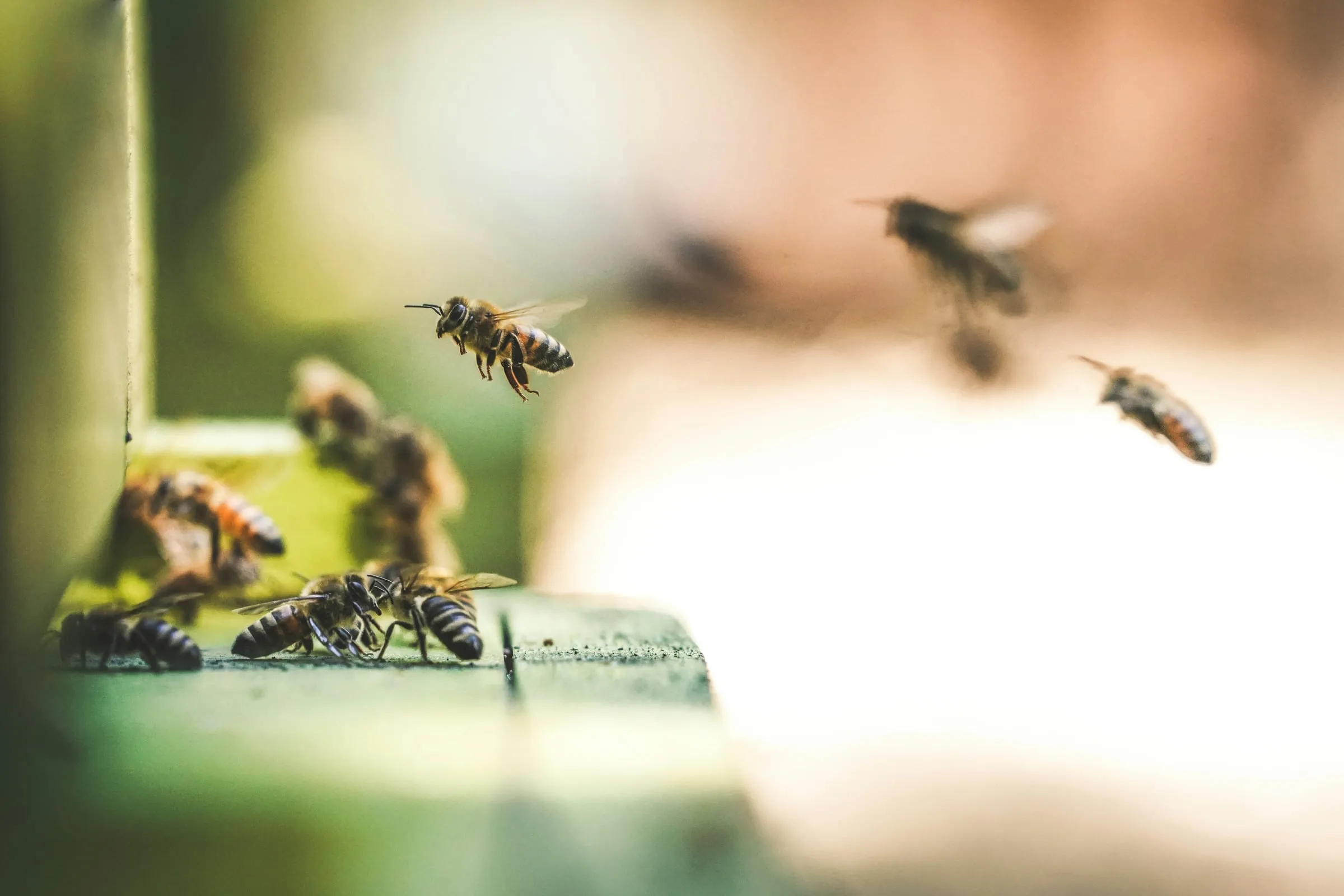
Anyone who keeps bees gets stung. It comes with the job, and after enough seasons most beekeepers treat a sting the way a cook treats a small kitchen burn. For everyone else, a sting is a shock. The good news is that honeybees almost never sting without a reason, and a little knowledge prevents most stings.
Quick answer: If a honeybee stings you, get the stinger out within seconds by scraping or pulling it, whichever is fastest. Wash the spot with soap and water, then apply ice for 10 minutes to ease pain and swelling. An antihistamine helps with itching. Call 911 if you have trouble breathing, swelling of the face or throat, dizziness, or hives spreading beyond the sting site. Those are signs of anaphylaxis.
Why do honeybees sting?
Honeybees sting to defend their colony. A bee foraging on a flower is busy and rarely stings unless she is stepped on, squeezed or trapped in clothing. Near the hive is different. Guard bees at the entrance are there to stop intruders, and they treat anything big, dark and close as a possible threat.
Only females sting. The stinger is a modified egg-laying tube, so drones (males) have none. Our post on what bee venom is explains what’s in a sting and why it hurts.
Does a honeybee die after stinging?
A honeybee dies after stinging a person or other mammal. Her stinger is barbed, and the barbs catch in our thick, elastic skin. When she pulls away, the stinger and venom sac tear out of her body. She can sting other insects and survive, because their bodies don’t trap the barbs. Wasps and yellowjackets have smooth stingers and can sting again and again.
When are honeybees most likely to sting?
- Near the hive entrance. Stand to the side of a hive, never in front of it in the bees’ flight path.
- When the hive is opened. Beekeepers wear veils for good reason.
- When nectar is scarce. In late summer and early fall, when flowers are few, colonies guard their stores more closely and robbing between hives makes bees edgy.
- In bad weather. Bees are crankier on cold, cloudy or stormy days, when foragers are stuck at home.
- After one bee stings. A stinging bee releases an alarm pheromone that smells a little like bananas (isopentyl acetate). It marks you as a target for other bees. That is why one sting can turn into several if you stay put.
Swarms surprise people: a cluster of thousands of bees hanging from a branch looks alarming, but swarming bees are usually at their gentlest, since they have no hive or honey to defend. Read how a bee swarm works if you find one.
How do you avoid being stung?
- Don’t swat. Swatting is the most common way people get stung. A bee flying around you is usually curious or lost. Stay calm and she’ll leave.
- Stay still if a bee lands on you. Let her walk off or gently blow on her.
- Wear light colors near hives. Bees are more defensive toward dark, fuzzy shapes, likely because their natural predators, like bears and skunks, are dark and furry.
- Go easy on perfume. Strong floral scents can draw curious bees.
- Move slowly and smoothly. Sudden movements and vibration near a hive put guard bees on alert.
- Wear shoes in clover. Many stings happen when bare feet step on a bee working clover in the lawn.
- Cover drinks outdoors. This one is mostly about yellowjackets, which love soda and sweet drinks.
If several bees start bumping into you or following you, walk away briskly in a straight line and get indoors or into a car. Don’t jump into water; bees will wait for you to come up.
What should you do right after a bee sting?
- Get the stinger out fast. Scrape it with a fingernail or card, or pull it out. For years people were told never to pinch it. A 1996 study in The Lancet by Visscher, Vetter and Camazine found that how you remove it makes little difference; speed is what matters, because the venom sac keeps pumping for up to a minute.
- Wash the area with soap and water.
- Apply a cold pack or ice wrapped in cloth for about 10 minutes at a time.
- Take an antihistamine for itching and an over-the-counter pain reliever if needed.
- Don’t scratch. Scratching makes the itch worse and can break the skin.
Redness, swelling and pain at the site are normal and usually fade within a few hours to a day. A larger local reaction, where swelling spreads to a whole hand or forearm over a day or two, is also common. It is uncomfortable but not usually dangerous. Ask a doctor about it, especially if it keeps happening.
When is a bee sting an emergency?
Call 911 and use an epinephrine auto-injector if one is available if, after a sting, someone has:
- Trouble breathing, wheezing or a tight throat
- Swelling of the lips, tongue or face
- Hives or itching spreading across the body
- Dizziness, fainting or a racing pulse
- Nausea, vomiting or stomach cramps
These are signs of anaphylaxis. According to the American College of Allergy, Asthma and Immunology, life-threatening sting reactions affect an estimated 0.4% to 0.8% of children and about 3% of adults. The CDC counted an average of 62 deaths a year in the United States from hornet, wasp and bee stings combined between 2000 and 2017.
Anyone who has had a serious reaction should see an allergist. Venom immunotherapy, a series of allergy shots, greatly reduces the risk of another severe reaction.
For someone who isn’t allergic, it takes a great many stings to be dangerous. In a 1989 paper in Nature, Schumacher and colleagues estimated the lethal dose of honeybee venom at about 19 stings per kilogram of body weight, well over a thousand stings for most adults. Dozens of stings at once still warrant a trip to the emergency room.
Was it a bee, a wasp or a yellowjacket?
Most late-summer “bee stings” at picnics are actually yellowjackets. Honeybees are fuzzy and golden-brown and leave their stinger behind. Yellowjackets are smooth, shiny and bright yellow, and they don’t. Our honeybee vs wasp vs yellowjacket guide shows how to tell them apart.
Frequently asked questions
How long does a bee sting hurt?
The sharp pain usually fades within a few minutes to an hour. Swelling and itching can last a day or two, and a large local reaction can last up to a week.
Should you scrape or pull out a bee stinger?
Either is fine. A 1996 study in The Lancet found that speed matters more than method, because the venom sac keeps pumping. Use whatever gets the stinger out quickest.
Can you put honey on a bee sting?
Some people dab honey on a sting, and it is gentle on skin. There’s no good evidence that it reduces pain or swelling more than ice. Wash first, ice second, and keep honey for your toast.
Do beekeepers become immune to stings?
Many beekeepers find stings swell less over time. That isn’t reliable immunity, and some beekeepers develop allergies instead. Anyone with a worsening reaction should see an allergist.
Do honeybees sting for no reason?
Almost never. Honeybees sting to defend the hive or when they are trapped or crushed. A bee on a flower away from her hive is focused on nectar.
Sources
- Visscher PK, Vetter RS, Camazine S. “Removing bee stings.” The Lancet, 1996. PubMed
- Schumacher MJ, Schmidt JO, Egen NB. “Lethality of ‘killer’ bee stings.” Nature, 1989. PubMed
- Centers for Disease Control and Prevention. “QuickStats: Deaths from hornet, wasp, and bee stings, 2000–2017.” MMWR, 2019.
- American College of Allergy, Asthma and Immunology, insect sting allergy guidance.
Bees are far more interested in flowers than in us. If honeybees have settled somewhere they shouldn’t, or you spot a swarm, call or text Nettie’s Bees at (508) 221-1578.