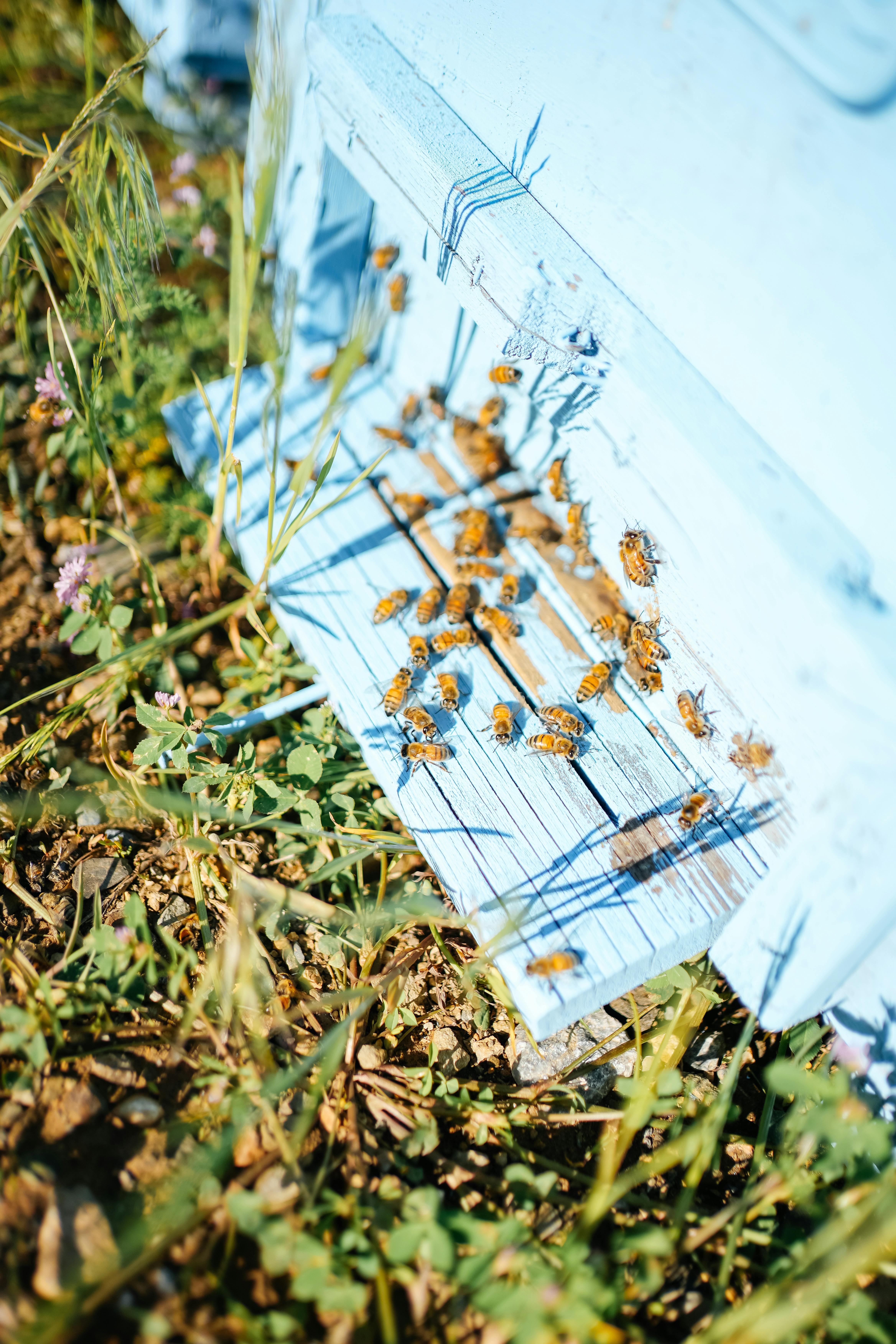
If you've ever been stung by a honeybee, you know the feeling. A sharp, instant burn that lingers longer than you'd expect from something so small. What most people don't realize is that the substance behind that sting is one of the most chemically complex venoms in the natural world, and that understanding it changes how you see bees entirely.
Quick answer: Bee venom (called apitoxin) is a biological fluid produced by worker honeybees in a specialized venom gland. Its primary active ingredient is a peptide called melittin, which disrupts cell membranes and causes the burning pain most people associate with a sting. Honeybees sting in defense of themselves or their colony. Because the honeybee stinger is barbed, it lodges in skin and tears free from the bee's body when she pulls away, which is why a honeybee can only sting once. Other bee species, including bumblebees and queen bees, have smooth stingers and can sting more than once.
What Is Bee Venom Made Of?
Bee venom is a mixture of proteins, enzymes, peptides, and small organic compounds. It's not a single chemical. It's dozens of them, each doing something different in your body.
The main components:
Melittin makes up roughly 50% of the dry weight of bee venom. It's a small peptide that punches holes in cell membranes, which is what causes the immediate burning pain and swelling. Melittin is also the most extensively studied component of venom for potential research applications.
Phospholipase A2 (PLA2) is an enzyme that breaks down phospholipids in cell membranes, triggering an inflammatory response. PLA2 is also the primary allergen in bee venom. It's the component most responsible for severe allergic reactions in sensitized individuals.
Hyaluronidase breaks down hyaluronic acid in connective tissue, essentially widening the path for venom to spread through the body.
Apamin is a small neurotoxic peptide that can cross the blood-brain barrier. Present in small amounts, it affects the central nervous system and has been studied for its effects on neural signaling.
Histamine contributes to the local reaction you feel right away: redness, itching, warmth at the sting site.
Adolapin is one of the more surprising components. Research has found it exhibits anti-inflammatory properties in laboratory settings, though the inflammatory effects of melittin and PLA2 far outweigh it in the context of an actual sting.
Together, melittin and PLA2 account for roughly 80 to 90% of bee venom's biological activity, according to a 2021 review published in the journal Toxins. The exact composition varies with the bee's age, her diet, and the season.
Why Do Bees Sting?
Honeybees sting for one reason: defense. They are not aggressive by nature. A bee foraging quietly on a flower has no interest in you at all. The sting is a last resort.
What actually triggers a defensive sting:
- A perceived threat to the hive. Getting too close, moving suddenly near the colony entrance, or causing vibrations near the boxes can signal danger.
- Direct physical contact. Stepping on a bee, swatting at one, or trapping one against your skin.
- The scent of alarm pheromones. Once a bee stings, she releases a chemical signal called isoamyl acetate, which smells faintly like bananas. That signal tells other bees that a threat is present and prompts additional defensive behavior from the colony. This is why calm, slow movement matters near a hive. Swatting draws more attention, not less.
One thing worth knowing: only female bees can sting. Worker bees are all female, and their stingers evolved from egg-laying anatomy. Male bees (called drones) have no stinger at all. You can learn more about how bee roles develop across the colony in our honeybee lifecycle guide.
Do All Bees Have Stingers?
Not exactly. There's more variation here than most people realize.
Worker honeybees have barbed stingers. The barb catches in elastic mammalian skin, and when the bee tries to fly away, the stinger and attached venom sac tear free from her abdomen. She dies within minutes. This is specific to honeybees stinging mammals. When honeybees sting insects, the smooth exoskeleton doesn't catch the barb the same way, and the bee survives.
Queen bees have smooth, curved stingers and can sting repeatedly. But queens almost never sting humans. They reserve the stinger primarily for rival queens during colony establishment.
Drones (male bees) have no stinger at all.
Bumblebees have smooth stingers and can sting multiple times. They're generally even more docile than honeybees and unlikely to sting unless directly handled.
Stingless bees are an entire tribe of bees (Meliponini) with vestigial, non-functional stingers. They defend their nests through biting and the use of sticky resins rather than venom. If you're curious about how different bee species compare and the roles they play in the ecosystem, our guide to native bees vs. honeybees covers this in depth.
What Happens in Your Body When You Get Stung?
The moment the stinger enters your skin, the venom sac begins pumping. This is the most important thing to know: if a honeybee stings you, remove the stinger as fast as possible. The sac will keep contracting and pushing venom for up to a minute after the bee is gone. Scrape the stinger out sideways using a fingernail or the edge of a card. Grabbing and pinching it can squeeze more venom in.
What follows depends on the person.
For most people: A local reaction. Melittin triggers immediate pain. Histamine causes redness and swelling. PLA2 drives more inflammation. The area stays tender for a few hours to a couple of days, then resolves on its own.
For some people: A larger local reaction, with significant swelling that spreads over a wider area and may last several days. This is fairly common and is not the same thing as an allergy.
For a small percentage of people: Bee venom triggers anaphylaxis, a systemic allergic reaction. The immune system overreacts to PLA2 or other venom proteins, causing hives beyond the sting site, swelling of the throat, difficulty breathing, or a drop in blood pressure. This is a medical emergency. People who know they have a bee venom allergy should carry an epinephrine auto-injector and act quickly.
Has Bee Venom Been Studied for Therapeutic Uses?
Bee venom has a long history in traditional medicine. The practice of using bee products for wellness is called apitherapy, and traditional herbalists and folk medicine practitioners have used bee venom for joint conditions, nerve complaints, and skin disorders across many cultures for centuries.
Modern research has started to examine some of these traditional uses more closely. A 2020 study published in Nature Precision Oncology found that melittin disrupted the membranes of cancer cells in laboratory conditions, though these were early-stage laboratory findings, not clinical treatments. A separate 2020 study in the Journal of Neuroinflammation found that bee venom injections reduced markers of neuroinflammation in a mouse model of Parkinson's disease.
Most of this research is preliminary. Bee venom therapy is not a medically established treatment for any condition. If you're curious about apitherapy, a conversation with a knowledgeable healthcare provider is a good starting point.
These statements have not been evaluated by the Food and Drug Administration. This product is not intended to diagnose, treat, cure, or prevent any disease.
Frequently Asked Questions
Why do bees die after stinging?
Only worker honeybees die after stinging, and only when stinging mammals. The barbed stinger catches in flexible skin. When the bee tries to fly away, the stinger, venom sac, and part of her abdomen tear free. The injury is fatal. When a honeybee stings an insect with a hard exoskeleton, the barb doesn't catch and she survives.
What's the fastest way to treat a bee sting?
Remove the stinger immediately. The faster you get it out, the less venom you receive. Scrape sideways with a fingernail or card edge rather than pinching, which can push more venom in. Ice the area to reduce swelling. Over-the-counter antihistamines and hydrocortisone cream help with itching and inflammation. If you develop hives beyond the sting site, throat tightening, difficulty breathing, or dizziness, seek emergency medical care right away.
Is bee venom the same as wasp venom?
No. Wasp venom and bee venom share some components but have meaningfully different compositions. Wasp venom contains lower levels of melittin and higher concentrations of wasp kinins and other peptides. Wasp stingers are smooth, so wasps can sting multiple times. Someone with a bee venom allergy may or may not react to wasp venom, since the allergen proteins differ between species.
Can bees smell fear?
Bees can't detect fear directly, but they do respond to signals that tend to accompany it. Carbon dioxide from rapid breathing, sweat compounds, and sudden movements can all trigger defensive behavior. Moving slowly and staying calm near bees isn't just a folk saying. It genuinely works.
How much venom does one sting deliver?
A single honeybee delivers approximately 0.1 to 0.3 milligrams of venom. For most healthy adults, a toxic reaction (as opposed to an allergic one) requires roughly 10 stings per kilogram of body weight. A single sting, while painful, delivers a very small amount of venom.
Bees didn't develop venom to bother us. They developed it over millions of years to protect something that matters to them deeply: the colony, the queen, and the stores of honey that carry the hive through winter. Understanding what bee venom actually is, and what drives a bee to use it, has a way of shifting how you see them. Less threat, more neighbor. If you want to go deeper on what bees are actually doing inside that hive all season long, our piece on how bees make honey is a good place to continue.

.jpg)
.jpg)