A Beekeeper's Year: Month-by-Month Beekeeping Calendar for New England
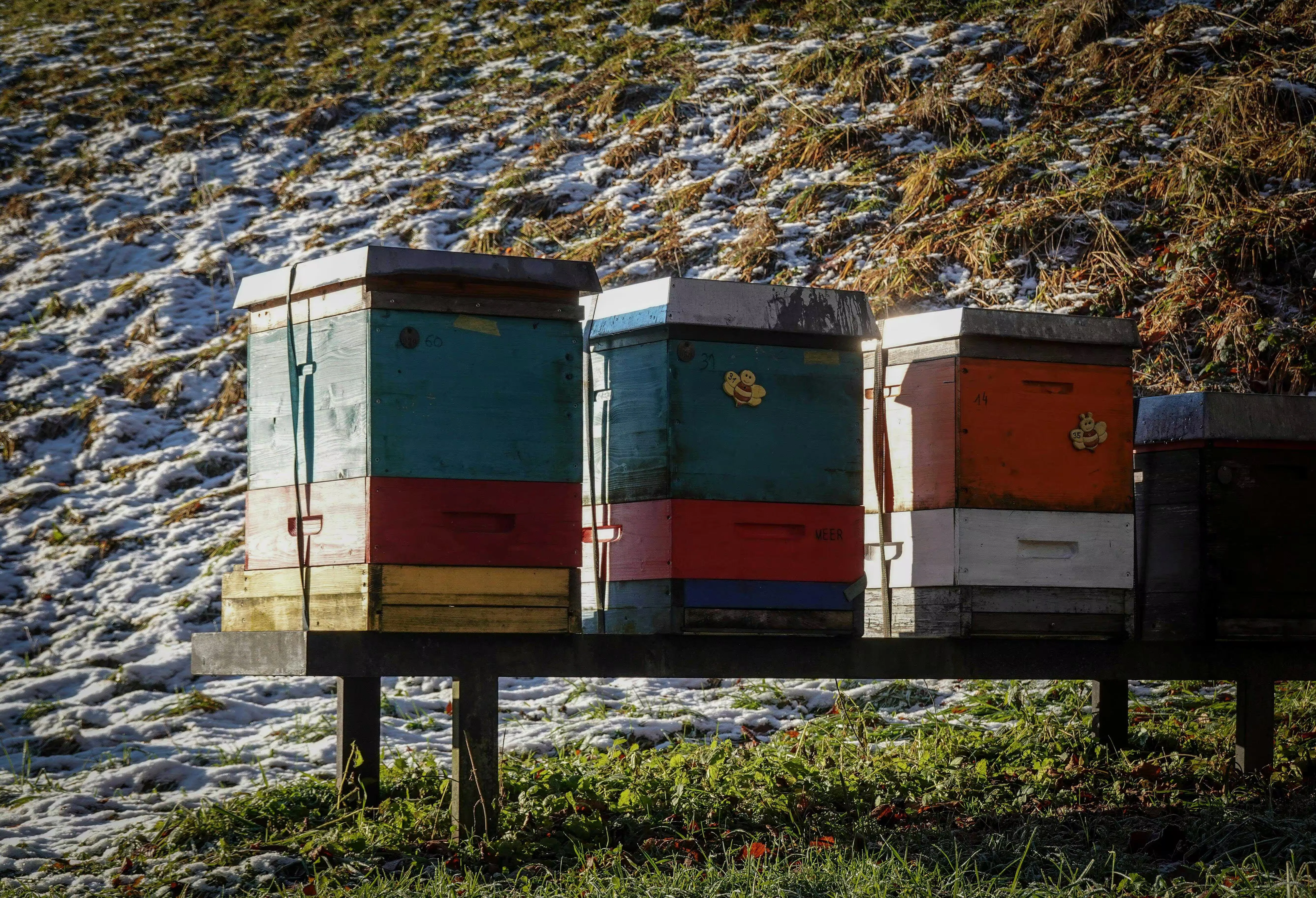
Beekeeping runs on the bees’ calendar, not ours. A job that takes ten minutes in May can kill a colony if you do it in January. For anyone thinking about keeping bees, or just curious why a beekeeper can’t come out to the hives on a cold Tuesday, here is how the year goes in a New England apiary like ours on the South Coast of Massachusetts.
Quick answer: In New England, beekeepers check colonies and feed if needed in early spring (March and April), manage swarming and add honey boxes in late spring (May and June), monitor for varroa mites and harvest surplus honey in summer (July and August), treat for mites, feed and prepare hives for cold in fall (September to November), and leave the colony alone in winter (December to February), checking only from outside.
What does a beekeeper do each month?
Exact timing shifts a week or two with the weather and with where you are. Coastal Massachusetts warms a little later in spring and stays mild a little longer in fall than inland towns.
| Month | What’s blooming nearby | What the bees are doing | What the beekeeper does |
|---|---|---|---|
| January | Nothing | Clustered, eating stored honey; queen starts laying a little | Leave the hive closed. Heft it from behind to judge its weight. Clear snow from the entrance |
| February | Nothing, or skunk cabbage in wet spots | Brood rearing slowly increases | Add emergency feed (fondant or sugar) on top if the hive feels light. Order bees and equipment |
| March | Red maple, pussy willow | First cleansing flights on warm days; early pollen comes in | First quick look on a calm day above about 50°F. Is there a queen? Enough food? |
| April | Maples, dandelions, early fruit trees | Population grows fast | Full inspection. Feed thin syrup if stores are low. Swarm season begins |
| May | Fruit trees, blueberry, dandelion, black locust | Colony near full strength; swarm preparations | Inspect every 7 to 10 days for queen cells. Add space. Split strong colonies |
| June | Cranberry, clover, raspberry, sumac begins | Main nectar flow starts | Add honey boxes (supers). Keep watching for swarms |
| July | Clover, sumac, milkweed, summer wildflowers | Peak population; honey stores build | Add supers as needed. Count varroa mites. Make sure bees have water |
| August | Knotweed, late wildflowers | Nectar slows in dry spells; robbing starts | Harvest capped surplus honey. Treat for mites if counts are high. Reduce entrances |
| September | Goldenrod, asters, knotweed | Fall flow; colony raises long-lived winter bees | Check that winter bees are healthy and mite loads are low. Feed thick syrup if stores are light |
| October | Asters, last goldenrod | Drones expelled; colony shrinks | Final check of stores. Fit mouse guards. Arrange ventilation or insulation |
| November | Witch hazel | Cluster forms on cold days | Close up for winter. Stop opening the hive |
| December | Nothing | Tight cluster | Leave them alone. Clean and repair equipment |
Spring: what do beekeepers do from March to May?
Spring is when a beekeeper sets up the whole year.
Early spring is about survival checks. On the first calm day above about 50°F, a beekeeper takes a quick look. Is the cluster alive? Is there a queen laying eggs? Is there honey left? A colony that made it through winter can still starve in March, because it’s raising brood fast and nothing much is blooming yet. If stores are low, the beekeeper feeds.
Mid-spring is about room. As maples, dandelions and fruit trees bloom, the population explodes. The colony needs space to store nectar and raise brood, so beekeepers add boxes.
Late spring is swarm season. A crowded, healthy colony will raise a new queen and send half its bees off with the old one. On the South Coast that’s mostly April through June. Beekeepers inspect every week or so for queen cells and split strong colonies before they swarm. Our posts on how bees prepare for spring and how a bee swarm works explain what’s happening inside.
Summer: what do beekeepers do from June to August?
Summer is when the honey gets made.
The main nectar flow. In June, the cranberry bogs here bloom, followed by clover, sumac and summer wildflowers. A strong colony can fill a honey box in a couple of weeks during a good flow. The beekeeper’s job is to stay ahead with space.
Mite monitoring. Varroa mites are the biggest threat to honeybees today. Mite numbers climb through summer as the colony’s brood grows. Beekeepers count them, usually by sampling about 300 bees with a sugar roll or alcohol wash, and treat when counts pass the threshold recommended by the Honey Bee Health Coalition. Late summer matters most, because that’s when the colony raises the long-lived bees that must survive winter.
Water. On hot days bees collect water to cool the hive. A nearby source keeps them out of neighbors’ pools.
Harvest. When frames of honey are mostly capped with wax, the honey is ripe. Beekeepers take the surplus, leaving the colony what it needs. From nectar to table walks through the harvest step by step, and our honey harvest calendar explains how weather shapes each year’s crop.
Fall: what do beekeepers do from September to November?
Fall decides whether a colony sees spring.
Leave enough honey. A New England colony usually needs somewhere around 60 to 90 pounds of honey to get through winter. If the fall flow from goldenrod and asters is poor, beekeepers feed thick sugar syrup so the bees can store it before it gets too cold.
Guard against robbing. As flowers fade, strong colonies try to steal from weak ones. Beekeepers shrink hive entrances so guard bees can defend them.
Get ready for cold. Mouse guards go on the entrances, and hives are set up to vent moisture, since wet bees die faster than cold ones. After that, the hive stays closed.
Winter: what do beekeepers do from December to February?
Mostly, nothing, and that is the point. Bees form a tight cluster and shiver their flight muscles to stay warm, keeping the center of the cluster around 90°F or more. Opening the hive breaks that heat.
A beekeeper checks from the outside: tipping the back of the hive to feel its weight, listening at the entrance, clearing snow and dead bees from the entrance so air can flow. On a warm, sunny winter day you’ll see bees take short cleansing flights and leave little yellow spots on the snow. That’s a good sign. Read more in what do bees do in winter.
Winter is also when beekeepers repair boxes, clean equipment and plan for spring.
How much time does beekeeping take?
During the active season, plan on an inspection every week or two, roughly 30 minutes to an hour per hive, plus extra time for harvest, splits and mite treatments. Winter takes almost no hive time. Most of good beekeeping is knowing when to leave the bees alone. If you’re thinking about starting, our beekeeping for beginners guide covers the first year.
Frequently asked questions
When is the best time to start beekeeping in New England?
Spring. Most beginners install bees in April or May, when flowers are blooming and the colony has a full season to build up before winter. Order bees and equipment in winter, since suppliers often sell out.
When do beekeepers harvest honey in Massachusetts?
Most harvest in late summer, around August, after the main summer flow. Some take a smaller harvest in early summer or after the fall goldenrod flow, always leaving enough for the bees’ winter.
What temperature is too cold to open a beehive?
Most beekeepers avoid full inspections below about 55 to 60°F and only take quick looks between 50 and 60°F on calm, sunny days. Below that, keep the hive closed.
When is swarm season in Massachusetts?
Mostly April through June, peaking in May and early June. Swarms can happen in late summer too, but they are less common.
Do you need to feed bees in winter?
Only if they run short of honey. Beekeepers check by hefting the hive. If it’s light in late winter, they place fondant or dry sugar directly over the cluster.
Sources
- Honey Bee Health Coalition. Tools for Varroa Management.
- Winston ML. The Biology of the Honey Bee. Harvard University Press, 1987.
- Penn State Extension, beekeeping seasonal management resources.
Every jar on our shelf comes from one part of this calendar, which is why our honey changes with the seasons. Stop by the Honey House, where there are samples to taste.