Beeswax for Lips and Skin: What It Does and How to Use It
Chapped lips are a New England rite of winter. Cold air holds little moisture, indoor heat dries it further, and lips, which have almost no oil glands of their own, crack first. For centuries, the fix has been a little beeswax.
Quick answer: Beeswax helps lips and dry skin by forming a thin, protective layer that slows water loss while still letting skin breathe. On its own it’s too hard to spread, so balms mix it with oils (which soften skin) and sometimes honey (which draws in moisture). A typical homemade lip balm is about 1 part beeswax to 3 or 4 parts oil. Beeswax rarely irritates, but people allergic to propolis or bee products should patch test first.
How does beeswax help dry lips and skin?
Healthy skin keeps itself moist with a barrier of oils and fats. When that barrier is thin, as on lips, or worn down, as on winter hands, water escapes and skin cracks.
Beeswax is an occlusive: it sits on the surface and slows that water loss. It’s firm and waxy, so it stays put through eating, talking and wind better than oils alone. Dermatologists often recommend simple, fragrance-free occlusive balms for chapped lips, and beeswax is one of the oldest.
Why is honey in some lip balms?
Honey is a humectant: its sugars attract and hold water. In a balm, a little honey helps draw moisture into the lips, while the beeswax holds it there. It also gives a faint natural sweetness. Read more about honey in skincare.
What makes a good beeswax lip balm?
Look for a short, simple ingredient list:
- Beeswax for protection and structure.
- Plant oils or butters such as olive, sweet almond, coconut, shea or cocoa butter, which soften and smooth.
- Honey, optionally, for moisture.
Things that can make chapped lips worse for some people: menthol, camphor, peppermint and cinnamon flavorings, strong fragrances and salicylic acid. They feel tingly but can irritate already-cracked skin.
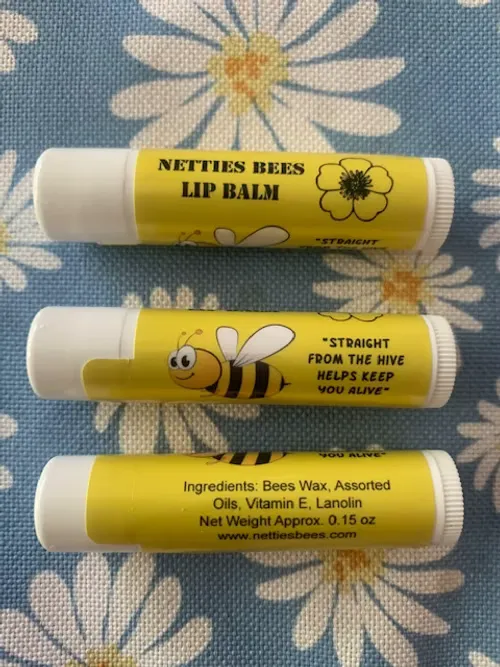
Our lip balm keeps it simple: our own beeswax, honey and plant oils, with no artificial fragrances, colors or preservatives.
How do you make beeswax lip balm at home?
- Melt 1 tablespoon of grated beeswax with 3 to 4 tablespoons of oil (olive, almond or coconut) in a heatproof jar set in a pan of simmering water.
- Stir until fully melted, then take it off the heat.
- Optional: stir in 1/2 teaspoon of honey while it’s warm, whisking well so it blends.
- Pour into small tins or tubes and let it set.
More beeswax makes a firmer balm; more oil makes it softer. Store it in a cool place.
What else is beeswax good for on skin?
- Hand salves for cracked winter knuckles and fingertips.
- Heel and elbow balms, often with tallow or shea butter. See deer tallow skincare.
- Cuticle balm.
- Wind and cold protection for cheeks and noses outdoors.
Who should avoid beeswax?
Beeswax rarely causes reactions, but it can contain traces of propolis, the bee resin that’s a known contact allergen for some people. If you’re allergic to propolis, bee products or balsam of Peru, patch test a small amount on your inner arm for a couple of days first.
Frequently asked questions
Is beeswax good for chapped lips?
Yes. It forms a protective seal that slows moisture loss, giving lips time to heal. Reapply through the day and before bed.
Is beeswax better than petroleum jelly?
Both are effective occlusives. Petroleum jelly is very good at sealing in moisture; beeswax is firmer, stays on longer and comes from bees rather than a refinery. Many people prefer it for that reason.
Does beeswax clog pores?
It’s considered low-risk on lips and body. On acne-prone facial skin, heavy wax balms may contribute to breakouts for some people; use them sparingly there.
Why does my lip balm feel grainy?
Shea or cocoa butter in a balm can form small crystals if it cools slowly or gets warm and cools again. It’s harmless; the grains melt on your lips.
Is beeswax vegan?
No, since it’s made by bees. Vegan balms usually use candelilla or carnauba wax instead.
Sources
- American Academy of Dermatology, tips for healing dry, chapped lips.
- Bogdanov S. Beeswax: Production, Properties, Composition, Control. Bee Product Science, 2016.
- de Groot AC. “Propolis: a review of properties, applications, chemical composition, contact allergy, and other adverse effects.” Dermatitis, 2013.
A tin of beeswax balm in your coat pocket is one of winter’s small comforts. Keep one by the door, and your lips will thank you in February.