Can You Eat Honeycomb? How to Eat It and What to Pair It With
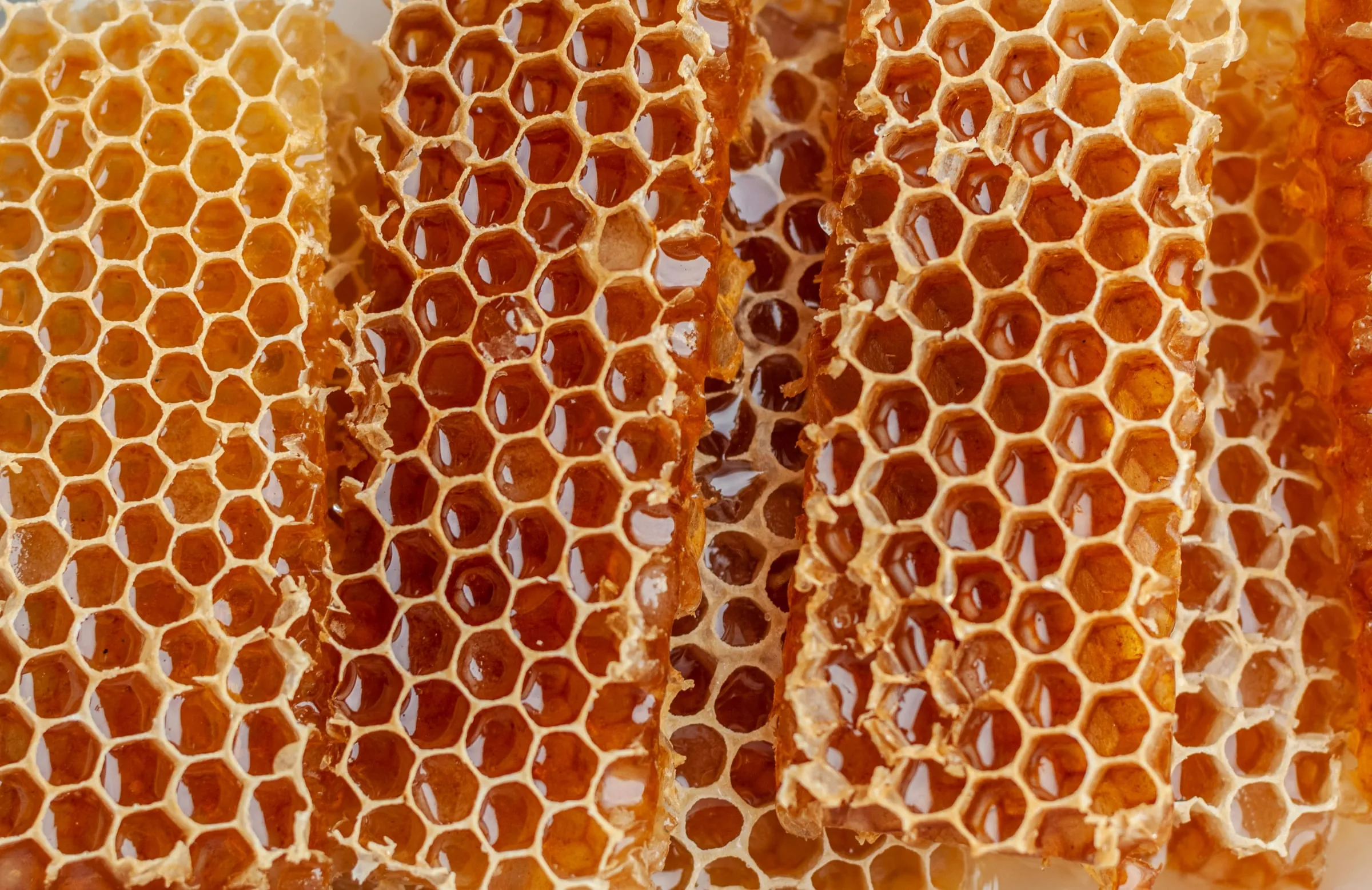
Honeycomb is the least processed honey there is. Nobody has extracted it, strained it or poured it into a jar. It’s honey still sealed in the wax cells the bees built, cut straight from the hive. The first bite surprises most people: the wax gives way, the honey floods out, and you’re left with something soft and chewy.
Quick answer: Yes, you can eat honeycomb, wax and all. Beeswax is safe to eat; your body doesn’t digest it, so it simply passes through. Cut a small piece, chew it to release the honey, then swallow the soft wax or spit it out if you prefer. Honeycomb is lovely on toast, with cheese, on yogurt or on its own. Like all honey, never give it to babies under 1 year old.
Is the wax in honeycomb safe to eat?
Yes. Beeswax is a natural wax made by worker bees from glands on their abdomen. It’s non-toxic and is even approved as a food additive (it’s the glaze on some candies). Humans can’t digest it, so it passes through like fiber.
A spoonful of comb a day is fine for most people. Eating large amounts of wax at once, though, could upset your stomach, so treat honeycomb as a treat rather than a meal. Read more about how bees make beeswax.
How do you eat honeycomb?
- Cut a small piece with a sharp knife, about a square inch. Honeycomb is soft and messy, so work on a plate.
- Chew it like gum to release the honey.
- Swallow the wax, or spit it out once the honey’s gone. Both are fine.
Some favorite ways to serve it:
- On warm toast or a biscuit, where the wax softens and spreads.
- On a cheese board, next to brie, goat cheese or aged cheddar. See honey and cheese pairing.
- On yogurt, oatmeal or ice cream, cut into small cubes.
- With fruit, especially apples, pears and figs.
- In tea, where the honey melts out and the wax floats; scoop it out after.
What is the difference between comb honey and extracted honey?
| Comb honey | Extracted honey | |
|---|---|---|
| What it is | Honey still sealed in wax cells | Honey spun out of the comb and strained |
| Processing | None; just cut and packed | Uncapped, extracted, strained, jarred |
| Wax | Included, edible | Removed |
| Pollen and propolis | All present | Mostly present in raw honey; removed in filtered honey |
| Texture | Chewy and juicy | Smooth liquid, or crystallized |
| Cost | Higher | Lower |
Comb honey costs more because the bees have to build new comb for every piece sold, and making wax takes them a lot of honey and energy. With extracted honey, the beekeeper can return the empty comb to the hive to be refilled.
You’ll also see chunk honey: a piece of comb in a jar topped up with liquid honey. It’s a nice middle ground.
Is honeycomb healthier than regular honey?
Honeycomb is as raw as honey gets, so it keeps all its enzymes, pollen and traces of propolis. It’s still mostly sugar, with the same calories as liquid honey. The wax adds texture, not nutrition.
How do you store honeycomb?
Keep it in a closed container at room temperature, away from heat. Don’t refrigerate it; cold makes the honey crystallize inside the cells. Crystallized comb is still good to eat, just firmer and grainier. Stored well, honeycomb keeps for a long time. See how to store raw honey.
Frequently asked questions
Can you swallow honeycomb wax?
Yes. Beeswax is safe to swallow and passes through your digestive system undigested. If you don’t like the waxy texture, chew out the honey and discard the wax.
Does honeycomb go bad?
Rarely. Honey in sealed comb resists spoilage. If the comb smells sour, shows foam or mold, or has been exposed to moisture, throw it away.
Why is my honeycomb crystallized?
Honey in the comb crystallizes just like jarred honey, especially in cool weather. It’s still safe and tasty; warm toast is the perfect place for it.
Can kids eat honeycomb?
Children over 1 year old can, in small pieces. Never give honeycomb or any honey to babies under 12 months. See when babies can have honey.
Where can I buy honeycomb?
From local beekeepers in season. Our raw honeycomb is sold by weight at the Honey House in Rochester.
Sources
- U.S. Food and Drug Administration, beeswax (yellow and white) as GRAS food substance, 21 CFR 184.1973.
- National Honey Board, comb honey and honey types.
Honeycomb is honey the way the bees made it. Put a piece on a warm biscuit and you’ll see why people have been cutting comb from hives for thousands of years.