Rhode Island Honey: What It Tastes Like and When It's Made
Stand at the Tiverton line and you can’t see where Massachusetts ends. The same stone walls, red maple swamps and salt marsh run straight through Westport into Tiverton and Little Compton, and the bees don’t carry passports. Rhode Island honey is coastal New England honey, shaped by a short, busy season and a long sea breeze.
Quick answer: Rhode Island honey is mostly wildflower honey, and its flavor follows the season. Spring honey from fruit trees, blueberry and black locust is light and mild. Summer honey from clover, sumac, sweet pepperbush and basswood is golden and floral. Fall honey from goldenrod and asters is darker and stronger, and much of it stays in the hive to feed the bees through winter. No single plant dominates, so every batch tastes a little different.
What does Rhode Island honey taste like?
It depends on the month the bees made it. Light honey comes early in the year and dark honey comes late, which is true across most of New England. A Rhode Island farm manager told So Rhode Island in 2022 that spring honey there comes out light yellow, while fall honey is typically darker.
Here is roughly how the year runs:
| Season | Plants bees work in Rhode Island | What the honey is like |
|---|---|---|
| Early spring (March to April) | Red maple, willow | Little or no surplus; the bees use it to raise brood |
| Late spring (May to early June) | Fruit trees, highbush blueberry, serviceberry, black locust | Light and mild |
| Summer (June to August) | Clover, sumac, sweet pepperbush, basswood | Golden and floral |
| Fall (August to October) | Goldenrod, New England aster | Darker and stronger, often kept for the bees |
Because a Rhode Island hive rarely sits next to a big field of one crop, most local honey is sold as wildflower. That is a good thing. Two jars from the same beekeeper, one from June and one from September, can taste like they came from different states. Our guide to seasonal honey flavors explains why.
What do bees forage on in Rhode Island?
Bees in Rhode Island work trees and shrubs as much as flowers. The red maple, Rhode Island’s state tree since 1964, is one of the first things to bloom, and its pollen gets colonies building in March. The University of Rhode Island’s Bee Lab lists highbush blueberry, serviceberry, pagoda dogwood and tulip tree among the spring bloomers worth planting, and sheep laurel, sweet pepperbush, sumac and American basswood for summer.
Sweet pepperbush (Clethra) deserves a special mention on this coast. It grows in wet, shady spots and blooms in late summer, when few other shrubs are flowering, so it fills a gap for the bees.
Fall belongs to goldenrod and asters. If your fall honey has a sharp smell straight from the hive, that is often goldenrod, and it fades as the honey ripens.
When is honey harvested in Rhode Island?
Honey comes off the hives after the late spring and summer flows, and the timing moves with the weather. A Warwick beekeeper told Edible Rhody in 2025 that black locust bloomed about two weeks earlier than the year before, and he extracted honey in early June.
A careful beekeeper leaves the fall honey alone. A colony in our part of New England needs a full set of honey frames to get through a cold January, and goldenrod and aster honey is the bees’ winter food.
Do Rhode Island beekeepers have to register their hives?
Yes. Rhode Island law requires every apiary in the state to be registered every year with the Department of Environmental Management (DEM), including backyard hives. Beekeepers report where their bees are and how many colonies they keep, and anyone who sells or gives away a colony must tell DEM the new owner’s name within 30 days. Registration now runs through DEM’s online portal, so check DEM’s apiary page for the current deadline.
That is a real difference from next door. In Massachusetts, the state describes registering hives as voluntary but highly recommended, as we explain in our guide to beekeeping classes on the South Coast.
| Rhode Island | Massachusetts | |
|---|---|---|
| Hive registration | Required every year, with DEM | Voluntary, recommended, with MDAR |
| Beekeepers’ association | Rhode Island Beekeepers Association, founded 1917 | County clubs plus the Massachusetts Beekeepers Association |
Do you need a license to sell honey in Rhode Island?
Not at a farmers market, if you are selling honey as it comes from the hive. The Rhode Island Department of Health’s 2023 farmers market guidance says vendors selling whole uncut produce or honey do not need a license. Products made from honey in a home kitchen are a different matter and fall under the state’s farm home food rules, so beekeepers who want to sell those should check with the Department of Health first.
How do you know honey is really from Rhode Island?
Ask the beekeeper where the hives are. Real local honey has an address, and the person selling it can tell you which town the bees live in and what was blooming when it was made. Rhode Island is small enough that “local” can mean a hive a few miles away, and so can honey from just over the state line. Our post on what real local honey means covers the questions worth asking.
Then look at the jar. Raw wildflower honey from this region often crystallizes within a few months, especially fall honey. That is a sign of real honey, not a flaw, and gentle warmth brings it back.
Frequently asked questions
Is there a Rhode Island state honey?
No. Rhode Island does not have an official state honey or a single signature variety. Most honey made in the state is wildflower honey, and its flavor changes through the season, from light spring honey to darker fall honey. Rhode Island’s state tree, the red maple, is one of the bees’ first spring sources.
Why is fall honey darker than spring honey?
Fall honey comes from different plants. In Rhode Island, late-season bees work goldenrod and asters, which make darker, stronger honey than spring fruit trees and blueberry. The bees bring in less of it, too, so beekeepers often leave it in the hive for winter.
How many kinds of bees live in Rhode Island?
More than 260 species of native bees live in Rhode Island, according to the University of Rhode Island, including bumble bees, mason bees, leafcutter bees and sweat bees. Honeybees are only one species, brought from Europe. Native bees don’t make honey to harvest, but they pollinate many of the same plants.
Where can I learn beekeeping in Rhode Island?
The Rhode Island Beekeepers Association, founded in 1917, runs a beginner bee school with hands-on lessons on hive setup, swarms, nectar sources, pests and wintering. The course includes a first-year membership. The association also holds monthly meetings and an annual field day. Check its website for current class dates.
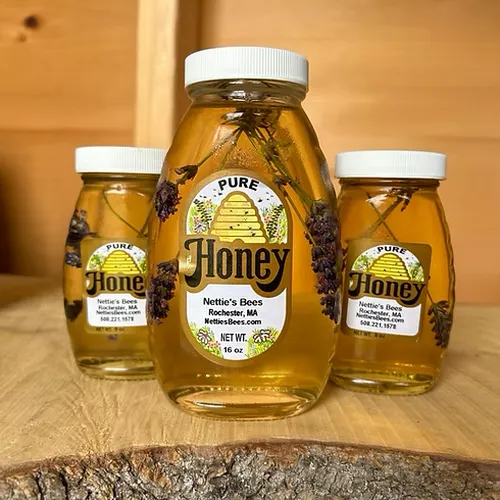
We bring our honey from Rochester, Massachusetts, to the Tiverton Farmer’s Market, just across the state line, and it is made from many of the same coastal blooms described here. If you’re curious how the Massachusetts side of the line compares, our South Coast honey guide walks through the bloom calendar month by month.
Sources
- Rhode Island General Laws § 4-12-12, Registration of apiaries.
- Rhode Island Department of Environmental Management, Apiary program and registration portal.
- Rhode Island Department of Health (2023). Farmers Markets presentation: licensing for honey and produce vendors.
- University of Rhode Island Magazine (Spring 2026). “Is Your Yard Bee-Friendly?” URI Bee Lab plant lists and native bee count.
- Rhode Island Secretary of State. State symbols: red maple adopted as state tree, 1964.
- Sherman, A. (2025). “The Honey Super.” Edible Rhody.
- Martini, A. (2022). “The Buzz on Rhode Island Honey.” So Rhode Island.
- Rhode Island Beekeepers Association. Bee School and association history.
- Wells Reserve (2017). “What’s Blooming: Eastern Sweet Pepperbush.”