What Do Drone Bees Do?
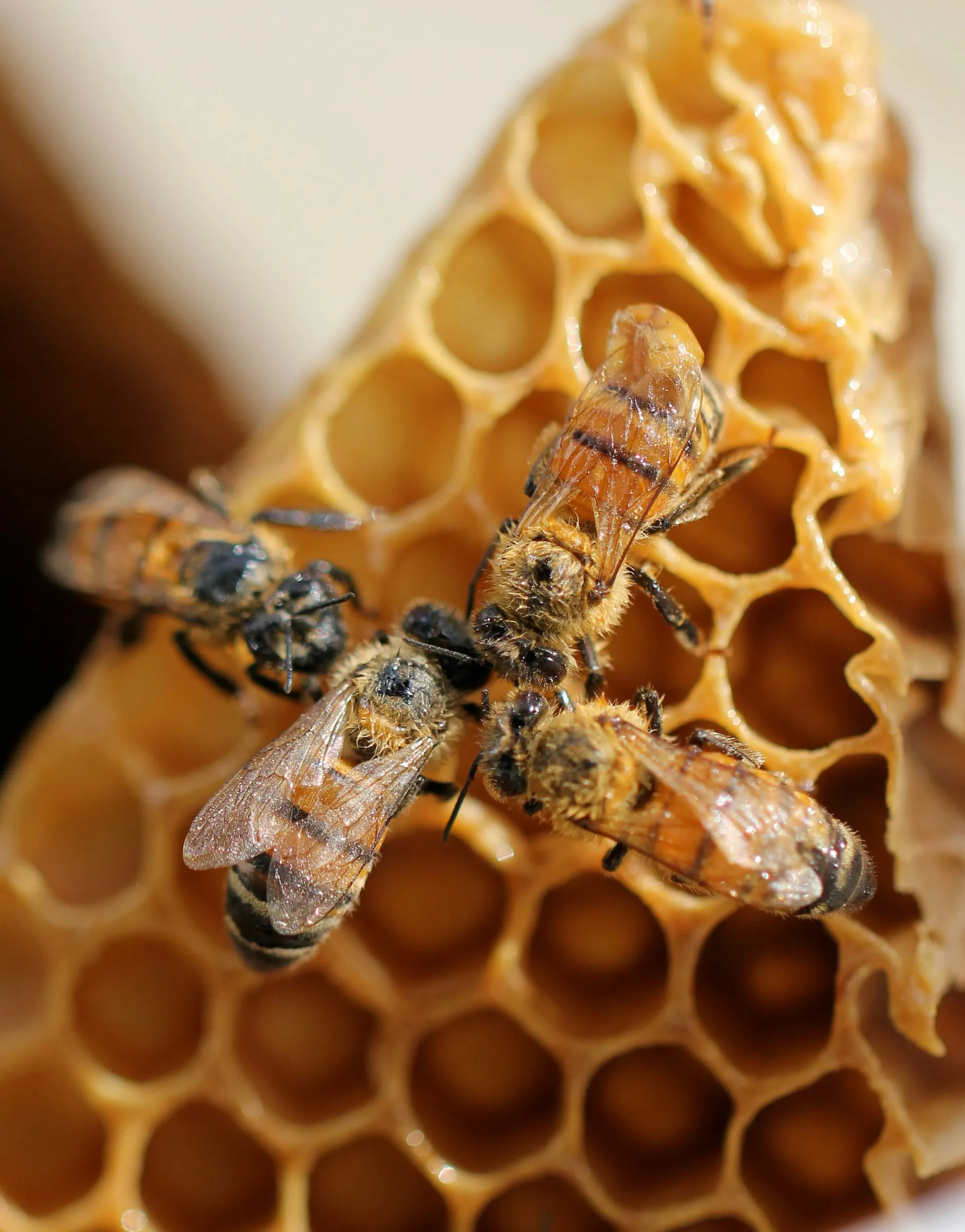
Drones are the big, bumbling, bug-eyed bees of the hive. They don’t sting, they don’t make honey, they don’t build comb, and they can’t even feed themselves very well. It’s easy to call them lazy. But without drones there would be no new colonies, and no honeybees at all.
Quick answer: Drones are male honeybees. Their main job is to mate with young queens from other colonies, which they do in flight at “drone congregation areas” high above the ground. Drones have large eyes, no stinger and no pollen baskets, and they rely on worker bees for food. Mating kills a drone. In fall, when they’re no longer needed, workers push the remaining drones out of the hive to save winter food.
How are drones different from workers?
| Drone (male) | Worker (female) | |
|---|---|---|
| Egg | Unfertilized | Fertilized |
| Development | 24 days | 21 days |
| Size | Larger, square-bodied | Smaller, slender |
| Eyes | Huge, meeting at the top of the head | Smaller, on the sides |
| Stinger | None | Yes |
| Jobs | Mating | Everything else |
| Lifespan | About 8 weeks in summer | About 5-6 weeks in summer |
Drones come from unfertilized eggs, so they have only one set of chromosomes, all from their mother. In a sense, a drone has a mother and a grandfather but no father.
How do drones mate?
On warm, sunny afternoons in spring and summer, drones fly out to drone congregation areas: particular spots, often 30 to 130 feet up, where thousands of drones from many colonies gather year after year. Young queens fly through on mating flights. Drones spot them with their enormous eyes and chase them.
The few that succeed mate in midair. The act tears the drone’s reproductive organs from his body, and he dies within moments. A queen mates with about 10 to 20 drones over one or a few flights and stores their sperm for the rest of her life. See the role of the queen bee.
Why can’t drones sting?
A honeybee’s stinger is a modified egg-laying organ, which only females have. Drones are completely harmless, so a big buzzing bee that won’t sting you near a hive is probably a drone.
Do drones do anything else?
Drones may help a little with keeping the brood warm, but mostly they eat, rest and fly out to mate. Workers feed them, though drones can also eat honey from cells. Colonies raise drones as an investment: each one is a chance to pass the colony’s genes to a new colony somewhere else.
Why are drones kicked out in fall?
When the nectar stops and queens are no longer mating, drones become mouths to feed. In autumn, workers stop feeding them, drag them to the entrance and push them out, where they die of cold and hunger. Colonies go into winter with no drones and raise new ones in spring.
Why do beekeepers care about drones?
- Varroa mites prefer drone brood. Drone cells stay capped longer, so mites reproduce more in them. Some beekeepers trap mites by removing capped drone brood. See varroa mites.
- Genetics. A colony’s drones carry its genes to queens in the area, so healthy local colonies help keep local bees strong.
- Laying workers. A hive with lots of drones and no worker brood may have lost its queen.
Frequently asked questions
Are drones lazy?
Not really. They’re specialists. Their single job, mating, is essential to the survival of the species.
How many drones are in a hive?
A few hundred to a few thousand in spring and summer, none in winter.
Do drones make honey?
No. Drones can’t collect nectar or pollen and don’t process honey.
Can drones mate with queens from their own hive?
They usually don’t. Drone congregation areas mix drones from many colonies, and queens fly some distance to mate, which helps prevent inbreeding.
What happens to drones that don’t mate?
They return to the hive each evening, live a few weeks, and are expelled in fall.
Sources
- Winston ML. The Biology of the Honey Bee. Harvard University Press, 1987.
- Koeniger G et al. Mating Biology of Honey Bees (Apis mellifera). Wicwas Press, 2014.
- Penn State Extension, honey bee biology.
Drones live short, single-minded lives, and almost all of them die without ever meeting a queen. Spare a thought for them the next time a big, harmless bee bumbles past your face.