How Much Honey Does One Bee Make? And How Much Does a Hive Make in a Year?
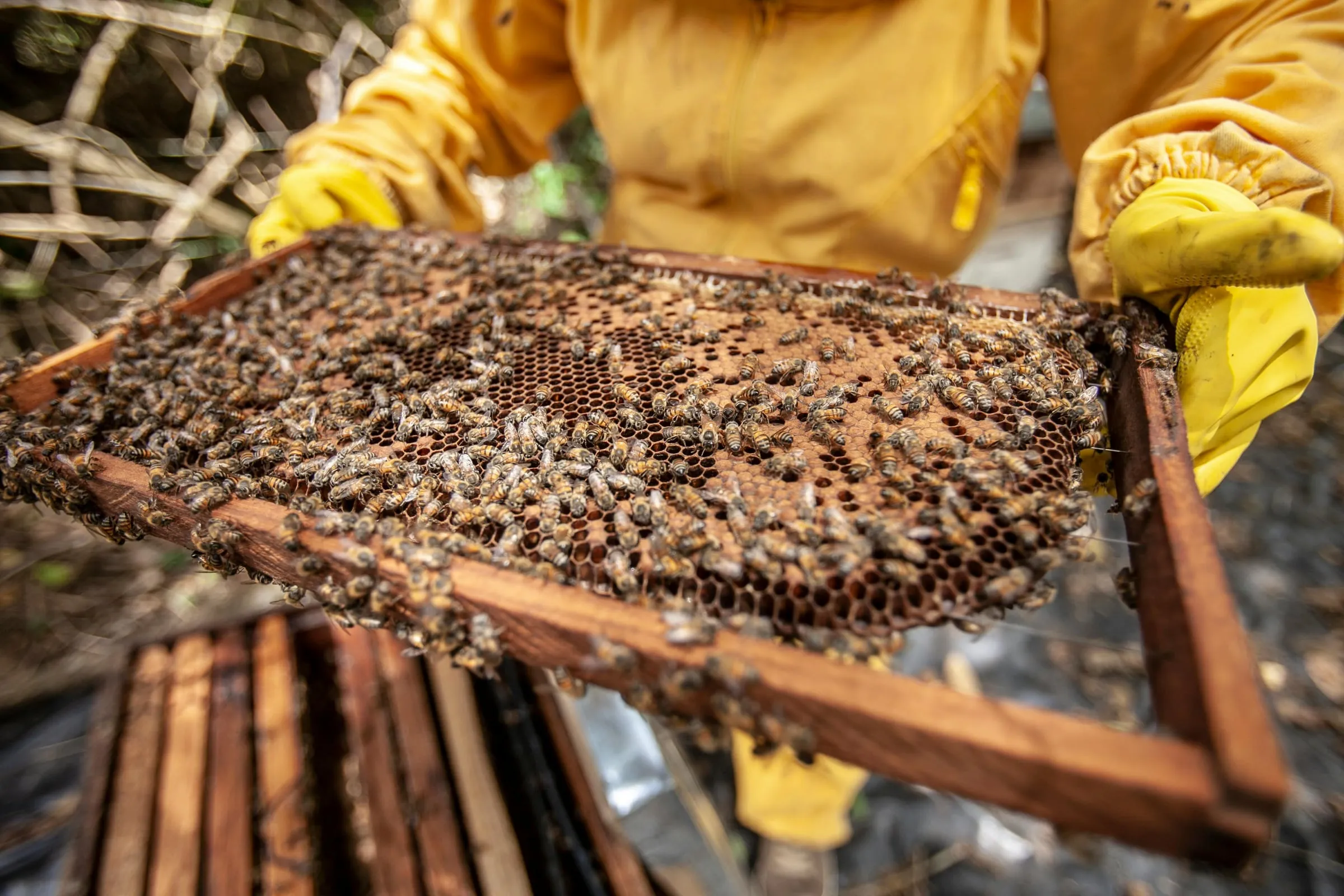
Next time you stir a teaspoon of honey into your tea, picture a dozen bees. That spoonful is roughly what twelve worker bees make in their entire lives. It’s one of the most striking facts in beekeeping, and it explains a lot about why honey is precious.
Quick answer: A single worker honeybee makes about 1/12 of a teaspoon of honey in her lifetime, according to the National Honey Board. To make one pound, bees fly about 55,000 miles and visit some 2 million flowers. A strong colony may make well over 100 pounds of honey in a season, but eats most of it; the surplus a beekeeper harvests averaged about 52 pounds per U.S. colony in 2024 and 48 pounds in 2025, according to the USDA.
How much honey does one bee make?
About 1/12 of a teaspoon, or roughly half a gram, over her whole life.
That’s because a worker bee’s life is short and most of it isn’t spent foraging. In summer, a worker lives about five to six weeks. She spends her first three weeks or so working inside the hive: cleaning, feeding larvae, building comb and guarding. Only in the last two or three weeks does she fly out to collect nectar, and she often wears herself out doing it. See what worker bees do.
How much work goes into a pound of honey?
According to the National Honey Board:
- Bees fly about 55,000 miles, more than twice around the Earth, to make a pound of honey.
- They visit about 2 million flowers.
- A forager visits 50 to 100 flowers on a single trip.
Nectar is 60-80% water, and bees evaporate most of it to make honey, so it takes a lot of nectar to make a little honey. See how bees make honey.
How much honey does a hive make in a year?
That depends on the weather, the flowers and the colony’s strength. A strong colony in a good year might gather and process a few hundred pounds of nectar and make well over 100 pounds of honey, but it eats most of it: feeding the brood, fueling foragers, and getting through winter.
What the beekeeper can harvest is the surplus. The USDA’s National Agricultural Statistics Service reported an average of 51.7 pounds of honey per producing colony in 2024 and 48.0 pounds in 2025. Some colonies make much more, and in a poor year, many make none at all.
How much honey does a colony need for winter?
In New England, a colony usually needs somewhere around 60 to 90 pounds of honey to survive the winter, more than the average harvest. That’s why responsible beekeepers take only what the bees can spare. See what bees do in winter.
Putting it in perspective
| Amount of honey | Roughly the lifetime work of |
|---|---|
| 1 teaspoon | 12 bees |
| 1 tablespoon | 36 bees |
| 1 pound jar | about 600 to 800 bees |
| A winter’s supply (60-90 lb) | tens of thousands of bees |
These are rounded estimates from the 1/12-teaspoon figure, but they show why every jar represents a lot of lives and a lot of flowers.
Frequently asked questions
How long does it take bees to make honey?
Nectar becomes ripe, capped honey in a few days. A colony needs a whole season of foraging to store enough for itself and a surplus.
Do all bees in the hive make honey?
All worker bees help at some stage: foragers collect nectar, younger house bees process and store it, and others fan to dry it. Drones and the queen don’t.
How many bees are in a hive?
Usually around 20,000 to 60,000 in summer, and fewer in winter. See how many bees are in a hive.
How much honey does a beehive produce per month?
It varies hugely. During a strong nectar flow, a colony can add several pounds a day; in a dearth, it may eat into its stores. Most surplus is made in a few weeks of peak bloom.
Do bees make honey in winter?
No. In winter there’s no nectar, so bees live on stored honey. They begin making honey again when spring flowers bloom.
Sources
- National Honey Board, honey facts.
- USDA National Agricultural Statistics Service, Honey reports, March 2025 and March 2026.
- Winston ML. The Biology of the Honey Bee. Harvard University Press, 1987.
Every jar of honey is a small miracle of teamwork. When you know the numbers, it’s hard not to savor each spoonful a little more.