Worker Bees: Every Job a Worker Does in Her Life
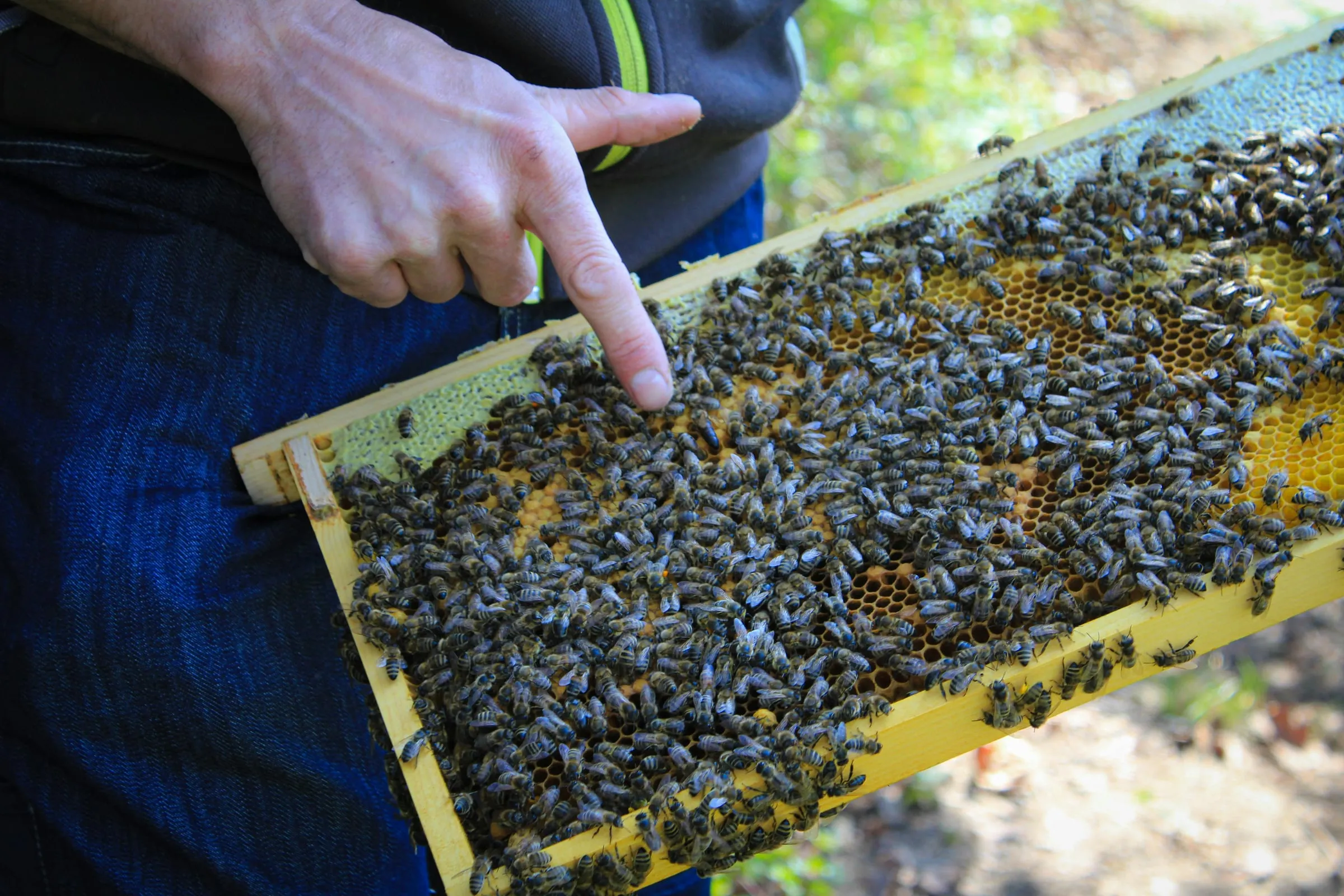
Almost every bee you see on a flower is a worker: a female honeybee, sterile, tireless and short-lived. Workers do everything in a colony except lay the eggs and mate. What’s remarkable is that each worker does nearly every job in turn, moving through a series of careers as she ages.
Quick answer: Worker bees are the female honeybees that run the colony, usually 95% or more of its bees. In summer they live about five to six weeks and change jobs with age: cleaning cells (days 1-3), nursing larvae and the queen (about days 3-12), building comb, storing food and fanning (about days 12-18), guarding the entrance (about days 18-21), and foraging for nectar, pollen, water and propolis for the rest of their lives. Winter workers can live four to six months.
What does a worker bee do at each age?
Scientists call this pattern age polyethism. The ages below are typical, not fixed; the colony shifts them to meet its needs.
| Age (summer) | Main jobs | Notes |
|---|---|---|
| Days 1-3 | Cleaning cells | Polishes cells so the queen will lay in them |
| Days 3-12 | Nurse bee | Feeds larvae with brood food and royal jelly from glands in her head; tends the queen |
| Days 12-18 | House bee | Makes wax and builds comb, receives and processes nectar, packs pollen, fans to cool and dry honey, removes the dead |
| Days 18-21 | Guard | Checks bees landing at the entrance by smell; defends against robbers and wasps |
| Day 21 on | Forager | Collects nectar, pollen, water and propolis; scouts for new food and, in swarms, new homes |
Cleaners
A newly emerged bee is soft and fuzzy. Her first job is housekeeping: cleaning out cells, including the one she was born in, so they’re ready for new eggs or food.
Nurse bees
Young workers have well-developed glands in their heads (hypopharyngeal and mandibular glands) that produce brood food and royal jelly. Nurses check each larva many times a day. Some attend the queen, feeding and grooming her and spreading her scent through the hive. See what is royal jelly.
House bees and builders
As their nursing glands shrink, wax glands on the abdomen become active. These bees build and repair comb, take nectar from foragers, add enzymes and dry it into honey, pack pollen into cells, fan their wings to cool the hive, and carry dead bees out. See how bees make beeswax and how bees make honey.
Guards
Guards stand at the entrance and inspect incoming bees by smell. Each colony has its own scent, so a bee from another hive trying to steal honey is challenged. Guards are the bees most likely to sting near a hive.
Foragers
The last stage, and the most dangerous. Foragers fly out to collect nectar, pollen, water (for cooling) and propolis (plant resin for sealing the hive), and share good finds with the waggle dance. See the waggle dance and how far bees travel. Foraging wears out their wings and bodies, and most foragers die within two or three weeks of starting.
Can worker bees change jobs early?
Yes. The schedule is flexible. If a colony loses its foragers, say to pesticides or a swarm, young bees start foraging early. If it needs nurses, older foragers can even revert, regrowing nursing glands. Researchers think chemical signals from brood, the queen and older bees help each worker decide what to do.
How long do worker bees live?
In summer, about five to six weeks; most of that time is spent inside. Workers raised in late summer and fall, called winter bees, are physiologically different: they store more fat and protein and can live four to six months, carrying the colony through winter. See what bees do in winter.
Can worker bees lay eggs?
Workers have ovaries but normally don’t lay; the queen’s pheromones and the brood hold them back. If a colony stays queenless for weeks, some workers start laying. Their eggs are unfertilized, so they can only become drones, and the colony will die out unless a beekeeper intervenes.
Frequently asked questions
Are all worker bees female?
Yes. All workers are female. Males are drones, and their only job is mating.
Do worker bees sting?
Yes, though rarely away from the hive. A worker’s stinger is barbed, so she dies after stinging a person. See bee stings.
How many worker bees are in a hive?
Usually tens of thousands: about 20,000 to 60,000 in summer. See how many bees are in a hive.
Why are worker bees sterile?
They develop from the same fertilized eggs as queens, but are fed less royal jelly as larvae, so their reproductive systems don’t fully develop.
What does a worker bee do in winter?
She clusters with her sisters, shivering her flight muscles to keep the colony warm and eating stored honey.
Sources
- Winston ML. The Biology of the Honey Bee. Harvard University Press, 1987.
- Seeley TD. The Wisdom of the Hive. Harvard University Press, 1995.
- Robinson GE. “Regulation of division of labor in insect societies.” Annual Review of Entomology, 1992. PubMed
Six weeks, half a dozen careers and a twelfth of a teaspoon of honey. The worker bee might be the hardest-working creature you’ll ever meet.