How Many Bees Are in a Hive?
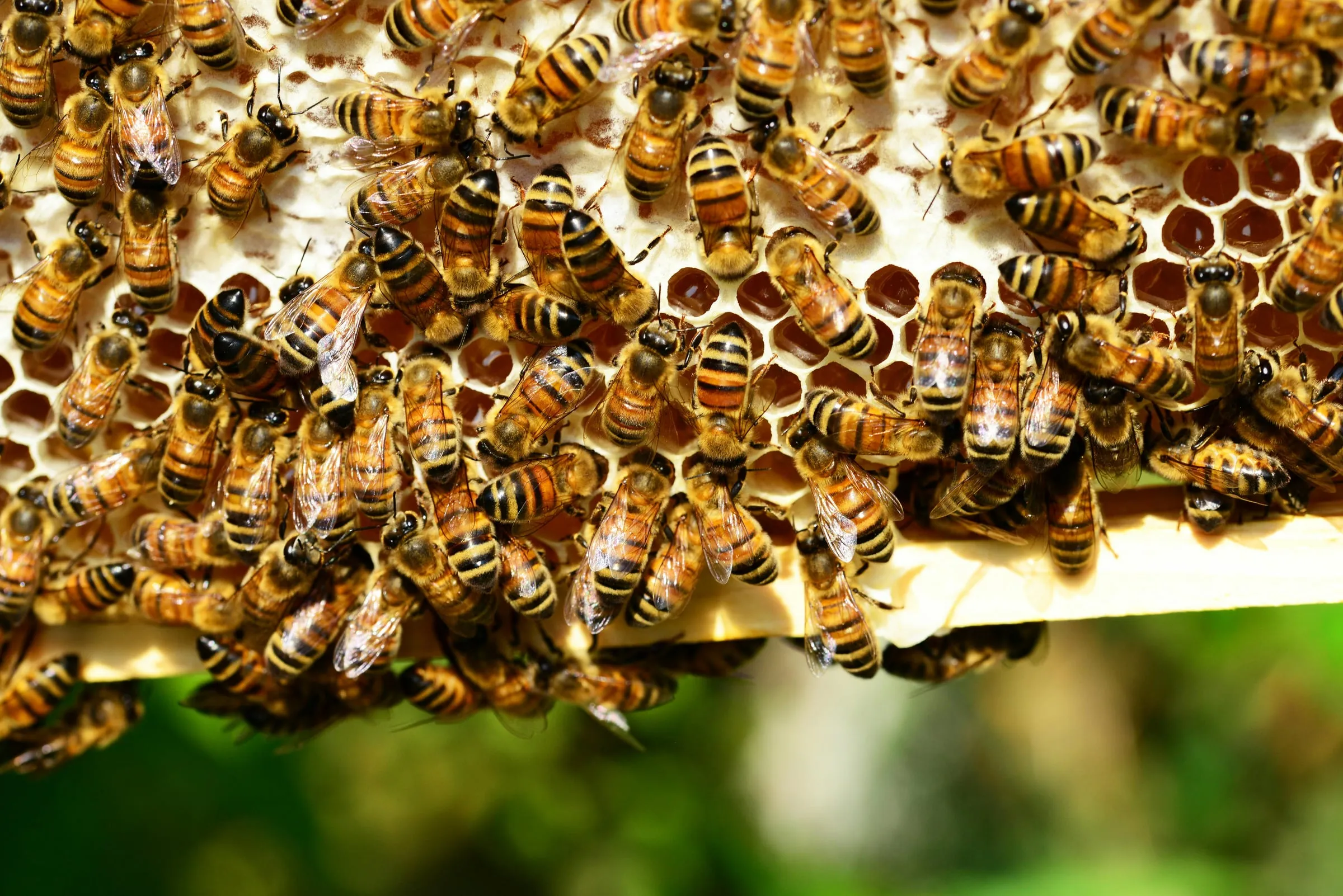
Open a hive in July and it’s hard to believe the number of bees in front of you. Every frame is covered, the air hums, and foragers pour in and out of the entrance. Open the same hive in January (which you shouldn’t) and you’d find a tight ball of bees a fraction of the size. A colony’s population rises and falls with the seasons like a tide.
Quick answer: A healthy honeybee colony usually has about 20,000 to 60,000 bees in summer, sometimes more, and about 10,000 to 30,000 in winter. Nearly all are female worker bees. There is one queen, and in summer a few hundred to a few thousand male drones, which are pushed out in fall. A swarm usually takes about half the colony’s bees with it.
Who lives in a hive?
| Type of bee | How many | What they do |
|---|---|---|
| Queen | 1 | Lays all the eggs, up to 1,500-2,000 a day in summer |
| Workers (female) | Tens of thousands | Everything else: nursing, building, guarding, foraging |
| Drones (male) | A few hundred to a few thousand, spring and summer only | Mate with queens from other colonies |
Read more about the queen bee, worker bees and drones.
How does the number of bees change through the year?
- Winter: about 10,000 to 30,000 bees, clustered for warmth, living on stored honey. These are long-lived “winter bees” that can survive four to six months.
- Early spring: the queen ramps up egg-laying as pollen arrives, and the population starts to climb.
- Late spring: the colony grows fast. If it gets crowded, it may swarm, sending off about half its bees with the old queen.
- Summer: peak population, often 40,000 to 60,000 or more in a strong colony.
- Fall: egg-laying slows, drones are expelled, and the colony shrinks to its winter size.
In summer, about 1,000 to 1,500 worker bees can die every day of old age and wear, and roughly as many emerge to replace them.
How many bees are in a swarm?
Swarms vary widely, from a few thousand to 30,000 or more, typically about half the parent colony. A football-sized cluster on a branch holds several thousand bees. See found a bee swarm.
How many bees do you get when you buy them?
Beekeepers start colonies in a few ways:
- A package of 3 pounds of bees holds roughly 10,000 bees (about 3,500 per pound) plus a queen.
- A nucleus colony (nuc) is a small working colony on five frames, with a laying queen, brood and a few thousand bees.
How many hives can you fit in a yard?
That depends on your town’s rules and your neighbors more than the bees. Two hives are a common start for backyard beekeepers.
Frequently asked questions
How many queens are in a hive?
Normally one. Occasionally, during queen replacement, a mother and daughter queen may briefly coexist.
How many bees are born each day?
In summer, a strong queen lays about 1,500 to 2,000 eggs a day, and a similar number of bees emerge daily from earlier eggs.
How many bees are in a winter cluster?
Usually about 10,000 to 30,000. A cluster smaller than a softball in late winter may be too small to keep itself warm.
How many bees does it take to make a pound of honey?
The lifetime work of roughly 600 to 800 worker bees. See how much honey does a bee make.
How do beekeepers estimate the number of bees?
By counting frames covered with bees. A deep Langstroth frame fully covered on both sides holds about 2,000 to 2,500 bees.
Sources
- Winston ML. The Biology of the Honey Bee. Harvard University Press, 1987.
- Seeley TD. The Wisdom of the Hive. Harvard University Press, 1995.
- Penn State Extension, honey bee biology.
A hive is never the same two months running. That constant change is part of what makes keeping bees endlessly interesting.