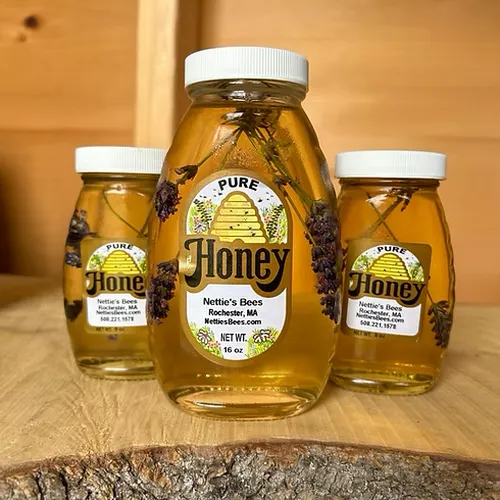
What's Actually in Raw Honey? The Nutrients Heating Destroys and Why It Matters
By Nerija "Nettie" Kupryte-Hopkins · · Updated

Walking through a farmers market, you might notice jars of golden honey labeled “raw” alongside regular honey varieties. While both are sweet and delicious, they differ significantly in their nutritional profiles. Raw honey—straight from the hive with minimal intervention—contains a complex array of beneficial compounds that processed honey often lacks. But what exactly gets lost during commercial processing, and what nutrients remain?
Quick answer: Raw honey is about 80% sugar (mostly fructose and glucose) and 17% water, plus small amounts of enzymes, amino acids, organic acids, minerals, antioxidants and pollen. Commercial heating to 150-170°F damages the enzymes and some aroma and plant compounds, and ultrafiltering removes the pollen. The sugars, calories and minerals barely change. Raw honey keeps all of it, which is why it tastes fuller.
As interest in natural, minimally processed foods grows, understanding these differences becomes increasingly important for health-conscious consumers. Let’s explore the nutritional treasure trove inside raw honey and discover what happens to these compounds during commercial processing.
What is raw honey made of?
Is raw honey more than sugar?
Raw honey is far more than just a natural sweetener. While primarily composed of carbohydrates (about 80% simple sugars—mainly fructose and glucose), raw honey contains over 200 substances that contribute to its nutritional profile. These include small amounts of proteins, amino acids, organic acids, and trace minerals like potassium, calcium, magnesium, and iron.
The creation of honey itself is a remarkable process. Foraging bees collect nectar from flowering plants, storing it in their honey stomachs. There, enzymes begin breaking down complex sugars into simpler ones. Back at the hive, house bees continue this process, repeatedly regurgitating and dehydrating the nectar until it transforms into honey with less than 18% water content—a natural preservation method that prevents fermentation.
What bioactive compounds are in raw honey?
What truly distinguishes raw honey nutritionally are its bioactive compounds that offer potential health benefits:
Enzymes: Raw honey contains several enzymes added by bees during honey production:
- Diastase (amylase): Helps break down complex carbohydrates
- Invertase: Converts sucrose into glucose and fructose
- Glucose oxidase: Produces hydrogen peroxide, contributing to honey’s natural antimicrobial properties
Antioxidants and Polyphenols: Raw honey contains various antioxidant compounds, including flavonoids and phenolic acids that help neutralize free radicals in the body. The antioxidant content varies significantly based on floral source, with darker honeys generally containing higher levels.
Bee Pollen and Propolis Fragments: Unfiltered raw honey contains small amounts of bee pollen—rich in proteins, vitamins, minerals, and fatty acids—alongside tiny fragments of propolis, a resinous mixture bees use to seal unwanted openings in the hive. Propolis contains numerous beneficial compounds with antimicrobial properties.
How does commercial processing change honey?
What are the common processing methods?
To understand nutritional changes, we must first understand how honey is typically processed commercially:
Heat Processing/Pasteurization: Commercial honey is often heated to temperatures ranging from 150°F to 170°F (65°C to 77°C). This serves multiple purposes: it kills yeast cells (preventing fermentation), dissolves sugar crystals, makes filtration easier, and creates a product with longer shelf life.
Ultra-filtration: Beyond removing particles like wax and bee parts, commercial processors may ultra-filter honey through fine filters that remove most pollen. Some operations use pressure filtration through diatomaceous earth or similar materials that create a highly clarified product.
Blending: Many commercial operations blend honey from multiple sources to achieve consistent color, flavor, and viscosity year-round.
Why is honey processed?
Commercial processing serves several practical purposes:
Extended Shelf Life: Heat treatment kills yeast cells that might cause fermentation, while removing moisture extends shelf stability.
Preventing Crystallization: By dissolving existing crystals with heat and filtering out the microscopic particles that seed new ones, processors delay the natural crystallization that consumers often mistakenly perceive as spoilage.
Aesthetic Consistency: Consumers have come to expect honey that’s clear, uniform in color, and smoothly pourable. Processing creates this consistency across batches.
What nutrients does processing remove?
What happens to honey’s enzymes when heated?
The natural enzymes in honey are proteins, and like most proteins, they’re vulnerable to heat degradation:
Diastase Activity: Diastase activity falls as honey is heated, faster the hotter it gets. That’s why international honey standards use diastase as a test for overheated honey.
Glucose Oxidase: This enzyme, which produces hydrogen peroxide and contributes to honey’s antimicrobial properties, is among the most heat-sensitive in honey.
Invertase: Invertase is also very heat-sensitive, and commercial heating removes much of its activity.
Without these enzymes, processed honey loses some of its unique digestive and antimicrobial benefits. For example, the reduced diastase activity means processed honey doesn’t break down complex carbohydrates as effectively as raw honey.
Does heating destroy honey’s antioxidants?
Heat processing also significantly impacts honey’s antioxidant content:
Polyphenol Changes: Heat changes honey’s phenolic compounds, and the effect depends on the honey and how long it’s heated.
Flavonoid Loss: Some flavonoid compounds in honey begin degrading at temperatures as low as 104°F (40°C) with extended exposure. Commercial processing temperatures accelerate this deterioration.
Overall Antioxidant Capacity: Results are mixed. Some studies find heated honey loses antioxidant activity; others, like a 2006 study in Food Chemistry, find long heating creates browning compounds that are antioxidants too. The original plant compounds are best kept by not heating at all.
What is lost when pollen is filtered out?
Ultra-filtration removes virtually all pollen from honey, with several consequences:
Nutritional Loss: Bee pollen contains at least 250 substances, including amino acids, vitamins (particularly B-complex), minerals, enzymes, and fatty acids. When pollen is completely removed, these nutritional components are lost.
Identity Erasure: Pollen serves as honey’s geographic and floral fingerprint. Without it, there’s no way to verify a honey’s origin or floral source—a concern for both authenticity and allergy benefits. Some people hope local pollen in raw honey will build tolerance to allergens, but the best trial found no benefit.
Reduced Prebiotics: Some components in bee pollen function as prebiotics that support beneficial gut bacteria. Ultra-filtered honey lacks these potential digestive health benefits.
What nutrients survive processing?
Which parts of honey are heat-stable?
Not all nutritional components are significantly affected by processing:
Minerals and Trace Elements: The mineral content—including potassium, calcium, magnesium, and sodium—remains relatively stable during heating and filtration. These minerals, though present in small amounts, contribute to honey’s nutritional profile.
Sugar Profile: While heating may slightly alter the ratio of different sugars through chemical reactions, the overall carbohydrate profile remains largely intact. Processed honey still provides the same caloric value and sweetening power.
Certain Organic Acids: Many organic acids in honey (like gluconic acid) withstand heat processing relatively well, preserving some of honey’s natural acidity and flavor compounds.
Is processed honey still better than sugar?
Even after processing, honey retains some advantages over refined sugar:
Glycemic Effect: Honey’s mix of fructose and glucose gives it a glycemic index a little lower than table sugar’s on average, though it varies widely by flower and still raises blood sugar.
Trace Nutrients: While diminished, processed honey still contains small amounts of vitamins, minerals, and antioxidants—unlike refined white sugar, which contains none.
Antimicrobial Properties: Though reduced, some of honey’s natural antimicrobial properties persist due to its high sugar concentration, low water content, and the presence of organic acids.
Do different honeys have different nutrients?
How do flowers change honey’s nutrients?
The floral origin of honey significantly impacts its nutritional composition:
Darker Honeys and Higher Antioxidant Content: Generally, darker honeys like buckwheat, manuka, and tulip poplar contain significantly higher levels of antioxidants than lighter varieties like clover or orange blossom. Studies show buckwheat honey may have up to 20 times the antioxidant content of lighter honey varieties.
Medicinal Compounds in Specific Varieties: Some honey varieties contain unique beneficial compounds. For example, manuka honey from New Zealand contains methylglyoxal (MGO), which gives it powerful antimicrobial properties. Honey from certain herbs may contain small amounts of their beneficial plant compounds.
Local Floral Diversity Creates Nutritional Diversity: Local wildflower honey reflects the specific plant diversity of your region. This creates a unique nutritional fingerprint with varying levels of minerals, antioxidants, and other beneficial compounds based on local plants.
How do you choose and use nutrient-rich honey?
What do honey label terms mean?
When shopping for honey, understanding terminology is crucial:
“Raw” vs. “Pure” vs. “Natural”: “Raw” honey has not been heated above hive temperature (around 95°F/35°C) or filtered beyond basic straining. “Pure” honey means no additives but says nothing about processing. “Natural” has no regulated meaning for honey and doesn’t guarantee minimal processing.
Identifying Minimally Processed Honey: Look for terms like “unheated,” “unpasteurized,” or “unfiltered.” Crystallization is often a good sign of minimal processing. Small-scale local producers typically offer less processed honey.
Questions for Local Producers: Ask about their extracting and bottling process. Do they heat the honey? What temperature? How do they filter it? Small-scale beekeepers often use minimal processing methods that preserve more nutritional components.
How do you store and use raw honey to keep its nutrients?
Proper storage helps maintain raw honey’s beneficial compounds:
Temperature Considerations: Store raw honey at room temperature or cooler, but not in the refrigerator (which accelerates crystallization). Avoid heating raw honey above 95°F (35°C) to preserve heat-sensitive enzymes.
Crystallization: Understand that crystallization is natural and doesn’t indicate spoilage. If your raw honey crystallizes, gently warm it by placing the jar in warm water (below 95°F/35°C) to preserve its enzymes and other beneficial compounds.
Best Practices: Use raw honey in unheated applications or add it to warm (not hot) beverages after they’ve cooled to a drinkable temperature. This preserves the heat-sensitive components that make raw honey nutritionally superior.
Frequently asked questions
How many calories are in a tablespoon of raw honey?
About 64 calories and 17 grams of sugar per tablespoon (21 grams), according to USDA FoodData Central. Raw and processed honey are essentially the same in calories. See honey nutrition facts.
Does raw honey have vitamins?
Only traces. Raw honey contains small amounts of B vitamins and vitamin C, and minerals like potassium, but you’d need to eat far too much honey for them to matter nutritionally.
Is raw honey more nutritious than regular honey?
Raw honey keeps its enzymes, pollen and delicate aroma compounds, which heating and filtering reduce. Calories, sugars and minerals are about the same. The difference is real but modest; flavor is where you notice it most.
Does honey lose nutrients over time?
Slowly. Enzyme activity declines over months and years, and color darkens. The sugars and minerals don’t change, and properly stored honey stays safe to eat indefinitely.
Sources
- USDA FoodData Central, “Honey.”
- Codex Alimentarius Commission. Standard for Honey (CXS 12-1981).
- Turkmen N et al. “Effects of prolonged heating on antioxidant activity and colour of honey.” Food Chemistry, 2006.
- Rajan TV et al. “Effect of ingestion of honey on symptoms of rhinoconjunctivitis.” Annals of Allergy, Asthma & Immunology, 2002. PubMed
Conclusion
The nutritional landscape of honey changes significantly during commercial processing. While the basic sugars, minerals, and some organic acids remain relatively stable, many of raw honey’s most interesting and beneficial compounds—enzymes, antioxidants, pollen, and propolis fragments—are reduced or eliminated.
For maximum nutritional benefit, choosing raw, minimally processed honey makes sense. This doesn’t mean processed honey lacks value; it’s still nutritionally superior to refined sugar and retains some beneficial properties. However, raw honey delivers the complete package of nutrients and bioactive compounds that bees meticulously create.