What Is Propolis? Benefits for Oral Health, Wounds, Sore Throats, and Skin
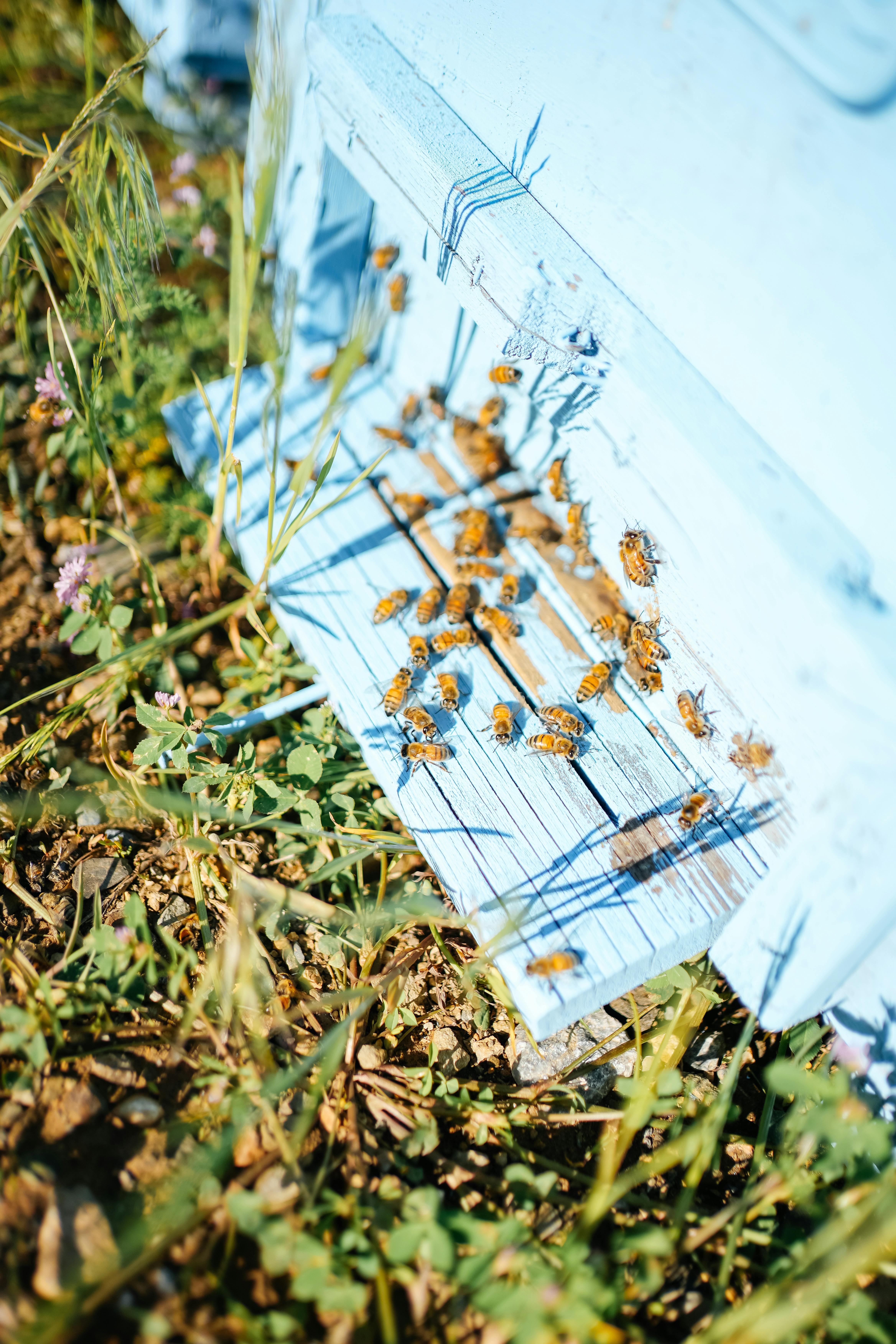
If you've ever opened a beehive and found everything slightly sticky, that's propolis. It coats the inner walls. It seals around frames. It fills every gap too small for beeswax but large enough to let in cold air or pathogens. Beekeepers learn fast that hive tools need scraping after every inspection. What they're scraping off is one of the most chemically complex substances in a hive, and outside of beekeeping circles, almost nobody knows it exists.
Quick answer: Propolis is a sticky, resinous substance honeybees make by collecting resins from tree buds, bark, and sap flows, then mixing them with beeswax and bee-produced enzymes. Bees use it to seal gaps in the hive, coat interior walls, and defend the colony against pathogens. A 2022 review published in Chinese Medicine (Springer Nature) catalogued over 800 compounds in propolis samples worldwide, including more than 140 flavonoids. Research has studied propolis for oral health, wound healing, respiratory illness, and skin applications, with results strong enough that it now appears in some clinical dental products.
What is propolis made of?
Propolis starts with plant resins. Certain forager bees, specialist collectors, seek out resinous tree buds, wounded bark, and the sap flows that plants produce when stressed or damaged. They pack this material into their corbiculae (the same pollen baskets on their hind legs used for pollen) and carry it back to the hive.
Back at the hive, other bees help unload it, a slower process than pollen because the material is so sticky. As it's worked and transported, bees mix in beeswax and enzymes from their own bodies, producing the finished compound.
The exact chemistry shifts depending on what trees grow near the hive. Temperate propolis from the northeastern United States tends to be poplar-type: rich in a specific group of flavonoids including chrysin, pinocembrin, and galangin, plus caffeic acid phenethyl ester (CAPE), which has been studied extensively on its own. Brazilian green propolis, collected near the plant Baccharis dracunculifolia, has a different profile dominated by artepillin C and has been the subject of some of the most recent clinical research. Mediterranean and New Zealand propolis look different again.
What unifies propolis globally is its general structure, plant resins plus wax plus bee additions, not a fixed ingredient list. This is important context for reading any research: not all propolis products are equivalent, and the source matters. To understand the full picture of what bees produce inside a hive, see our article on how bees make honey.
Why do bees make propolis?
The word "propolis" is Greek. "Pro" means "before" or "in defense of." "Polis" means "city." Aristotle used this word, and bees have been earning it ever since.
The primary job of propolis is structural. A beehive has one persistent vulnerability: gaps. Any opening smaller than about 3/8 of an inch gets filled with propolis. Larger gaps become comb. Propolis handles everything in between, the small cracks around frames, rough patches in the wood, the spaces where the cover doesn't sit perfectly flat.
But propolis is more than caulk. It coats the entire interior of a healthy hive with a thin, antimicrobial layer. That coating matters because a hive is warm, humid, and full of food, exactly the conditions pathogens prefer. Propolis is a significant reason the hive isn't overrun.
When a hive is invaded by something too large to remove, a mouse that got in and died, a large insect the bees killed, they will encase it entirely in propolis. The resin prevents decay and eliminates the threat to hive hygiene. Beekeepers who've opened a hive and found a perfectly preserved, propolis-mummified mouse know this firsthand. It's startling the first time.
A 2018 study in PLOS ONE (Simone-Finstrom et al.) found that propolis-coated hive interiors significantly reduced pathogen loads and actually lowered immune activation in individual bees, suggesting that the colony-level defense of propolis reduces the burden on each bee's individual immune system. The hive functions, in a real sense, as a single immune organism.
What does propolis look like and feel like?
Color varies: yellow-green when fresh and high in certain resins, darkening to amber, reddish-brown, or nearly black as it ages or depending on plant sources. In the hive it looks like brown or dark orange-brown varnish, smooth and glossy on the inner walls.
Temperature changes its character completely. Cold propolis is brittle and hard, and beekeepers in winter can chip it off frames like glass. Warm propolis, at hive temperature (around 95°F), is pliable and sticky. It will stretch, smear, and bond to almost anything it contacts. A hive tool left on a sunny car seat will come out with propolis smeared across the seat. This is a rite of passage.
The smell is distinct: balsamic, resinous, faintly medicinal. Some people describe it as a cleaner version of turpentine. Others find it reminiscent of tree sap or a forest floor after rain. The taste, for those curious enough to try raw propolis, is intensely bitter and astringent.
How has propolis been used throughout history?
The documented history is longer than most people expect.
Aristotle formally described propolis in his natural history of honeybees. Hippocrates reportedly prescribed propolis preparations for healing sores and ulcers. Ancient Egyptians used it in embalming, noting what bees already knew: propolis slows decay. A 2013 review published in Evidence-Based Complementary and Alternative Medicine (Kuropatnicki et al.) traced this history from Aristotle through medieval folk medicine, where propolis tinctures were used as wound disinfectants and oral antiseptics, and into the 20th-century research revival that began in earnest in the 1960s.
Traditional herbalists across Europe, South America, and parts of Asia prepared propolis as alcohol-based tinctures, topical preparations, and lozenges. Long-term, broad traditional use across independent cultures is consistently what draws modern researchers to a natural substance. It suggests something worth investigating, even when the traditional use itself is not a medical claim.
Propolis sits in the same world as honey in terms of its place in traditional wellness. For a longer look at how honey has been used throughout history in healing contexts, see our article on honey as medicine throughout history.
These statements have not been evaluated by the Food and Drug Administration. This product is not intended to diagnose, treat, cure, or prevent any disease.
Propolis and oral health: what the research shows
This is one of the best-documented applications of propolis, with a research base strong enough that propolis is now an ingredient in commercially sold dental products.
Streptococcus mutans is the primary bacterium responsible for dental cavities. Multiple laboratory studies have documented that propolis extracts inhibit its growth and, critically, its ability to adhere to tooth surfaces, which is how cavity formation begins. A 2020 systematic review published in Dentistry Journal (Coutinho, 2020) analyzed 17 studies on propolis in oral care and found consistent antimicrobial effects against both cavity-causing bacteria and the pathogens most associated with gum disease.
Canker sores (recurrent aphthous ulcers) have been specifically studied in randomized controlled trials. A trial published in Phytotherapy Research (Madhivanan et al., 2022) compared propolis ointment directly against a standard corticosteroid treatment. Propolis reduced pain scores and healing time at a level comparable to the pharmaceutical treatment, without the side effects associated with corticosteroid use on mucous membranes.
A practical application that follows from this research: a small amount of propolis tincture diluted in warm water used as an oral rinse, particularly during periods of mouth soreness, after dental work, or at the first sign of a canker sore. This mirrors the traditional use and aligns with what the clinical research has studied.
Propolis for sore throats and respiratory illness
Traditional use here is remarkably consistent across cultures and centuries, and modern research has followed with some substantive clinical work.
For sore throats, propolis throat sprays, lozenges, and tinctures have been used for a very long time. The flavonoids concentrated in propolis, particularly galangin and pinocembrin, have documented activity in laboratory research against bacteria commonly associated with throat infections. Raw honey has similar and complementary properties for sore throats and respiratory symptoms, and traditional preparations often combined both.
A 2020 randomized controlled trial published in Complementary Therapies in Medicine (Silveira et al.) enrolled 479 patients hospitalized with COVID-19 and gave half of them standardized Brazilian green propolis extract. The propolis group had shorter hospital stays and lower rates of acute kidney injury. This was a single study using a specific propolis type in a specific clinical context, not a basis for broad treatment claims. But it illustrates why researchers are taking propolis seriously for respiratory illness and why the conversation has intensified.
The compound CAPE (caffeic acid phenethyl ester), concentrated in poplar-derived propolis from the northeastern United States, has been studied for its anti-inflammatory effects in airway tissue. Research published in the Journal of Agricultural and Food Chemistry (Marquez et al., 2016) identified specific pathways by which CAPE modulates inflammatory signaling, at least in laboratory models. The mechanism in respiratory contexts appears to involve both direct antimicrobial activity and a reduction in the inflammatory response that causes much of the discomfort from respiratory illness.
These statements have not been evaluated by the Food and Drug Administration. This product is not intended to diagnose, treat, cure, or prevent any disease.
Propolis for wound care and skin
The wound care application has both the longest documented history and some of the strongest modern research. People were using propolis on wounds before they had any language for why it worked.
A review published in Burns and Trauma (Anjum et al., 2019) surveyed clinical and laboratory research on propolis for wound management and found evidence for accelerated wound closure, antibacterial activity in wound environments, and reduced inflammation at wound sites. The mechanisms studied included inhibition of bacterial biofilm formation (which is what makes infected wounds resistant to treatment) and stimulation of collagen synthesis.
For burn wounds, some clinical research has compared propolis dressings against silver sulfadiazine, the standard topical treatment. A study in Alternative Therapies in Health and Medicine (Bretz et al., 2014) found propolis dressings produced comparable healing rates with fewer reported side effects. This does not mean propolis should replace medical care for serious wounds or burns. For minor skin wounds, cuts, and chapped or irritated skin at home, the research behind it is real.
Raw honey has documented wound-care properties in its own right, particularly for certain resistant bacterial species, and the two substances share some overlapping mechanisms. Both have been used together in traditional wound preparations for exactly this reason.
For skin applications more broadly, propolis has a history of use for acne-prone skin because of its antimicrobial and anti-inflammatory compounds. The research on honey in skincare covers related territory. Both substances act on skin partly through the same pathways, and both were being used in traditional skincare long before those mechanisms were understood.
How to use propolis
Tincture: Propolis extracted in alcohol is the most concentrated and the most studied form. Alcohol dissolves the resinous compounds more effectively than water alone. Typical concentrations run from 10% to 30% propolis by weight. Used internally (diluted in water), as an oral rinse, or applied topically.
Throat spray: A diluted propolis tincture in spray form, designed for direct application to throat tissue. This format closely mirrors traditional use and is practical for sore throat applications.
Capsules: Powdered or standardized propolis in supplement form. More convenient, though absorption and quality vary significantly by product and source.
Topical preparations: Propolis in creams, ointments, or salves for skin and wound use. Easier to apply than raw tincture for topical purposes; look for preparations that specify propolis percentage.
Raw propolis: Some beekeepers sell raw propolis scraped directly from hive frames. This is the least processed form, though it does not dissolve in water, and direct skin contact can cause reactions in some people.
One important note: propolis can trigger allergic reactions, particularly in people with known bee or bee-product allergies. Anyone in that category should use caution and consult a healthcare provider before using propolis in any form.
What the current research says overall
The research base on propolis has grown significantly since the 1960s. Researchers are drawn to it primarily because of its flavonoid content. Flavonoids are plant compounds with well-documented antimicrobial and anti-inflammatory properties, and propolis concentrates them from plant sources in unusually high quantities.
The 2022 review in Chinese Medicine noted over 140 individual flavonoids identified across global propolis samples. Much active research studies propolis's effects against bacteria, fungi, and viruses in laboratory settings. This is a different thing from establishing that it treats or prevents infection in the human body, which requires clinical trials, some of which now exist in specific areas (oral health, wound care) and others of which are still developing (respiratory illness).
What the research shows collectively is that the compounds present are chemically real, the traditional uses across cultures pointed at something genuine, and the clinical applications worth watching most closely are oral health, minor wound care, and respiratory symptom support. Propolis also shares chemistry with raw honey in terms of antimicrobial mechanisms. For the science behind honey's documented antimicrobial properties, see our article on how raw honey fights bacteria.
Frequently Asked Questions
What are the main health benefits of propolis?
The best-researched applications of propolis are oral health (antimicrobial activity against cavity bacteria and canker sore reduction), wound care (accelerated healing and antibacterial effects documented in clinical studies), and respiratory and throat support (traditional use backed by growing laboratory and clinical research). It has also been studied for skin applications and antifungal activity. These are areas where research exists, not medical claims. Propolis is not a treatment or cure for any disease.
Is propolis the same as beeswax?
No. Beeswax is produced by bees from glands on their abdomens and used to build honeycomb cells. Propolis is collected from plants and is primarily plant resin. They're both used in hive construction, but they're chemically distinct with different origins and different roles. Beeswax builds structure. Propolis seals, coats, and protects.
Can propolis help with a sore throat?
Propolis throat sprays, lozenges, and tinctures have been used for sore throats across multiple traditional medicine systems for centuries. Research has documented antimicrobial activity against bacteria commonly associated with throat infections, and several studies suggest propolis reduces discomfort and recovery time from throat inflammation. It is not a medical treatment. Many people use it alongside raw honey for sore throat and respiratory symptoms, a combination that has a long traditional history.
Does propolis have antifungal properties?
Yes. Laboratory research has documented consistent activity against several Candida species, among the most common causes of fungal infection in humans. A 2020 review in Antibiotics (Sforcin) summarized existing evidence on propolis as an antifungal agent and found repeatable results across multiple studies. Most of this evidence is from in vitro (laboratory) research rather than clinical trials in humans, so the picture is still developing for direct clinical application.
Does all honey contain propolis?
Raw honey harvested with minimal processing may contain trace amounts of propolis, since it coats the inside of the hive. Commercially filtered and processed honey typically does not. The amounts in raw honey are small and not significant from a propolis content standpoint. Beekeepers who specifically want to harvest propolis install dedicated propolis traps in the hive.
Is propolis safe?
For most adults in typical amounts, propolis is well-tolerated with a long history of use. The main documented risk is allergic reaction, particularly for people with sensitivities to bee products or to plant resins (notably balsam of Peru or pine). Propolis contact dermatitis has been documented in beekeepers with long-term skin exposure. Pregnant or nursing women and people on blood-thinning medications should consult a healthcare provider before using propolis supplements. Anyone with a known bee allergy should use caution.
Why is propolis sometimes called "bee glue"?
Because of what it does and how it behaves. Bees use it to bond and seal surfaces inside the hive the way glue bonds objects together. It's also phenomenally sticky, especially at warm temperatures, and will adhere to wood, skin, fabric, and tools on contact. Anyone who has worked a hive in summer weather has firsthand experience with why the nickname stuck.
Propolis is not something most honey buyers ever think about, and that's part of what makes bees so worth paying attention to. A jar of raw honey is the result of thousands of individual decisions happening inside a living colony, and propolis is part of what keeps that colony alive long enough to make it. If you're curious what that honey actually tastes like from hives right here in South Coast Massachusetts, we'd love for you to try a jar.
These statements have not been evaluated by the Food and Drug Administration. This product is not intended to diagnose, treat, cure, or prevent any disease.


.jpg)
.jpg)
