Why Honey Colors and Flavors Vary: The Natural Science Explanation
By Nerija "Nettie" Kupryte-Hopkins · · Updated

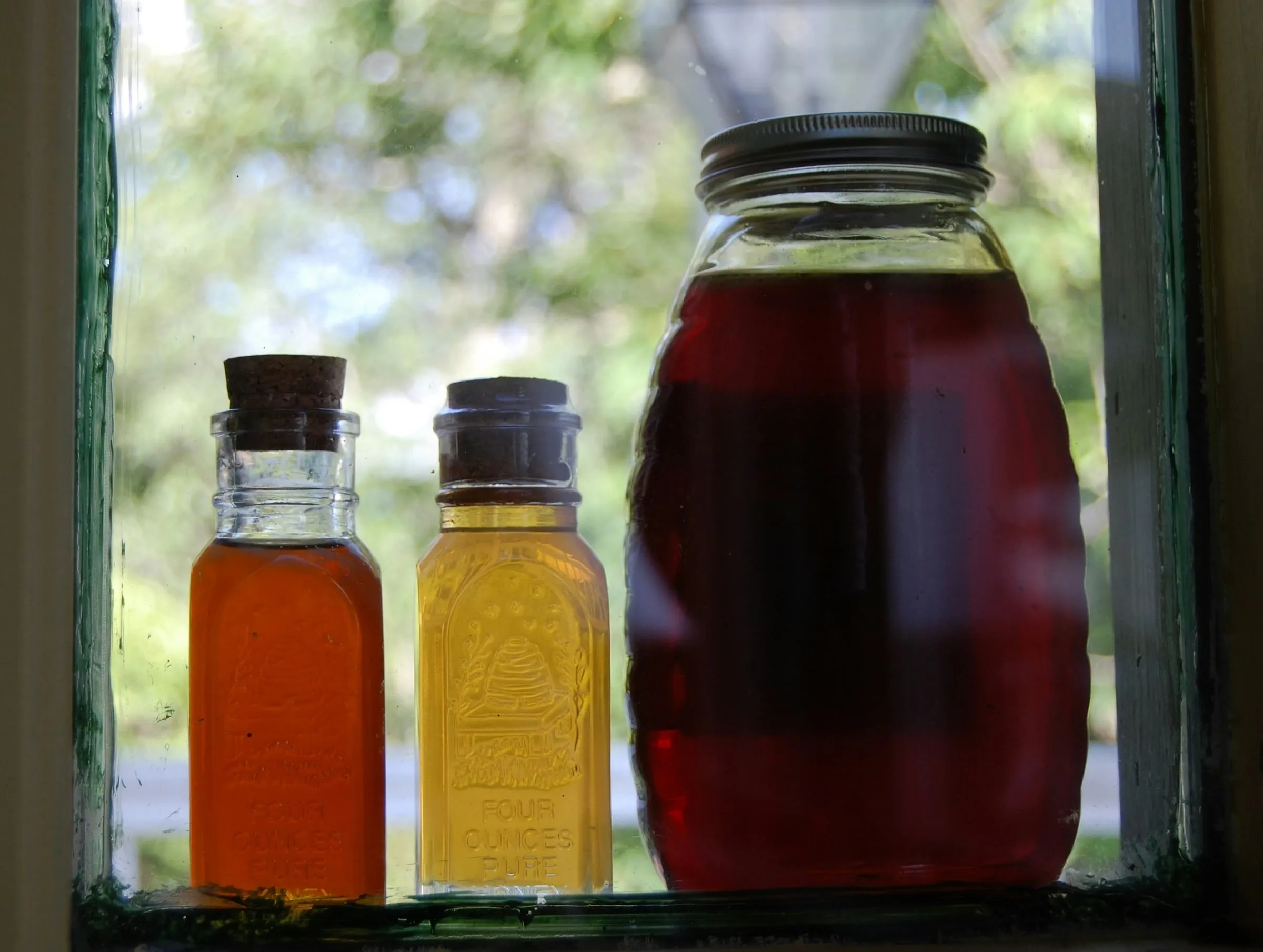
When you open jars of raw honey from different sources or seasons, you might notice striking variations in color—ranging from nearly transparent pale yellow to deep amber or even rich, dark brown. Take a taste, and you’ll discover equally diverse flavor profiles, from delicately floral to boldly robust or even slightly bitter. Far from being flaws, these natural variations are the hallmark of authentic raw honey.
Quick answer: Honey’s color and flavor come mostly from the flowers the bees visited. Each plant’s nectar has its own sugars, minerals and aroma compounds, so clover honey is pale and mild while buckwheat is dark and malty. Darker honeys usually have more minerals and antioxidants. Season, weather, soil and age also play a part: honey darkens slowly in storage, and the same hives give different honey in spring and fall.
At Nettie’s Bees, we celebrate these differences as evidence of our honey’s unprocessed nature and direct connection to specific local environments. But what causes these fascinating variations? Let’s explore the natural factors that create the unique “fingerprint” in every jar of raw honey.
What is the biggest influence on honey’s color and flavor?
How do flowers shape honey?
The single most influential factor in honey’s color and taste is the floral source of nectar. Bees typically forage within a 2-3 mile radius of their hive, collecting nectar from whatever flowering plants are available. Each plant species produces nectar with distinct sugar compositions, mineral contents, and aromatic compounds that directly translate to the resulting honey’s characteristics.
The nectar source essentially functions as honey’s primary identifier, similar to how grape varieties create different wines. Different flowers create fundamentally different honeys with distinctive flavor profiles.
What do common honey varieties look and taste like?
Light Honeys (Clover, Alfalfa, Orange Blossom)
Light-colored honeys generally originate from floral sources with simple sugar compositions and fewer mineral components. Clover honey—one of the most common varieties in North America—produces a light amber color with a pleasantly mild, slightly floral taste. Orange blossom honey offers a distinctly citrusy aroma with a light golden color and delicate flavor.
These lighter varieties typically contain lower concentrations of minerals and antioxidants than their darker counterparts but offer subtle complexity that makes them versatile for everyday use.
Medium Honeys (Wildflower, Raspberry, Blackberry)
Wildflower honey—a polyfloral variety from mixed nectar sources—typically presents medium amber colors and more complex flavor profiles that vary by region and season. Berry blossom honeys from raspberry or blackberry flowers often show medium amber coloration with distinctive fruity undertones.
Dark Honeys (Buckwheat, Chestnut, Tulip Poplar)
Dark honey varieties like buckwheat deliver bold, robust flavors often described as earthy, malty, or even slightly molasses-like. Their deep amber to nearly brown coloration comes from higher mineral content and complex plant compounds. These darker honeys typically contain higher concentrations of antioxidants and minerals like iron, manganese, and zinc.
How do monofloral and wildflower honeys differ?
Monofloral honey comes predominantly from a single flower type, producing more consistent color and flavor profiles when compared to polyfloral varieties. For a honey to be considered monofloral, at least 45% of its nectar typically needs to come from one plant species.
Polyfloral honey (sometimes called wildflower honey) derives from multiple nectar sources, resulting in more complex, layered flavor profiles and often greater seasonal and regional variation. Our summer wildflower honey shows this diversity, with each batch reflecting what was blooming around the hives that season.
How does the season change honey’s color and flavor?
What is spring honey like?
Spring honey often features lighter colors and more delicate, floral flavors from early-blooming plants like fruit trees, clover, and dandelion. The cooler temperatures and higher moisture content of spring can influence both nectar production and honey characteristics.
Spring honey captures the essence of renewal, typically appearing lighter and more aromatic than late-season varieties due to the specific plant populations blooming during this time.
What is summer honey like?
As summer progresses, blooming patterns shift to different plant populations. Summer honey often displays medium amber colors from sources like alfalfa, various wildflowers, and herb blossoms. The flavors typically become more pronounced and diverse.
What is fall honey like?
Late-season honey from fall-blooming plants like goldenrod, aster, and certain varieties of sunflower typically produces deeper colors and more robust flavor profiles. Fall honey often crystallizes more quickly due to its different glucose-to-fructose ratios.
Does weather change honey from the same hives?
Even within the same geographic location, weather patterns significantly impact honey characteristics. Drought conditions can concentrate nectar sugars and minerals, producing darker, more intensely flavored honey. Excessive rainfall might dilute nectar, resulting in lighter, milder honey.
Temperature fluctuations affect both plant nectar production and bee foraging patterns. Particularly hot or cold seasons can shift the bloom times of various plants, changing which nectar sources are available to bees at specific times.
Does where honey is made change its flavor?
Does soil affect honey?
The minerals present in soil directly influence plant nectar composition. Soil rich in specific minerals will produce plants with nectar containing those same minerals, which eventually appear in the honey.
Honey reflects the entire surrounding ecosystem, from soil chemistry to plant communities. The mineral signature of a region’s soil creates subtle but detectable differences in honey produced there, even from the same floral sources.
Do climate and altitude matter?
Regions with vastly different climates produce distinctly different honey varieties. Altitude affects both which plants can grow and their nectar characteristics, with high-altitude honey often displaying unique flavor profiles due to the specialized flora that thrive in those conditions.
How does the local landscape show up in honey?
The entire surrounding ecosystem—from dominant forest types to agricultural practices—shapes honey characteristics. Urban honey may contain surprising diversity from ornamental gardens and street trees, while rural honey reflects local agriculture or natural landscapes.
Does honey have terroir like wine?
Much like wine’s concept of terroir—where soil, climate, and geography create distinctive characteristics—honey displays its own sense of place. Honeys from the same floral source but different regions will show subtle but distinctive differences based on local environmental factors.
At Nettie’s Bees, we see this every year. Our cranberry honey from the June bogs tastes nothing like our late-summer knotweed honey, though both come from hives a few miles apart in Rochester.
How does processing affect honey’s natural variety?
Why does raw honey vary from jar to jar?
Raw honey undergoes minimal processing—typically just straining to remove large particles like beeswax and bee parts. This gentle handling preserves the natural enzymes, pollen, and subtle flavor components that make each honey batch unique.
At Nettie’s Bees, we extract honey with as little interference as possible, essentially just helping it from comb to jar. That’s why customers might notice variations between batches—we’re not homogenizing or altering the natural product.
Why does supermarket honey always look the same?
In contrast, many commercial honey products undergo extensive processing, including:
- Ultra-filtration that removes all pollen (eliminating evidence of floral and geographic origin)
- High-temperature pasteurization that destroys enzymes and alters flavor compounds
- Blending from multiple sources to achieve consistent color and flavor
- Occasionally, adding corn syrup or other sweeteners to standardize consistency
These processes create the uniform appearance and flavor consumers have come to expect from mass-market honey, but they eliminate the natural variations that make raw honey so special.
Does crystallization change honey’s flavor?
Crystallization—often mistakenly viewed as spoilage—is a natural process where glucose in honey separates from water and forms crystals. Different honey varieties crystallize at different rates based on their glucose-to-fructose ratios.
Interestingly, crystallization can actually enhance certain flavor notes in honey. As crystallization progresses, honey develops a more complex mouthfeel and sometimes more pronounced flavor characteristics.
How can you explore honey’s diversity?
How should you taste honey?
To fully appreciate honey’s diverse characteristics:
- Taste at room temperature when flavors are most expressive
- Use small tasting spoons and take small amounts
- Allow honey to coat your entire tongue to experience all flavor notes
- Clear your palate between varieties with water or mild crackers
- Notice appearance, aroma, flavor, and aftertaste
- Try comparing several varieties side-by-side to notice differences
Different honey varieties pair beautifully with specific complementary foods. Light, delicate honeys enhance mild cheeses and fresh fruits, while robust dark honeys stand up to stronger flavors like aged cheeses or dark chocolate.
How can you buy honey through the seasons?
To explore honey’s full diversity:
- Purchase honey throughout the year to experience seasonal variations
- Look for specific harvest date information on labels
- Try the same varietal (e.g., clover) from different geographic regions
- Develop relationships with local beekeepers who can provide information about each batch
- Consider joining a honey subscription service to receive different seasonal varieties
How should you store different honeys?
Proper storage ensures you’ll experience honey’s intended characteristics:
- Store at room temperature in a dark location
- Keep tightly sealed to prevent moisture absorption
- If crystallization occurs, gently warm by placing the jar in warm (not hot) water
- Avoid refrigeration, which accelerates crystallization
- For long-term storage, honey can keep for years in a cool, dark pantry
Each honey variety may respond differently to storage conditions. High-glucose honeys (like alfalfa, clover and goldenrod) crystallize quickly, while high-fructose honeys (like acacia and tupelo) can stay liquid for years.
Frequently asked questions
Why is some honey dark and some light?
Mostly because of the flowers. Nectar from plants like buckwheat and chestnut carries more minerals and plant pigments, giving dark honey; clover and acacia nectar give pale honey. Age and heat also darken honey over time.
Does dark honey taste stronger?
Usually. Dark honeys tend to be bolder, maltier and less sweet-tasting; light honeys are milder. There are exceptions, which is why tasting beats guessing by color.
Why did my honey get darker?
Honey slowly darkens with age and faster with warmth, through natural browning reactions. It’s still safe to eat; the flavor may become a little more caramel-like.
Is darker honey healthier?
Dark honeys generally contain more antioxidants and minerals, but the amounts are small compared with fruits and vegetables. Choose by flavor first.
Sources
- Gheldof N, Engeseth NJ. “Antioxidant capacity of honeys from various floral sources.” Journal of Agricultural and Food Chemistry, 2002. PubMed
- National Honey Board, honey color and varietals.
- USDA Agricultural Marketing Service, Pfund color scale in U.S. honey grade standards.
Conclusion
The natural variations in raw honey’s color and taste aren’t imperfections—they’re windows into the fascinating relationship between bees, plants, seasons, and local environments. Each jar of raw honey tells the story of a specific time and place, captured through the remarkable work of honeybees.
At Nettie’s Bees, we celebrate these variations as evidence of our honey’s authenticity and connection to specific local ecosystems. Rather than blending or processing to achieve artificial consistency, we preserve the unique character of each harvest to allow you to experience honey as nature intended—diverse, complex, and always fascinating.