Do Bees Sleep?
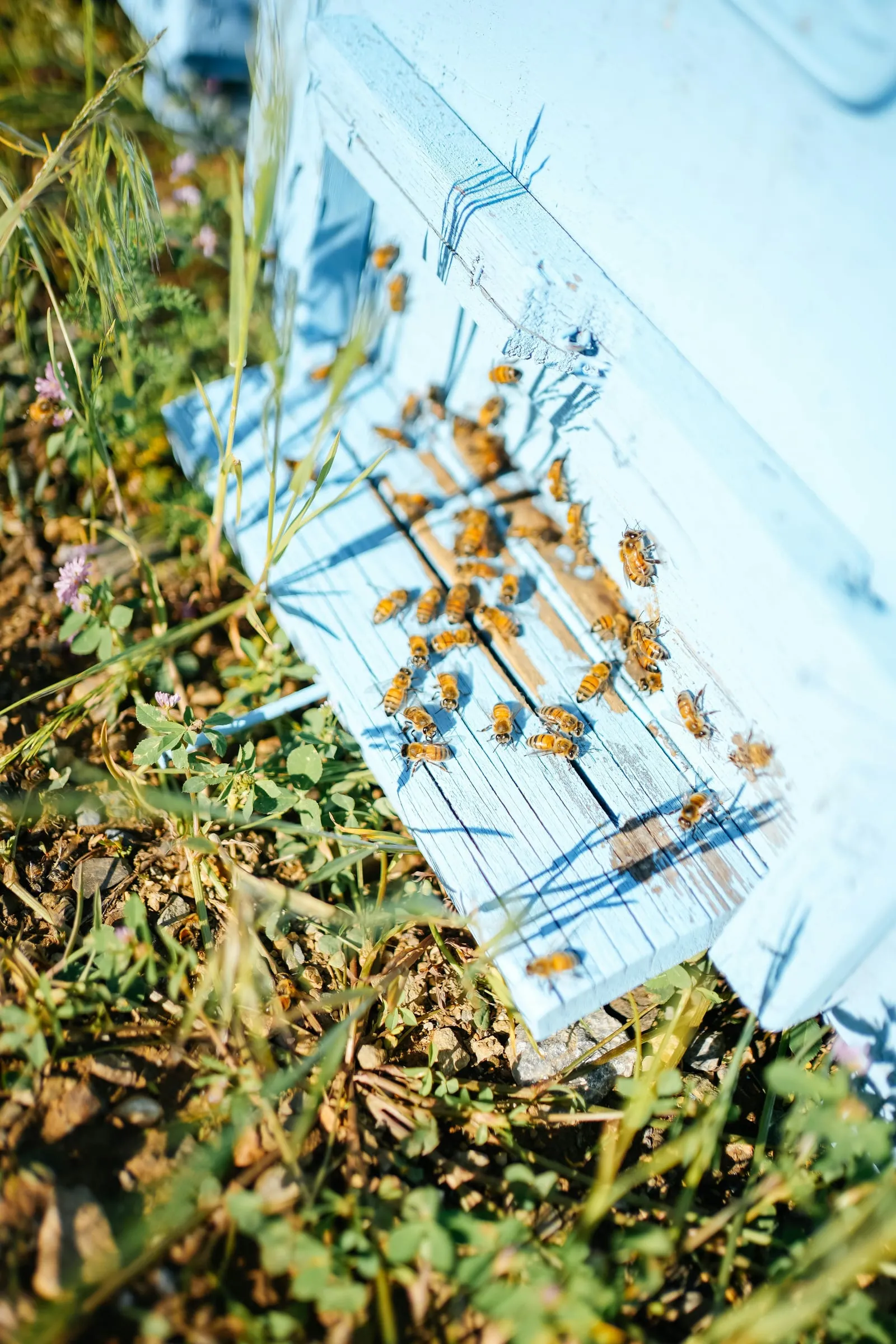
Sit by a hive on a summer evening and the traffic slows to a trickle as the light goes. Inside, the hive never fully stops, but many bees do something remarkably like what we do at night: they sleep.
Quick answer: Yes, bees sleep. Honeybee foragers sleep mostly at night, for several hours, often inside empty comb cells or at the edges of the hive. A sleeping bee goes still, her antennae droop and her body sags, and she’s harder to wake. Young house bees nap in short bouts around the clock. Studies show sleep-deprived bees dance less precisely, so sleep matters to the whole colony.
How do we know bees sleep?
In the 1980s, German researcher Walter Kaiser watched honeybees at night and recorded the activity of neurons in their brains. In a 1983 paper in Nature, he described a state that looked a lot like sleep: bees became still, their antennae stopped moving and drooped, their muscle tone relaxed and their brains responded less to stimulation. That’s essentially how biologists define sleep in any animal.
What does a sleeping bee look like?
- Still, often for minutes at a time.
- Antennae drooping and not twitching.
- Head and body sagging, sometimes with legs folded under.
- Harder to wake; it takes a stronger touch or light to get a reaction.
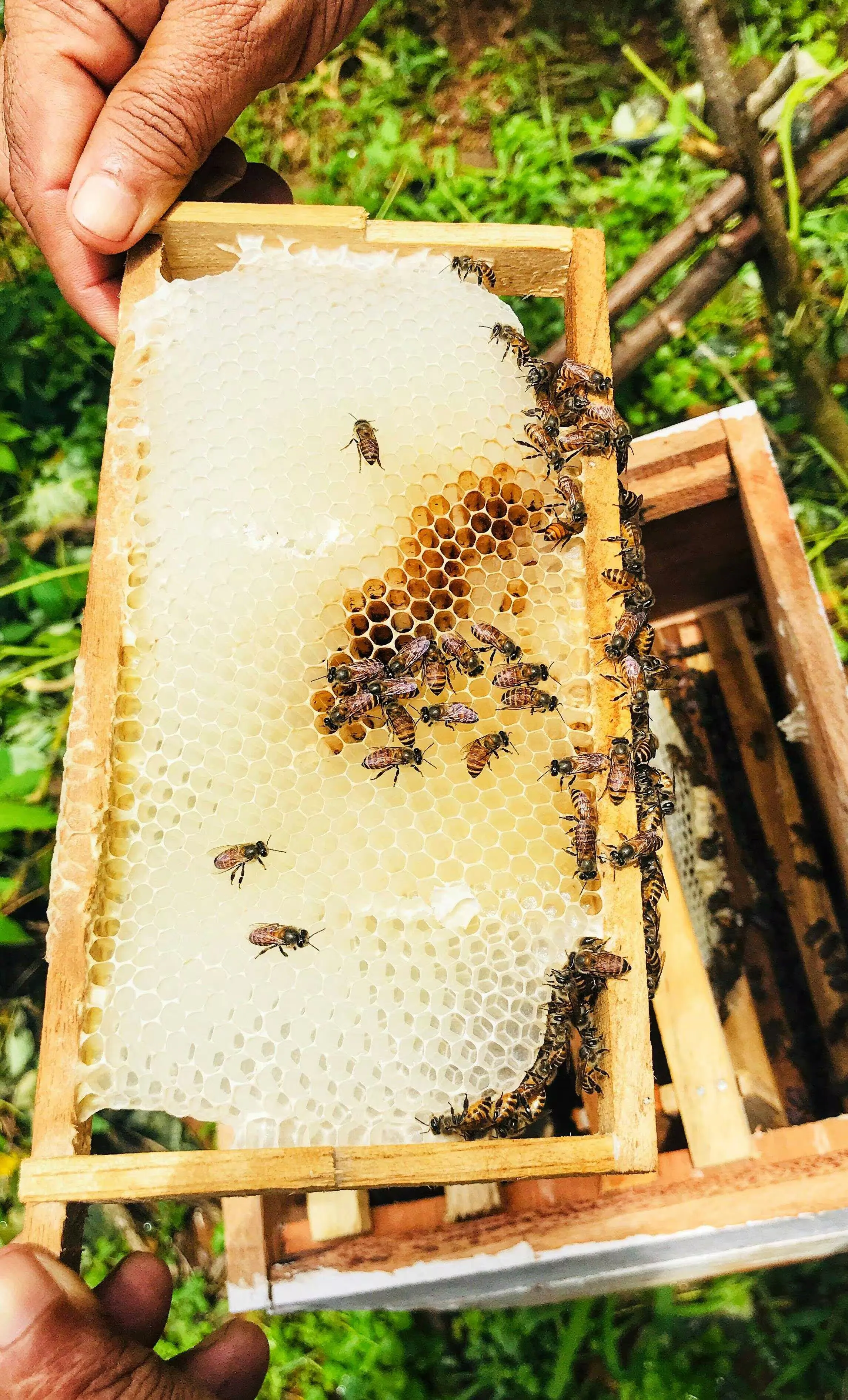
Some sleeping bees crawl head-first into empty cells near the center of the brood nest, where it’s warm. Others rest at the edges of comb, away from the busy middle.
When do bees sleep?
It depends on their job. Foragers keep a day-night rhythm and do most of their sleeping at night, for roughly five to eight hours, in bouts. Young house bees, who work in the dark hive caring for brood around the clock, nap in short bouts at any hour, without a strong daily rhythm.
What happens when bees don’t get enough sleep?
Barrett Klein and colleagues tested this in a 2010 study in PNAS. They kept some bees awake at night with a gentle magnetic jostling device, then watched the bees perform the waggle dance the next day. Sleep-deprived bees danced with less precise directions, meaning the bees following them would be sent less accurately to the flowers. Like us, tired bees make more mistakes. See the waggle dance.
Do other bees sleep?
Yes, and some in surprising places:
- Bumblebees sleep in their nests, and males sometimes spend the night outdoors on flowers.
- Male solitary bees, including longhorn bees, often sleep clamped to a plant stem by their jaws, sometimes in groups.
- Squash bees: male squash bees often spend the night curled inside squash and pumpkin flowers that close around them in the evening.
Our post on native bees vs honeybees introduces more of them.
Do bees sleep in winter?
Not the way bears hibernate. Honeybees stay in the hive all winter, clustering together and shivering their flight muscles to keep warm. Some bees in the cluster are quiet and resting, but the colony stays active. See what bees do in winter.
Frequently asked questions
Do bees sleep at night?
Foraging honeybees mostly do, after the evening return. That’s why hives are quiet at night and why beekeepers move hives after dark, when everyone is home.
Where do bees sleep?
Honeybees sleep inside the hive, often in empty comb cells or at the edges of frames. Some solitary bees sleep in flowers or clamped to plant stems.
How long do bees sleep?
Foragers sleep roughly five to eight hours a night, in several bouts. Younger bees take short naps around the clock.
Do bees dream?
No one knows. Bees show sleep-like brain changes, but whether they experience anything like dreams can’t currently be tested.
Is it bad to disturb bees at night?
Opening a hive at night disturbs the whole colony and makes bees defensive. Beekeepers usually inspect on warm, sunny days, when many foragers are out.
Sources
- Kaiser W, Steiner-Kaiser J. “Neuronal correlates of sleep, wakefulness and arousal in a diurnal insect.” Nature, 1983. PubMed
- Klein BA et al. “Sleep deprivation impairs precision of waggle dance signaling in honey bees.” PNAS, 2010. PubMed
- Eban-Rothschild AD, Bloch G. “Differences in the sleep architecture of forager and young honeybees.” Journal of Experimental Biology, 2008. PubMed
Even the busiest creatures need rest. If you ever see a fuzzy bee clinging motionless to a flower stem at dusk, let her sleep.